Best Wholesale eCommerce Platforms for B2B Businesses
Find the best wholesale ecommerce platform for your business. Compare top-rated B2B solutions to streamline bulk orders, pricing, and inventory management.


Are you looking to start an e-commerce business but lack the funds to invest in inventory? Did you know it's possible to sell products on Amazon without inventory? There are ways to run an Amazon store without having to manage physical items. Around 40% of Amazon's sellers use its Fulfilled by Amazon (FBA) service to handle inventory for them.¹
Selling without inventory avoids having to deal with storage and logistics and allows you to gain experience with the Amazon platform while you explore ways to scale your business without high upfront costs.
This article explains how to sell products on Amazon without inventory using methods like dropshipping, Fulfillment by Amazon (FBA), and more. It also explores the pros and cons to help you identify the best sales method for your business.
| If you decide to sell products internationally through Amazon, you can receive funds into a Wise Business account to save time and avoid excess currency conversion fees. |
|---|

| In this article: |
|---|
"Can I sell on Amazon without buying inventory" is a common question. Selling products on Amazon traditionally requires sellers to purchase inventory in bulk and store it until orders come in, and then dispatch orders customers. This requires the funds to purchase inventory and pay for storage space, as well as logistics planning.
However, there are several ways to sell products on Amazon without holding physical inventory. These include dropshipping, FBA, print-on-demand, and digital content publishing. In this way, you can build up some funds to invest in inventory, or simply earn income.
| Selling Model | Inventory Needed | Upfront Cost | Fulfillment Responsibility | Suitable For |
|---|---|---|---|---|
| Traditional Retail Model | Yes | High | Seller | Established businesses |
| Dropshipping | No | Low | Supplier | Beginners, low capital |
| Fulfillment by Amazon (FBA) | No (with services) | Medium | Amazon | Scaling businesses |
| Print-on-Demand (Merch) | No | Low | Amazon/3rd Party | Creatives, designers |
| Kindle Direct Publishing | No | Low | Amazon | Authors, publishers |
What is dropshipping, and how does it work on Amazon?
Dropshipping is a type of ecommerce fulfillment in which the seller doesn't hold inventory and outsources product storage and shipping to a third party, typically a manufacturer or distributor. When a customer places an order, the seller purchases the product from the supplier, which then ships it to the customer directly. This helps to keep startup costs low, as the seller only buys the product in the volumes it sells.
You can dropship on Amazon but you must comply with Amazon's dropshipping policies.² These require you to be the seller of record, so your customers should not receive any packing slips, invoices, or packaging, and never dropship from another retailer as your Amazon seller account could be terminated.
Customers expected timely shipping and good customer service, so you should only dropship on Amazon if you find a reliable supplier that can ship in 1-2 days and complies with Amazon's rules.
Dropshipping can be profitable with the right strategy, especially in niche markets. According to recent data, successful Amazon dropshippers can achieve profit margins of 10-30% depending on their niche and supplier relationships.
Here's how it works:
| Read the full Amazon dropshipping guide to learn more |
|---|
Another way to sell on amazon without keeping inventory is to use the Fulfillment by Amazon (FBA) service.
What is FBA and how does it work? FBA stores, packs, and ships your products to customers for you. When a customer places an order, Amazon handles everything from warehousing to customer service, including returns. Unlike dropshipping, you need to purchase the inventory upfront and arrange to send it to Amazon's warehouses. But you can work with suppliers that will ship the inventory directly to Amazon, so you don't have to physically handle the items.
To sell products using FBA:
How does FBA compare to dropshipping? The main difference between them is that with dropshipping, the supplier handles product sourcing for you, whereas FBA does not. In addition, with dropshipping you only pay for items after customers place orders, while FBA requires you to source and pay for inventory upfront and ship it to Amazon.
Dropshipping is well suited to new and smaller businesses with lower budgets, and it enables sellers to test out markets for different products without investing in stock that may not sell. FBA is more suitable for established and growing businesses that can afford to purchase inventory in advance. As orders and stock turnover increase, transferring storage, order fulfillment and customer service to Amazon becomes more efficient.
The best method for your business will depend on your available capital and how involved you want to be in managing inventory as well as customer service. Dropshipping means you never physically see the inventory, so you can't inspect the items before they are shipped to customers. While FBA gives you more control, you need to be able to receive the products and prepare them for shipping to Amazon, unless you use a supplier that can send them to Amazon's fulfillment centers directly.
| You can also read the full comparison of Amazon FBA vs dropshipping to help decide which is best for your business |
|---|
To use FBA without inventory, you need to find private label or wholesale suppliers that understand Amazon's requirements. If you're considering this method, you should be aware of the pros and cons to make sure you get the most out of the service.
If dropshipping or FBA do not suit your needs, there are other ways to sell items on Amazon without inventory worth considering.
Amazon's Merch on Demand service is a way for artists and graphic designers to sell custom print-on-demand products without buying inventory upfront.
You upload your designs and set a list price for a range of items, including t-shirts, hoodies, bags, mugs, phone cases, and more. When customers place an order, Amazon prints and ships the products. You receive monthly royalties based on the items sold.³ Designs must comply with Amazon's content policy.⁴
This service allows designers and sellers to create and sell custom-designed apparel, such as t-shirts and sweatshirts on Amazon, without buying the inventory upfront.
KDP allows you to self-publish e-books and other digital content as well as print books on Amazon, bypassing the traditional constraints of the publishing industry. You can publish in more than 10 countries and 45 languages. As with Merch on Demand, Amazon pays you a royalty on each sale.⁵
Beyond written content, you can create journals, planners, puzzle books, and coloring books, as well as printables and art prints.
The digital content you list on KDP is made available to the millions of users of Kindle readers. If you list physical books, Amazon prints them on demand when customers place orders, so there's no need to purchase the inventory upfront.
To sell on KDP, prepare your digital products, sign up for an account on Amazon, upload the content and set your pricing. Market your listings to gain visibility. Each time a customer purchases a digital product, they can download it instantly. Physical books are typically delivered within a few days.
For artists and crafters, Amazon Handmade offers a way to reach an international market. It also provides customers with a way to find authentic handcrafted goods. The application and audit process for Amazon Handmade is designed to ensure the marketplace features genuine handcrafted products. The monthly Professional seller account fee is waived after the first month for approved Handmade sellers.
Amazon charges a 15% referral fee on sales but there are no other listing or payment processing fees.⁶
You can only list products in certain categories, such as accessories, artwork, beauty and personal care, clothing, home, jewelry and watches, stationery and party supplies, and toys and games. Although you must make products yourself, you can often produce them on demand rather than hold stock. You can also use Fulfillment by Amazon (FBA) to manage your inventory and free up time to focus on your craft.
To list your products on Handmade, you need to have a Professional Amazon Seller Account. Confirm you comply with the guidelines, then submit your application. Once approved, list and classify your products, indicating whether they are hand-altered, hand-designed, handcrafted, repurposed, or upcycled. Create a maker profile sharing your inspiration and creative process to be viewed by customers.
To sell to customers internationally, you'll need a selling account and maker profile for each region. Your Handmade approval extends across regions.
Before jumping into selling on Amazon without inventory, it's vital to understand the platform's rules and your responsibilities to ensure to remain compliant.
When it comes to dropshipping, Amazon only allows you to use its platform if you are clearly identified as the seller on all packaging, packing slips, and invoices, remove any third-party branding or documentation, and accept responsibility for customer service and returns. Failing to comply with these policies can result in Amazon suspending your account. For this reason, it's important that you always vet your suppliers carefully to ensure they also understand and comply with Amazon's policies.
Even if you don't hold inventory, you're responsible for ensuring that returns and refunds are handled promptly and customer queries receive timely responses. You should also monitor reviews and feedback scores to address any problems as they arise and avoid damage to your business' reputation.
If you choose a dropshipping model, coordinate with your supplier to handle returns efficiently. If you use FBA or other Amazon-fulfilled services, much of this is automated, but you still need to stay on top of communications.
Additionally, ensure that you comply with tax laws, such as sales tax nexus regulations, and register your business legally. Depending on your location, types of business and the products you want to sell, it may be beneficial to consult a tax professional.
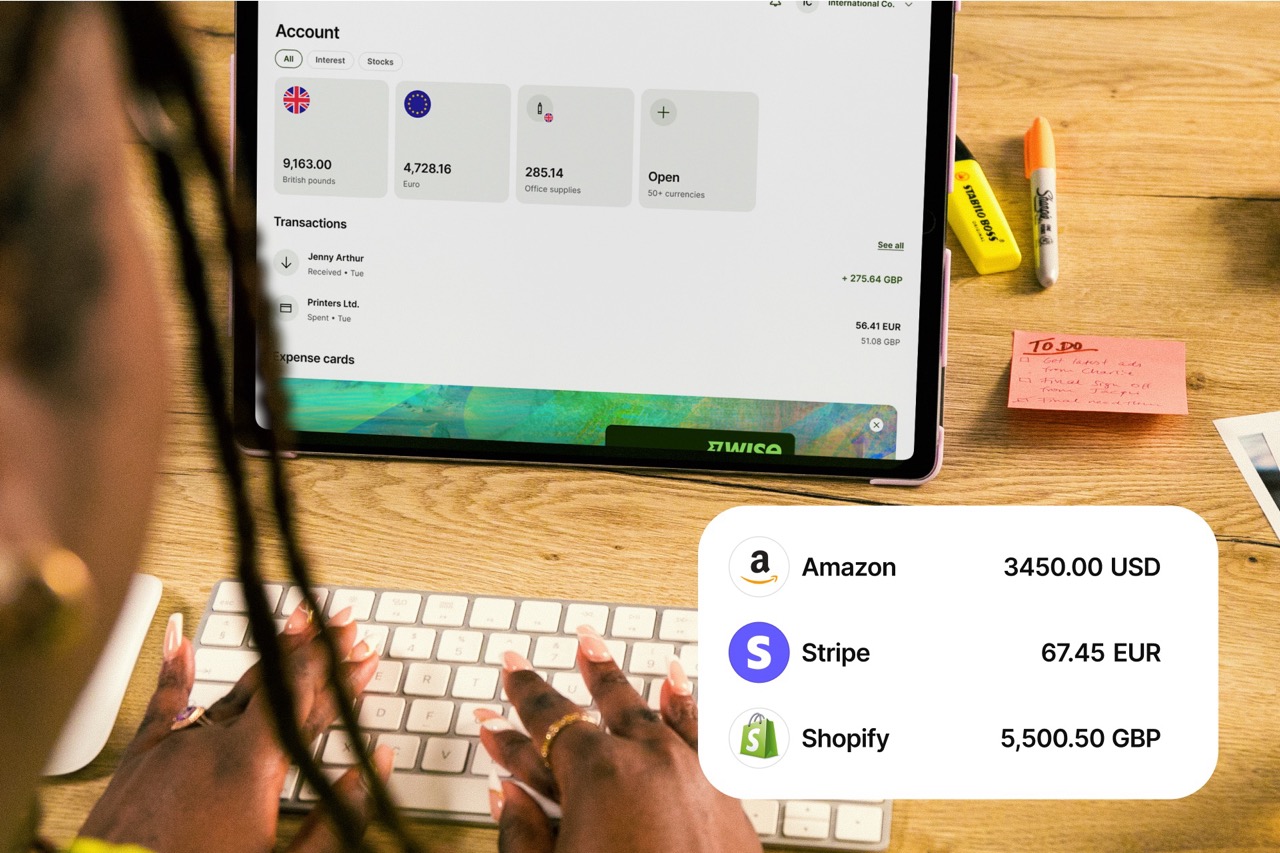
With minimal startup costs and access to a massive customer base, selling on Amazon without inventory is ideal for entrepreneurs looking to build a low-risk e-commerce business. If you plan to sell to international customers in various currencies, a Wise Business account can help manage your international sales revenue efficiently.
You can receive payments like a local with major currency account details and convert your sales revenue into US dollars at the mid-market exchange rate plus a low, transparent fee.
Open a Wise Business account online
⭐️ Trustpilot: Excellent 4.3 out of 5 stars
A Wise account is designed to manage multiple currencies all in one place, so you can hold 40+ currencies and wait for favorable exchange rates to convert funds. There is no monthly fee (other transaction fees apply), and you can connect to accounting software to make bookkeeping more efficient.
Is it legal to dropship on Amazon?
Yes, dropshipping is legal on Amazon, but you must follow Amazon's specific dropshipping policy. This includes being the seller of record for all products, ensuring your information appears on all packing slips and packaging, and handling all customer returns. You cannot purchase products from another online retailer and have them ship directly to your customer.
Which no-inventory method is most profitable on Amazon?
Profitability varies based on your skills, investment capability, and chosen niche. FBA often offers the highest scaling potential but requires more upfront capital. Merch by Amazon and KDP provide passive income with minimal investment but may have lower total earnings. Dropshipping balances low startup costs with reasonable profit potential but faces high competition.
How much does it cost to start selling on Amazon without inventory?
The minimum costs include Amazon's seller account fee ($39.99/month for Professional accounts) plus any initial marketing budget. Dropshipping can start with as little as $500, while FBA might require $1,000-$3,000 for initial inventory and shipping. Merch by Amazon and KDP can be started with virtually no investment beyond time and creative skills.
How quickly can I start making sales with no-inventory methods?
Timeframes vary by method. Dropshipping can generate sales within 1-4 weeks once your listings are live. FBA takes 2-6 weeks to set up (including shipping inventory to Amazon warehouses). KDP books can be live within 72 hours after submission. Merch by Amazon requires approval first, which can take 1-4 weeks, with production beginning after your first sale.
Do I need to register a business to sell on Amazon without inventory?
While not always required to start, registering a business is recommended for liability protection and tax benefits. Amazon requires tax information for all sellers. As your business grows, having a proper business structure (LLC, corporation, etc.) becomes increasingly important, especially when dealing with international sales or multiple supplier relationships.
| Editor & Business Expert: | ||
|---|---|---|
 | Panna is an expert in US business finance, covering topics from invoicing to international expansion. | You can read more useful business articles on her author profile. |
| Author: | |
|---|---|
 | Nicole is a professional journalist with two decades of experience in writing and editing, she has also run her own freelance business for the past five years. Her expertise spans the financial and technology industries, including payment processing and small business banking. |
Sources:
¹ Amazon Third-Party Seller Success
² Amazon Dropshipping Policy
³ Merch by Amazon Royalties
⁴ Merch by Amazon Content Policy
⁵ Kindle Direct Publishing
⁶ Amazon Handmade Program
All sources checked September 2025
*Please see terms of use and product availability for your region or visit Wise fees and pricing for the most up to date pricing and fee information.
This publication is provided for general information purposes and does not constitute legal, tax or other professional advice from Wise Payments Limited or its subsidiaries and its affiliates, and it is not intended as a substitute for obtaining advice from a financial advisor or any other professional.
We make no representations, warranties or guarantees, whether expressed or implied, that the content in the publication is accurate, complete or up to date.

Find the best wholesale ecommerce platform for your business. Compare top-rated B2B solutions to streamline bulk orders, pricing, and inventory management.

Choosing between an LLC and a sole proprietorship in Florida? Learn the key differences in asset protection, taxes, and FL registration.
Discover effective ways on how to reduce shipping costs for small business. Compare carriers, negotiate rates, and optimize packaging to save money today.

Choosing between an LLC and a sole proprietorship in Texas? Compare asset protection, TX franchise tax impacts, and how to launch your business.
Find the best shipping for small business. Compare top carriers, rates, and delivery options to save money and streamline your shipping logistics today.
Discover the best ecommerce platform for your business. Compare top-rated features, pricing, and scalability.