
Using Square as a US Sole Proprietor
Learn how to use Square as a US sole proprietor. Discover how to accept payments, set up your account without an LLC, and manage your taxes.


The Federal Reserve conducts several surveys each year to track business trends in the United States. According to their “Small Business Credit Survey,” 58% of businesses applied for business credit cards last year.¹ This guide explains how to do that and how a business credit card can help you grow and scale your company.
Some key takeaways:
| When it comes to making international payments, Wise is a transparent and low-fee option. You can hold more than 40 currencies in one account, spend using the Wise Multi-Currency Debit Card, and all international payments are made at the mid-market rate. |
|---|

Learning how to choose a business credit card involves more than simply comparing interest rates and features. The global business credit card market is projected to hit $52.28 billion by 2029.² Existing credit card companies are expanding their offerings. New companies come on the scene every year. That’s good for cardholders, provided you know what you’re doing.
As a new business owner, you’ll start to receive credit card offers shortly after you open a business bank account or launch a website. It can be challenging to decide which one of those offers is best for your business. Some promote low or zero-percent interest rates. Others advertise their rewards programs. Before accepting any of these, consider the following:
The size and type of your business should be the first consideration when choosing a business credit card. A sole proprietor running a service business has different needs than a C-corp with retail and distribution costs. Look for a credit card with a high enough limit to cover your expenses, but not one that exceeds what you can afford to pay back.
According to recent data, average monthly credit card spending among small businesses rose from $10,000 in 2020 to $23,000 in 2025.³ Most of that is due to rising costs, but some of it can be attributed to rapid growth. Keep those factors in mind when you calculate your annual spending. The credit card you get should have the bandwidth to grow with your company.
Understanding what you spend money on can determine which rewards program best suits your needs. For instance, a company with traveling sales reps can benefit from airline miles or hotel discounts. Local businesses that do business within their communities would be better off with cash back rewards on their purchases. Choosing the right program can minimize your costs.
Make sure you have a firm grasp on your business needs before you proceed through the following steps. Applying for the wrong card can be costly, especially if you don’t get the rewards that can benefit your bottom line. It can also impact your credit scores.
You can avoid that by paying careful attention to the following:
Annual fees are one of the most overlooked costs of business credit cards. Some card issuers charge several hundred dollars per year in fees, while others might have $0 in fees or charge smaller fees monthly. Compare these fees to the rewards you’ll get for using the card. If the benefits outweigh the costs, put that card on your shortlist.
According to WalletHub, interest rates for business credit cards increased by 36% between 2015 and 2025.⁴ Business card interest and fees are tax-deductible, but paying them every month can impact your company’s cash flow. The two combined make up the annual percentage rate (APR), which is the overall cost of the credit card to your company.
Searching for the highest possible credit limit may seem to make sense, but it’s not always the most prudent move. Higher credit limits mean larger spending bandwidth. It’s easy to get caught up in that and spend more than your company can afford to repay. A more responsible choice would be to find a card with a reasonable credit limit that you won’t need a loan to repay.
Cash back cards return a percentage of your spending as statement credits or deposits. Travel cards earn miles or points redeemable for flights, hotels, and upgrades. Points cards offer flexibility to transfer rewards to various partners. As we mentioned earlier, choose the rewards program based on what delivers the most value for your spending habits.
Many cards offer substantial welcome bonuses when you meet a minimum spending requirement within the first few months. These bonuses can be worth hundreds of dollars and significantly boost the card's first-year value, but be careful. Not hitting the spending threshold could trigger a high interest rate, fee, or penalty.
International transaction fees typically range between 1% and 3% per credit card transaction. Premium business card providers and travel cards may waive these fees, but you’re likely to pay an annual or monthly fee for that benefit. Read the terms and conditions of the credit card agreement carefully before acquiring one of these “no-fee” credit cards.
Look beyond basic features. Employee cards help track team spending while earning rewards on a single account. Purchase protection covers damaged or stolen items. Extended warranties, travel insurance, and expense management tools add value that compounds over time. Refer back to the business needs section above to see what else you might need.
Businesses with limited or poor credit history can start their credit journey with a secured business credit card. These are cards that are secured by a refundable security deposit matching the spending limit. For instance, you deposit $1,000 into a holding account managed by the credit card provider. They give you a $1,000 credit limit for your company.
Monthly payments on secured cards are reported to the credit bureaus. Unsecured cards offer the same reporting without the security deposit. These are the most common types of business credit cards, and they offer a wide range of spending limits and rewards programs. Apply the principles we reviewed above to make a decision on which is best for your company.
A charge card looks like a credit card, but it operates differently. Charge cards require full payment each billing cycle, meaning you can’t carry a balance like you can with a business credit card. That also eliminates interest charges, not to mention the debt itself. Without a carryover balance, there’s no short-term liability for using the card.
Learning how to choose a business credit card for large corporations requires more specialized business knowledge. Corporate cards offer features like centralized billing, advanced reporting, and integration with enterprise software. Small business cards focus on accessibility, simpler applications, and rewards that benefit smaller spending volumes.
Business credit cards separate personal and business expenses, simplifying accounting and tax preparation. They help build business credit independently from personal credit, which becomes valuable when seeking loans or other financing. Rewards programs turn everyday spending into tangible benefits, while employee cards and spending controls improve oversight.
Market research shows that 83% of business owners sometimes use personal credit cards for business purposes.⁴ This is generally not a good idea, but it can work in a pinch. Apply for a business card as soon as possible. In the meantime, keep hard copy receipts of all your expenses and write detailed descriptions if you plan on deducting them.
New businesses rarely have a business credit score, so credit card companies use the business owner’s personal credit score and history to determine eligibility. As your company grows, you’ll develop a business credit history that will make the approval process easier. If you’re a freelance or gig worker, look for a business credit card that caters to your industry.
Most credit card issuers prefer a personal credit score of 690 or above to approve you for a business credit card, but the cards with the best rewards programs and features are typically reserved for individuals with credit scores over 700. This varies by company, so don’t be discouraged if you’re initially refused. Another company may have different standards.
The best way to avoid debt is to pay your full balance every month. According to J.D. Power, 51% of small businesses in the United States are deemed “financially unhealthy.” 61% of that group carries revolving debt on their credit cards.⁶ It’s also a good idea to set up autopay for at least the minimum payment to avoid late fees and credit damage.
Review statements monthly to catch errors and track spending patterns. Many cards offer mobile apps with real-time alerts and spending categorization. Others provide online dashboards you can access from your laptop or desktop. You can use these tools to maintain visibility into where your money goes and to prepare cash flow projections.
Consistent, on-time payments build your business credit profile with bureaus like Dun & Bradstreet, Experian Business, and Equifax Business. Strong business credit opens doors to better financing terms, higher credit limits, and more favorable interest rates in the future. Register your business with these credit bureaus now to get that process started.
International payments can be difficult to navigate. There are plenty of companies out there, but many charge high fees or add markups to exchange rates. Some companies may claim to offer no fees, but the exchange rate ends up being poor, resulting in hidden losses for customers.
Wise is not a bank, but a Money Services Business (MSB) provider and a smart alternative to banks. The Wise Business account is designed with international business in mind, and makes it easy to send, hold, and manage business funds in multiple currencies. You can get major currency account details for a one-off fee to receive overseas payments like a local. You can also send money to 140+ countries.
Get a Wise Multi-Currency Card
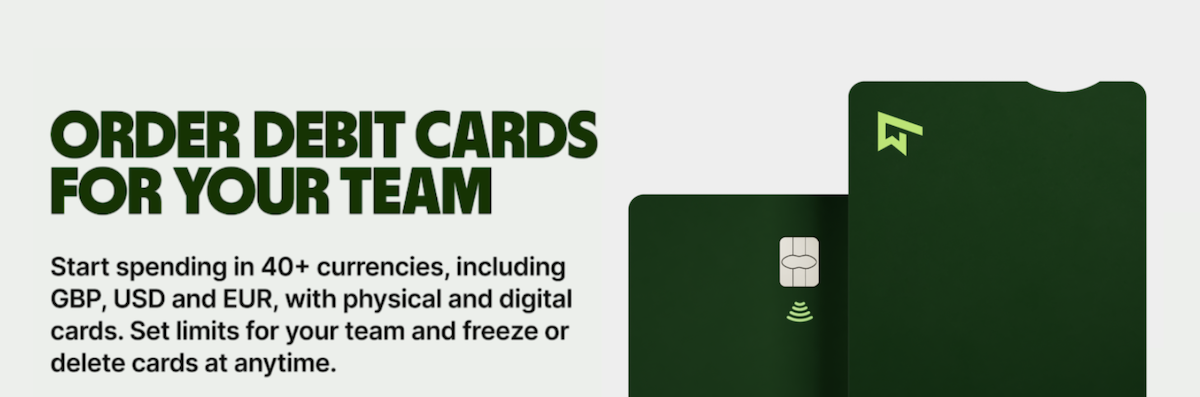
With the Wise Multi-Currency debit card, you can reduce costs on international spending. You'll get the mid-market exchange rate when you pay bills or expenses in foreign currencies. You can pay online or in-store in 40+ currencies and 160+ countries. The first card on your Wise Business account is included in your one-time account setup fee. After that, cards for team members cost just 5 USD each.
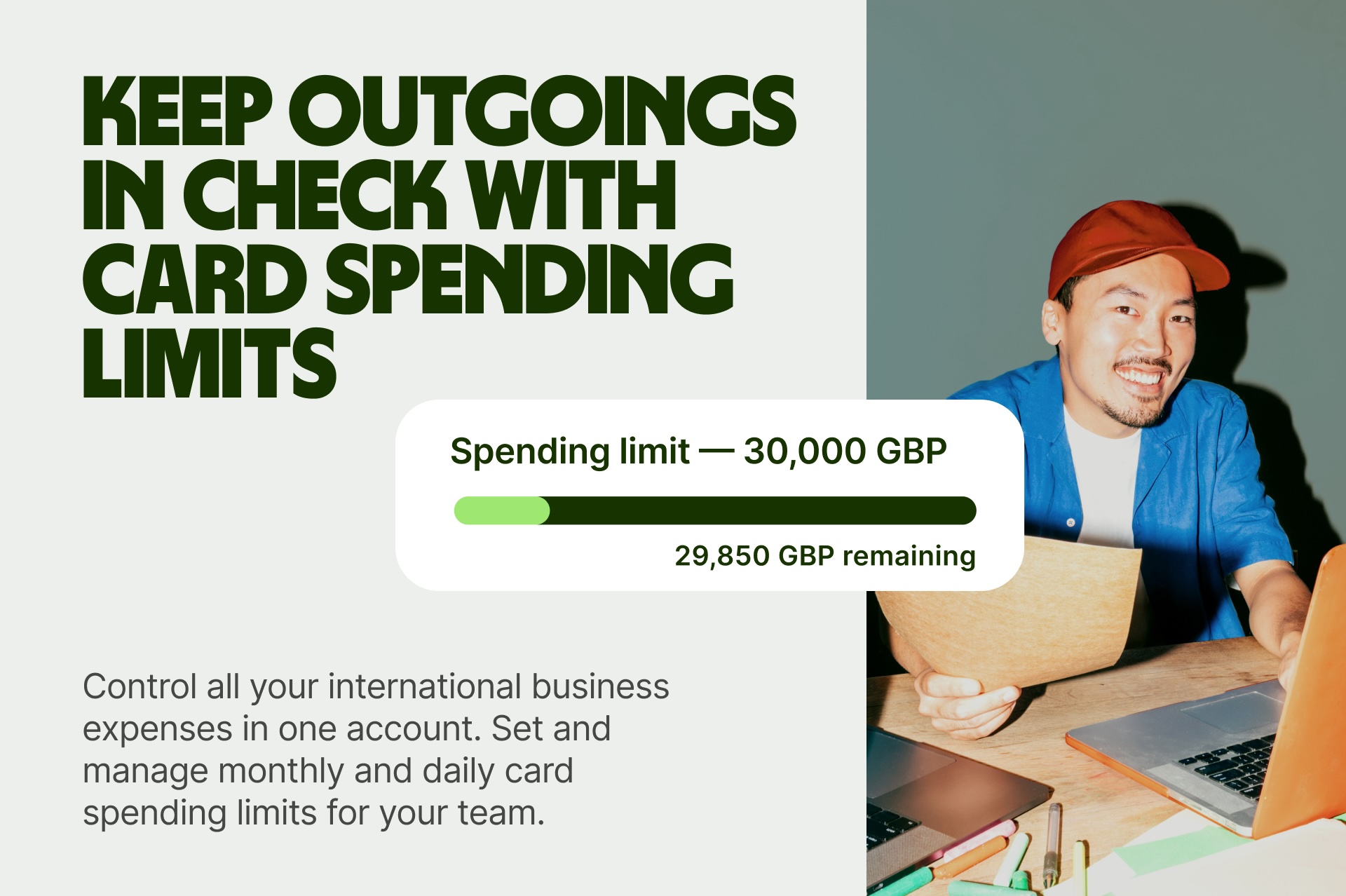
Invite your employees to order Wise Multi-Currency Cards and pre-set their spending limits. Add them to your Business account with controlled access and track their spending in one place. See real-time spending anytime, anywhere.
| Some key benefits of Wise Business include: |
|---|
|

| Editor & Business Expert: | ||
|---|---|---|
 | Panna is an expert in US business finance, covering topics from invoicing to international expansion. | You can read more useful business articles on her author profile. |
| Author: | ||
|---|---|---|
 | Kevin D. Flynn is a retired financial professional, business coach, and financial writer. He lives in Leominster, Massachusetts with his wife Evelyn, two cats, and ten wonderful grandchildren. | When he’s not working, you’ll find him at the golf course or on his back porch reading classic sci-fi novels. |
Sources:
*Please see terms of use and product availability for your region or visit Wise fees and pricing for the most up to date pricing and fee information.
This publication is provided for general information purposes and does not constitute legal, tax or other professional advice from Wise Payments Limited or its subsidiaries and its affiliates, and it is not intended as a substitute for obtaining advice from a financial advisor or any other professional.
We make no representations, warranties or guarantees, whether expressed or implied, that the content in the publication is accurate, complete or up to date.

Learn how to use Square as a US sole proprietor. Discover how to accept payments, set up your account without an LLC, and manage your taxes.

Need a business loan with no credit check? Quick funding explained. Learn costs, risks, and alternatives to secure capital for your small business.

Ready to use Stripe as a sole proprietor in the US? Learn how to set up your account, handle taxes, and accept payments without an LLC.

Discover which US banks offer Zelle for business accounts. Learn about the benefits and understand its limitations for your growing business.

Discover the pros, cons, and functionality of the AvidXchange Supplier Hub. Learn if it fits your business needs and budget.

Find the best 3PL for small business to optimize your fulfillment. Compare top providers, features, and pricing.











