How to Expand Your Business Internationally: A US Guide
Discover actionable steps for US businesses to expand internationally; research markets, plan effectively, and manage finances to achieve global growth.


The 11 Incoterms® rules are a set of rules maintained by the International Chamber of Commerce. They specify who is responsible for what during international trade – whether the buyer or seller is liable for the costs and risks of each part of the process.
One of the 11 rules is EXW. This guide will explain what it means, and when you should use it.
International transfer costs can really cut into the profit margins of a business.
That's why 7 million users are already using Wise, the new and clever way to send and manage money internationally.
Wise lets you send money for a low transparent fee using the mid-market rate, through their own network of local bank accounts. Money never crosses borders, fees stay low and you save cash.
See if you could save with Wise
EXW is short for “Ex Works”, and it’s the Incoterms® rule that places most responsibility on the buyer.
The seller has to make the goods available at the place of delivery. That place is commonly the seller’s own warehouse or factory – i.e. the “works” of the title.
The buyer is then responsible for the whole process of getting the goods to their destination, including:
That encompasses both costs and risks – they’re all the buyer’s responsibility. Even if the seller does load the goods at the place of delivery, the risk is still with the buyer at this point.
Does the seller have any responsibilities, then? Once the goods have been collected, not really, no. But before that, they will need to ensure they’re properly packaged and readily available for collection.
Realistically, the seller will need to be somewhat involved in the process. They’ll need to ensure that the buyer is adequately informed about the goods, so that they can handle customs clearance and other formalities.¹ ² ³
The ICC updates the Incoterms® rules every decade or so. The most recent updates were in 2020 and 2010.
When drawing up a contract, you can agree to use whichever set of Incoterms® rules you like, so long as it’s specified. So if neither party has had time to read up on the 2020 rules, it’s perfectly legitimate to stick with 2010.
There weren’t any major updates to the EXW rule in 2020.
You might see references to Incoterms® rules 2015, 2016, 2017, and so on. You shouldn’t! There weren’t any sets of rules published in those years. Most likely, any agreements drawn up then would have used the 2010 rules.⁴ ⁵
There’s sometimes confusion between EXW and FCA, which stands for “Free Carrier.”
The key difference is that under FCA, the seller is also responsible for handling export clearance. That’s often an advantage, as the seller is usually in a better position than the buyer to provide all the necessary information at that stage.
And there’s another difference. Under FCA, the named place can be the seller’s premises, like with EXW – but if so, loading is the seller’s responsibility, not the buyer’s.
The alternative use of FCA is specifying the named place as a later point in the journey – like the terminal from which the goods will travel on. In that situation, the seller is responsible for unloading the goods there, and the buyer is responsible for loading.⁶ ⁷
FOB – “Free On Board” – is one of the four Incoterms® rules that can only be used for goods traveling by sea or waterway.
It’s similar to FCA, although with FOB the seller has responsibility up to and including getting the goods loaded onto the vessel.
FOB and EXW are considerably different, then. With EXW, the seller hands over responsibility at their own premises, whereas with FOB they have to get the goods all the way onto the vessel at a port.⁸ ⁹
On paper, EXW might look like the simplest Incoterms® rule of all, because the seller is responsible for pretty much everything.
But of course there’s a reason why so many of the other rules take great care to specify whether the buyer or the seller is responsible for each step.
For instance, it’s usually the seller – not the buyer – who is best placed to handle export clearances. The same is often true for arranging transportation in the seller’s own country.
When that’s the case, it’s often worth considering FCA instead of EXW. It might look more complicated, but in practice it could prove easier.
It’s worth taking a look at the full list of Incoterms® rules, so you have the complete picture.
Learn More:
DDU Incoterms®: What You Need to Know
Sources:
All sources last checked 23 June 2020
*Please see terms of use and product availability for your region or visit Wise fees and pricing for the most up to date pricing and fee information.
This publication is provided for general information purposes and does not constitute legal, tax or other professional advice from Wise Payments Limited or its subsidiaries and its affiliates, and it is not intended as a substitute for obtaining advice from a financial advisor or any other professional.
We make no representations, warranties or guarantees, whether expressed or implied, that the content in the publication is accurate, complete or up to date.
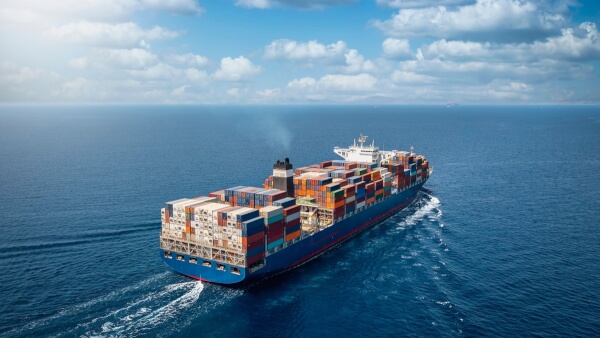
Discover actionable steps for US businesses to expand internationally; research markets, plan effectively, and manage finances to achieve global growth.

Looking for a Philippines Business Visa? Our guide for US citizens covers requirements, fees, and processing steps for a smooth trip.

Learn how to register a US business in Australia. Navigate legal requirements, foreign company registration with ASIC, and the Australian tax system.
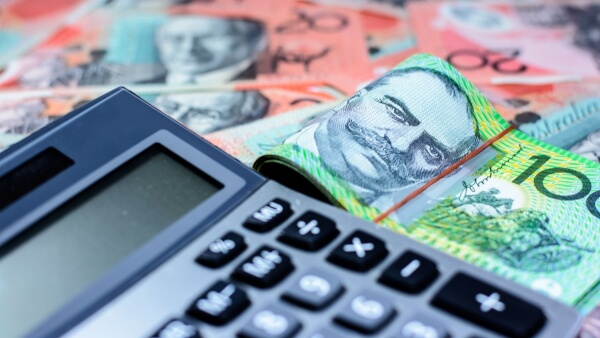
Understand Australia's corporate tax rates for 2025-26: a base rate of 25% for small businesses and a standard 30% for all other entities.
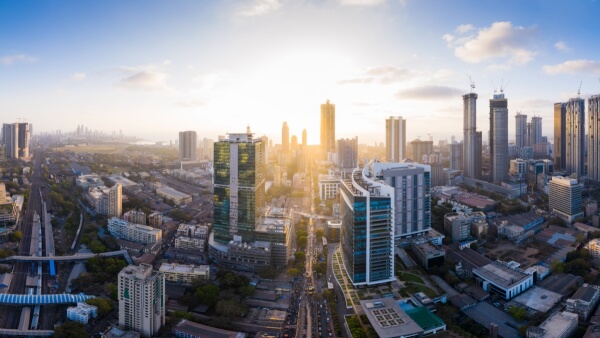
Learn how to register a business in India from the US. Our guide details steps, documents, and key financial considerations for aspiring entrepreneurs.

Learn how to get your India business visa. A step-by-step guide for US professionals on requirements, applications, and costs.











