
Buying property in Germany as a foreigner: US guide
Thinking about buying property in Germany? Learn all about step-by-step processes, average prices, taxes, and legal requirements in our guide.



Buying property in Spain is popular with Americans who are looking for a vacation home, retirement destination, or investment opportunity. Spain offers a nice Mediterranean lifestyle and affordable real estate compared to many US markets, so the demand isn't surprising.
But the process raises many big questions, such as whether or not you can get a mortgage as a non-resident, which legal requirements apply, and how taxes work.
Overall, Americans can buy property in Spain without any major restrictions, but you'll need to understand the steps, costs, and regulations that apply to foreign buyers.
Here's everything you need to know.
We'll also introduce Wise — your international money transfer alternative. Use Wise to send stress-free transfers to over 140 countries - all at the standard mid-market exchange rate.
Spain's real estate market is strong heading into 2026.
Investment reached 18.4 billion EUR in 2025, up 31% from the previous year, with forecasts predicting growth between 5% and 10% in 2026.¹ Rental demand is also high, especially in coastal areas and major cities like Madrid and Barcelona.
However, housing supply hasn't kept pace with demand, keeping prices elevated in popular markets.
Despite the strong real estate market, whether buying property in Spain makes sense ultimately depends on your personal situation and goals.
You should think about how often you'll use the property, your budget for ongoing costs like taxes and maintenance, and where in Spain you want to buy, because prices can vary a lot by region.
Yes, US citizens can buy property in Spain without restrictions.
Spain welcomes foreign investment in real estate, and Americans have the same property ownership rights as Spanish citizens. You don't need residency or a visa to purchase property.
To buy property in Spain as an American, you need a NIE (Número de Identificación de Extranjero). This is a Spanish tax identification number required for all financial transactions, including real estate purchases. You can't complete a property purchase without it.
You should also hire an independent Spanish property lawyer.
This isn't technically a legal requirement, but the notary in Spain doesn't represent your interests or verify the property's status. They simply witness the transaction. You should hire a lawyer to conduct due diligence and make sure that the property has no hidden debts, liens, or legal issues.
Yes, you can buy property in Spain without being a resident.
Spain previously had a Golden Visa program that granted residency to foreigners who invested at least 500,000 EUR in real estate. This program ended in 2025**.** Buying property in Spain no longer gives you a pathway to residency, regardless of the purchase price.²
This means that if you want to live in Spain long-term, you'll need to apply for a visa separately from your property purchase.
Options include the Non-Lucrative Visa for retirees, work visas if you have Spanish employment, a Digital Nomad Visa, or another type of visa that allows you to live in Spain.
| 💡 As a property owner without residency, you can stay in Spain for up to 90 days within any 180 days under standard tourist rules for Americans.³ |
|---|
The purchase price is only part of what you'll pay when buying property in Spain.
You should also budget an additional 10-15% on top of the listing price to cover taxes, legal fees, and administrative costs.⁴
These expenses often catch American buyers off guard.
Your main costs include property transfer taxes (or VAT for new construction), notary fees, land registry fees, and legal fees.
Property prices in Spain look very different depending on the region you're considering.
Premium locations like Costa del Sol and Madrid come with high prices, but you can also find more affordable options in inland regions that are less popular with tourists.
Here's a snapshot of what you can expect to pay when looking for an apartment or house in Spain:
| City | Price per square foot (city centre) |
|---|---|
| Madrid⁵ | 745.37 EUR |
| Barcelona⁶ | 562.72 EUR |
| Palma de Mallorca⁷ | 560.96 EUR |
| Marbella⁸ | 574.85 EUR |
| Málaga⁹ | 410.79 EUR |
| Alicante¹⁰ | 316.04 EUR |
Madrid tops the list as one of Spain's most expensive real estate markets, and Barcelona and Palma de Mallorca follow closely.
Marbella, despite being a smaller coastal city, commands prices similar to Barcelona because of its luxury market and wealthy international community.
| Málaga and Alicante are more affordable options, but still popular with foreign buyers. |
|---|
You'll have to pay the following taxes and fees when purchasing property in Spain:
| Tax/fee | Rate¹¹ | Applies to |
|---|---|---|
| Property transfer tax (ITP) | 6-10% | Resale properties |
| VAT (IVA) | 10% | New construction only |
| Stamp duty (AJD) | 1.2-1.5% | New construction only |
| Legal fees and notary | 1-2% | All purchases |
Overall, you should budget 10-15% of the purchase price to cover all taxes and fees. In other words, on a 300,000 EUR property, expect to pay an additional 30,000-45,000 EUR beyond the listing price.
One of the biggest expenses is the property transfer tax, and how much you pay depends on whether you're buying new construction or resale property.
For resale properties (previously owned homes), you pay ITP (Impuesto de Transmisiones Patrimoniales). The rate varies by region. For example, Madrid charges 6%, and Valencia 10%.¹¹
For new construction that you buy from a developer, you pay VAT (IVA) at 10% instead of ITP. You also pay an additional stamp duty (AJD) of 1.2-1.5% depending on which region the property is located in. The stamp duty rate is set by each autonomous community.¹¹
You pay either ITP or VAT, never both.
The NIE (Número de Identificación de Extranjero) is your Spanish tax identification number, and you need it before you can buy property.
You can apply to get a NIE at a Spanish consulate in the US or at a police station in Spain. Alternatively, you can also authorize a Spanish lawyer to apply on your behalf using a power of attorney.
This is not a requirement, but it's convenient to have a Spanish bank account to pay for the property, transfer taxes, notary fees, and ongoing expenses like utilities and property taxes.
Most Spanish banks require you to open the account in person at a branch. You'll need to bring your passport, NIE, proof of address, and, in some cases, documentation showing the source of your funds.
Find a Spanish property lawyer—ideally, someone who works with foreign buyers and speaks English, so it's easy to communicate with them.
Your lawyer will conduct due diligence on the property, check for debts or liens, review contracts, and represent your interests throughout the transaction.
You'll also use a notary, but Spanish notaries don't protect buyers or verify the property's legal status. Your lawyer handles this critical work.
Once your NIE and bank account are set up, start looking for properties. You can use:
- Spanish real estate portals, such as Idealista
- Real estate agents
- Facebook groups
- Word-of-mouth
- Your lawyer
When you find a property you like, your lawyer requests a nota simple from the land registry. This document confirms who owns the property, whether any mortgages or liens exist, and if the property description matches what you're viewing.
Also, make sure to verify that all utilities work, community fees are paid, and the property has proper building permits.
When you're ready to move forward, make a formal offer. If the seller accepts, you'll usually sign a reservation contract and pay a small deposit to take the property off the market.
This gives you time to complete any remaining checks and finalize your financing, if needed.
The deposit contract is the binding agreement to purchase. You typically pay 10% of the purchase price at this stage.¹¹
In Spain, if you back out without a valid reason, you lose this deposit. If the seller backs out, they must return double the amount. Your lawyer should review this contract carefully before you sign and make sure that everything is in order.
It's possible to get a mortgage in Spain as a foreigner, but it's usually not an easy process.
Just like in the US, Spanish banks will require documents including proof of income, bank statements, tax returns, and a property valuation.
But they typically only lend 60-70% of the property value to non-residents, meaning you need 30-40% as a down payment plus additional funds for taxes and fees.¹¹
The final step happens at the notary's office.
You (or your lawyer with power of attorney) sign the escritura de compraventa (purchase deed). The notary reads the document, verifies identities, and witnesses the signatures.
You pay the remaining balance of the purchase price, and the seller hands over the keys.
Your lawyer handles registering the deed at the land registry, which officially records you as the owner. You must pay the property transfer tax (ITP) or VAT within 30 days of signing.⁴
Once registered and taxes are paid, the property is legally yours.
You'll need to transfer utilities, including electricity, water, gas, and internet, into your name.
If the property is part of a building or complex, it's also important to notify the community administrator that you're the new owner so they include you in all the necessary communications.
In addition to these logistics, make sure you understand your ongoing tax obligations as a property owner in Spain, including the annual property tax and rental income tax (if you're planning to rent out your property).

There are many different ways to find properties to buy in Spain, including:
- Online property portals, such as Idealista and Realtor.com
- Local real estate agents
- Your property lawyer
You can also simply walk around different neighborhoods. In smaller towns and coastal areas, properties are sometimes advertised with se vende (for sale) signs.
Facebook groups for expats in Spain and word-of-mouth connections can also be very helpful, especially if you don't want to spend extra money on your real estate agent's commission fees.
| 💡 Sellers are often interested in making a deal directly with the buyer – just make sure that your lawyer does all the necessary checks before you commit to anything. |
|---|
Your property's location is one of the biggest things to consider because it influences its purchase price, long-term value, and how much you're going to enjoy living in it.
It's also important to think about:
- Rental regulations: Some regions have banned or severely restricted short-term vacation rentals, affecting potential income
- Community fees: Properties in complexes with pools, gardens, or security can charge a pretty high amount monthly for maintenance and HOA
- Tourist license availability: If you want to rent the property short-term, verify that you can obtain the required license in that municipality
- Resale potential: Popular areas with international buyers offer easier exits if you decide to sell later
- Building age and condition: Older properties may need expensive updates to plumbing, electrical, or structural systems
- Climate and maintenance: Beachfront properties face salt damage and usually require more upkeep than homes that aren't directly on the shore
During your property search process, spend time in the surrounding area at different times of day and week to understand what living there feels like. For example, noise levels are an important thing to check, especially if it's something you're sensitive to.
The Spanish capital is naturally one of the more expensive places to buy property, but as an investment, or if you plan to work in Spain, it can be a great option.
You’ll find great shopping, nightlife, cuisine, and culture, and as Madrid is one of the largest cities in Europe, there are also plenty of housing options to choose from.
The central district of Salamanca is popular with professionals, while Retiro suits family buyers. If you want the best of Madrid but also some peace, consider nearby Pozuelo, just a few miles from the city center but with luxury real estate and more space.
Barcelona is another fun place for expats to buy property in Spain, but another one with a relatively high price tag.
While housing costs may not be quite as high as Madrid, they’re still pretty eye-watering—shop around or consider locations slightly outside of the city center to make your budget go further.
Sarria and Tres Torres are good places to look for family accommodation, while Vila Olimpica will suit anyone looking to be in the heart of the action, with plenty of bars and nightlife to choose from.
Both a city and a province on the Costa Blanca, Alicante is a super popular destination with expats, particularly people who want to retire in the sun.
If you’re looking for a regional home, this is a great place to start, with an established expat community, great weather, and plenty to do.
Popular cities in the area include Benidorm and Rojales, while Alicante city itself also presents a good option with a wide range of housing.
Romantic Seville, said to be the birthplace of modern tapas, is popular both with tourists and expats moving to Spain.
It’s a small city, so you won’t be far from the center wherever you choose to buy a new home. The prices are somewhat lower than in places like Madrid and Barcelona, too.

Buying property in Spain as an American can be a great investment, and the process isn't complicated once you understand the steps that you need to follow and the costs involved.
However, remember that the listing price is only part of your total expense. Taxes and fees add 10-15% on top of the purchase price, and ongoing obligations like property taxes continue after you buy.⁴
It's important to plan for these costs upfront, but one cost that many American buyers overlook is currency exchange.
When you convert USD to EUR to purchase a property, banks add a markup on the exchange rate. This hidden cost can add thousands of dollars to your transaction.
For example, a 300,000 EUR property purchase could cost you an extra 3,000-5,000 EUR in exchange rate markup alone, depending on your bank's margin.
This is why it's important to research your options for international transfers before moving large amounts and try alternatives, such as Wise.
| With Wise, you can send up to 1,000,000 USD per wire transaction to 140+ countries, with the mid-market exchange rate and low, transparent fees. |
|---|
Get a Wise Account
in minutes 💰
Sources
Sources checked 03/23/2026
*Please see terms of use and product availability for your region or visit Wise fees and pricing for the most up to date pricing and fee information.
This publication is provided for general information purposes and does not constitute legal, tax or other professional advice from Wise Payments Limited or its subsidiaries and its affiliates, and it is not intended as a substitute for obtaining advice from a financial advisor or any other professional.
We make no representations, warranties or guarantees, whether expressed or implied, that the content in the publication is accurate, complete or up to date.
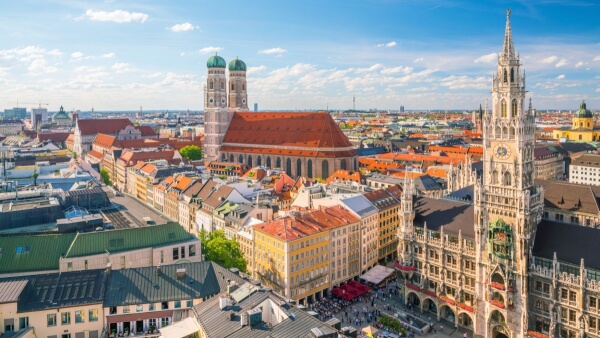
Thinking about buying property in Germany? Learn all about step-by-step processes, average prices, taxes, and legal requirements in our guide.

Learn all about different ways to get an overseas property mortgage as an American and gain unique insights to prepare yourself for the whole process.

Get a full overview of the best property management software systems for small landlords to easily track and manage their overseas property.
How to buy your first rental property overseas? Here's a detailed guide that can help you understand the challenges and steps for making an investment.

What are the best property management software systems for managing student housing? Take a look at our list and choose the most suitable option for you.

Are you thinking about making smart property investment decisions and wondering how rental yield is calculated? Have a look at our guide to find out.











