
Best Business Bank Accounts for US Landlords (2026)
Find the best business bank account for landlords. Compare rental property banking, focusing on low fees, international transfers, and financial management.


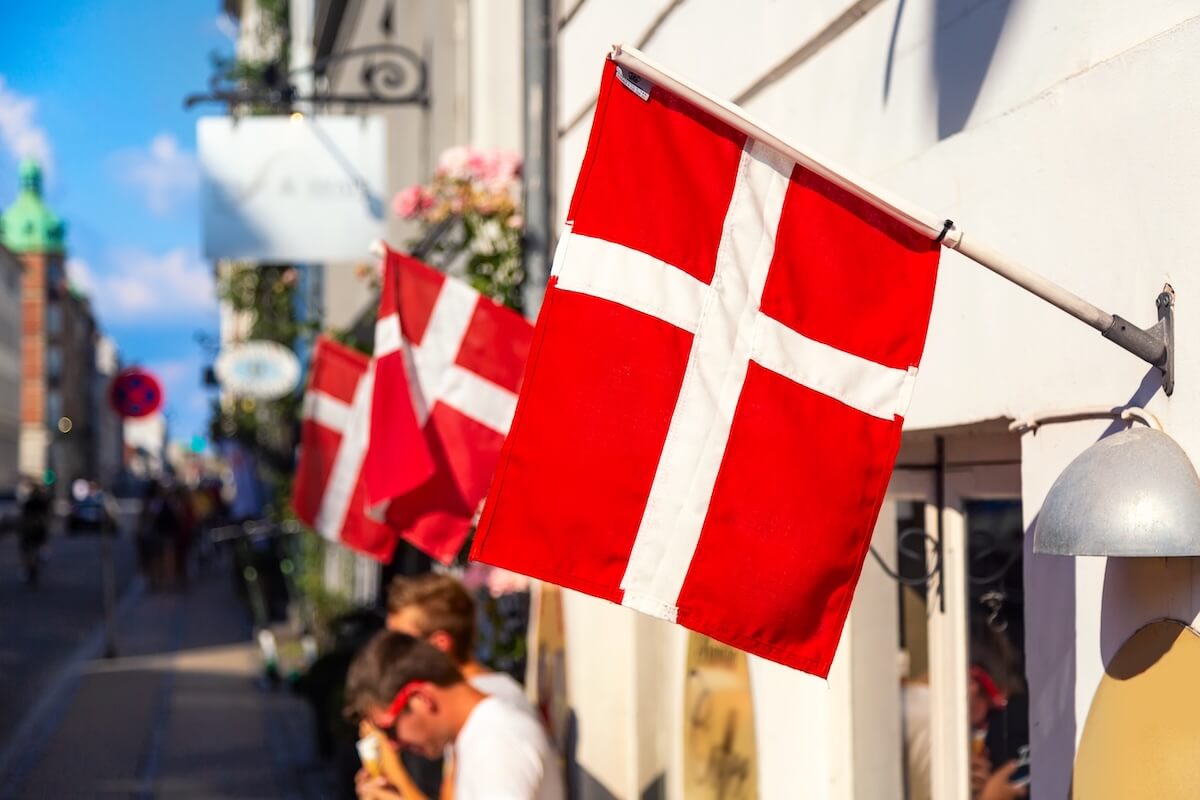
Denmark is an attractive expansion opportunity for US businesses, with access to the EU as well as a strong presence in diverse sectors such as life sciences, tech, research and development, manufacturing and food science. It’s also a great place to live, making it a popular choice for US business owners who intend to build their physical company presence overseas.
If you’re thinking of opening a Danish business you’ll need a local bank account. This guide walks through how to apply, what your options may be, and some places to look to find ways to manage your money in DKK, USD and more. We'll also discuss the Wise Business account. The global account that can help your company with all things cross-border.
Do you send and receive global payments?
Wise Trustpilot Score: 4.3 stars on 230,000+ reviews
No minimum balance requirement and no monthly fees
Integrates with QuickBooks, Xero, Sage, and more
If you’re running a US business with a new entity located in Denmark, you’ll need to open a bank account - called a NemKonto - as part of the process of establishing your business¹. A Nemkonto for business is essentially a basic bank account which can be used to receive payments from public bodies - tax refunds for example².
You can technically use a foreign business account as a Nemkonto but the process to do this tends to be more complicated. As Danish banks may be able to offer basic banking services to business owners with a quick turnaround time for assessment and opening, this is a more common approach.
So - why might you want to expand your US business to Denmark?
Denmark boasts favourable tax rules compared to OECD averages and good tax rates for expats moving to the country. The Danish government actively supports incoming business owners with free services from Invest in Denmark³ which can include advice and guidance, fact finding support, after care and connections to local service providers which may be able to help you launch your new enterprise more successfully in Denmark.
Denmark is also in the EU, which means that having a business there can make market access easier, including being part of the SEPA payment network to make payments across many countries in Europe cheaper and faster.
Denmark’s currency is the krone (DKK), so if you’ll be transacting in Denmark it makes sense to have a business account which can hold krone without being forced to convert every incoming payment back to dollars. This will make it more straightforward to send and receive local DKK payments and avoid unnecessary costs involved with currency conversion.
Another advantage of having a Danish business account is that it gives you an IBAN you can use to send and receive SEPA (Single Euro Payment Area) payments⁴.
SEPA consists of 36 SEPA countries and SEPA payments can be processed quickly, arriving in bank accounts in other SEPA countries no later than the following day - with some instant SEPA transfers also available. SEPA payments are also usually extremely cheap, or included for free as part of banking packages.
You may find that to open a Danish business bank account you need to have a local registered business in Denmark as well as a suite of supporting information and documents. Some banks may require you to live in Denmark or another EU country. Due to financial regulations, some banks can not offer a full suite of services to US persons or business customers, so do double check with the providers and products you’re interested in before you apply.
Once you’ve found an account you like, and checked your eligibility you’re likely to need to assemble a suite of documents which can include:
Because Denmark has strict checks to complete when offering accounts, you may also find that any foreign documents you use to support your application need translation or notarization. Check with your bank to ask which paperwork they like to see, and whether any documents should be translated if not originally in Danish.
You can often apply for a Danish bank account online - but this may not be a service that’s extended to you as a foreign business owner. Instead, banks may need you to attend a meeting in person to show your documents and discuss your requirements.
The good news is that because businesses in Denmark must have a Nemkonto linked to their Danish CVR number (Central Business Register number), banks are obliged to consider all applications for a basic business bank account⁵.
If you apply to a Danish bank for a basic payment account the application must be processed in a maximum of 10 days according to law. If you’re refused, you have recourse to challenge the rejection if you think it is unfair.
We’ve got a couple of Danish banks you might consider coming up in a moment - plus an alternative if you’re looking more for an international account which can support DKK, USD, EUR, GBP and many other currencies all in one place.
If you’re ready to open a Danish bank account for your business you can start your search with major local banks to see if they’re able to offer an account which suits your needs. Here are a couple to consider:
Danske Bank⁶ offers a full range of business accounts and services, through personal and relationship management to allow you to talk through your needs and get advice on which products may be best suited. There’s a dedicated number to call if you’re applying for a foreign registered company - but bear in mind that some Danske Bank products are not available to people living outside of Denmark or the EU⁷.
Nordea Bank⁸ has various different banking packages for entrepreneurs and small business owners, right through to enterprise level customers. Packages offer an account alongside added value support and advice, savings options and more. Monthly fees do apply, but as there are several different packages on the market you can pick the one which most closely meets your transaction requirements easily.
If you’re looking for an account to hold and exchange DKK as well as other currencies, you may find that an account from Wise Business is the flexible solution you need.
With a Wise Business account you can hold global currencies including DKK and USD, and receive 8+ currencies with your own account information. You can also send money to 140+ countries with the mid-market rate and low fees, and get debit and expense cards for you and your team.
Best of all, Wise uses the mid-market rate for currency conversion, with no fees added to the rate used to conversion. Instead, the fees you pay are split out for transparency, allowing you to easily check and compare your options whenever you need to send a payment, convert your balance or spend with your card.
The costs of transacting in a different country and currency can be a surprise. With a Danish business account you’ll need to review your specific account fee schedule carefully to make sure you’re clear on where costs may lie, to allow you to plan and budget effectively. Here are a few common costs to watch out for.
You may find your Danish bank has an account set up fee, as well as ongoing costs for your banking package.
With Danske Bank you’ll pay a set up charge of 1,500 DKK to 3,000 DKK, and then monthly fees of 139 DKK to 299 DKK depending on the package you need. Higher fee packages have more features and may offer perks like individual financial advice for your business⁹.
Alternative services like Wise Business can be a good pick if you’re looking for an account with no ongoing fees. Wise has a one time account fee to get full feature access, but you can then transact as you wish with no monthly charges to worry about.
When managing a business across different countries it’s inevitable that you’ll need to send payments overseas and convert currencies from time to time. This can become a costly transaction type, with fees built into the exchange rates used for conversion common. As these charges are a percentage, if you’re converting a high amount, the fee can rise significantly - an unwelcome surprise.
For a conversion service with transparent fees and mid-market rates, consider Wise Business instead.
As we’ve seen, Danish banks may have strict eligibility requirements and higher fees, particularly if you’re new to the market and unsure of how often you’ll need to transact. Banking packages can be helpful for businesses with high volume transaction requirements, but you may need to pay a monthly fee even for occasional use.
*Please see terms of use and product availability for your region or visit Wise fees and pricing for the most up to date pricing and fee information.
This publication is provided for general information purposes and does not constitute legal, tax or other professional advice from Wise Payments Limited or its subsidiaries and its affiliates, and it is not intended as a substitute for obtaining advice from a financial advisor or any other professional.
We make no representations, warranties or guarantees, whether expressed or implied, that the content in the publication is accurate, complete or up to date.

Find the best business bank account for landlords. Compare rental property banking, focusing on low fees, international transfers, and financial management.

Discover the pros and cons of PayPal Business and QuickBooks. Find out which solution fits your business needs best and boosts your financial management.

Uncover the essentials of QuickBooks Money! Learn about its features, pricing plans, and how it can streamline your finances.

Unlock the potential of your business with the right account. Dive into our comparison of Revolut vs. Paysera for seamless global trade solutions

QuickBooks or Sage? Dive into our detailed comparison to see which accounting software excels in features, usability, and value for your business

Discover how Finom's Business Account can simplify business finance for entrepreneurs. Explore features, benefits, and user experiences in our detailed review











