
Renting in Brussels: How to find your perfect home
Brussels is usually seen as the perfect location for expats wanting to explore Europe in their spare time. Sometimes called the “capital of Europe”, Belgium...


If you want to move to Belgium or are already living there, you might be wondering how to bring your family along. The family reunification visa in Belgium lets eligible relatives join you and live in the country legally.
Americans often have questions about who qualifies, what documents are required, and how long the process to reunite with your family takes. Are there many long and confusing steps?
Whether you're an American settling in Belgium or a Belgian resident wanting to sponsor American family members, this guide covers everything that you need to know.
We'll also introduce Wise — your international money transfer alternative. Use Wise to send stress-free transfers to over 140 countries - all at the standard mid-market exchange rate.
The family reunification visa allows close relatives of people living in Belgium to join them and obtain legal residence. It's a long-stay Type D visa. Once you qualify, you get the right to live, work, and access Belgian services like healthcare and education.
Americans can visit Belgium without a visa for up to 90 days, but that tourist status doesn't allow them to work, study, or access public benefits.¹
Over time, the family reunification visa in Belgium may give you a pathway to apply for permanent residency or transition to other legal statuses in Belgium.
To sponsor someone, you must already have the right to stay in Belgium for more than 3 months, hold a permanent resident status, or be a Belgian citizen.²
Also, the family reunification visa only applies to close family relationships. In other words, not all relatives are eligible. Only these ones qualify:²
- Spouse or registered partner: Your husband, wife, or registered partner (equivalent to marriage) qualifies, or your legal partner if you've been in a documented and stable relationship for at least 1 year
- Minor unmarried children: Your children under 18, including stepchildren or adopted children, can join you as long as they're not married
- Adult children with disabilities: Unmarried adult children who have a disability and can't live independently may qualify for reunification
- Parents of unaccompanied minors: If you're an unaccompanied minor who has been granted international protection in Belgium, you can sponsor your parents
For the family reunification visa to get approved, the sponsor usually needs to meet a few different conditions, such as having enough income, suitable housing, health insurance, and the ability to live together under the same roof.
Some groups, such as refugees, may be exempt from some of these requirements.

Generally speaking, the application process for the Belgian family reunification visa involves proving your relationship and showing that the sponsor can provide for the arriving family members.
Here's what you'll need:
The sponsor must be a Belgian citizen, have a permanent resident status, or hold a valid residence permit allowing them to stay in Belgium for more than 3 months.²
Tourist visas or short-term stays don't qualify for sponsoring family reunification.
You'll need official documents that prove your connection to the sponsor. This typically includes:
If you aren't officially married, you'll need evidence showing you've been in a stable, documented relationship for at least 1 year.²
DNA testing isn't mandatory for everyone, but Belgian authorities may request it when there isn't enough evidence of a family relationship.
For example, this often happens when birth certificates are missing or unclear.
The sponsor must demonstrate that they have a stable, regular, and adequate income to support the family members joining them. The exact amount required depends on your situation.
For example, sponsors using the fast-track family reunification process typically need to earn at least 5,000 EUR gross per month to support dependents.³
But refugees and asylum seekers often face much lower income requirements or may be fully exempt from this condition.
The sponsor must show proof of adequate housing in Belgium with enough space for everyone who will be living there. You can usually show a rental agreement or proof of homeownership to satisfy this requirement.
All family members applying for reunification must have health insurance that covers them in Belgium. They'll use this health insurance until they can access Belgium's healthcare system.
Applicants submit a visa application form through Belgium's visa portal, along with documents like a valid passport, copies of the sponsor's residence permit and passport, medical certificates, and proof of no criminal record.
You'll need to translate and legalize all of your English-language documents.
Once approved, the family reunification visa gives your relatives a legal status in Belgium and access to all of the different rights that come with it, including:
- Legal residence: Family members receive a residence permit (A-card) valid for 1 year, renewable annually, and after 5 years can usually apply for permanent residence (B-card)²
- Right to work: Family members can usually work legally in Belgium with no restrictions on changing employers
- Access to education: Both children and adults can enroll in public schools and universities in Belgium
- Healthcare and social benefits: Most family members will be able to access Belgium's healthcare system and social security programs
- Path to permanent residency: After 5 years of continuous legal residence, family members can usually apply for EU long-term resident status²
- Freedom to change status: If your circumstances or purpose of stay change, you can apply for most other residence statuses in Belgium without leaving the country.
Overall, if you want to build a stable, long-term life in Belgium together with your loved ones, the family reunification visa is a great option as long as you're able to meet all of the requirements.
The application process starts in the US, where you'll need to apply for your Type D visa. After you arrive in Belgium, you'll need to register at your local municipality to receive your residence permit.
Here's how the full process works:
Before you can apply, you need to create a user account on Belgium's official visa website at visaonweb.diplomatie.be.⁴
You can do this yourself, or your sponsor in Belgium or a third party helping you with your application can create it, too.
Log in to your account and fill out the visa application form online.
Use box 23 of the form to indicate that you're applying for family reunification and add any additional context to box 24.⁴
Once you've completed and validated the form, submit it through the portal.
You'll need the following documents for your Belgium family reunification visa application:
Start gathering these documents ahead of time, and make sure that all US-issued paperwork is legalized (apostilled) and translated into Dutch, French, or German by a certified translator.
You'll need to book an appointment at a Visa Application Centre (VAC) in the US. This will be an in-person appointment, so make sure to make all necessary travel arrangements.
On the day of your appointment, go to the Visa Application Centre with all original documents, printed copies, and your appointment confirmation.
The VAC staff will review your file and give you a checklist showing which documents you've submitted. If your file is incomplete, you can choose to submit later after gathering the missing documents.
At the appointment, you'll also pay the handling fee and service fee, have your photo taken, and provide fingerprints for biometric identification.
The Visa Application Centre forwards your application to the Belgian embassy or consulate for processing. Belgian immigration authorities have up to 9 months to make a decision, but the timeline often depends on whether your sponsor is a Belgian citizen or legal resident.²⁴
You'll be able to check the status of your application online.
Once your Type D visa is approved, travel to Belgium and register at the municipality (commune) of your place of residence within 8 days.⁴
The municipality will issue your residence permit (A-card), which is initially valid for 1 year. You’ll need to renew it annually.²
There are a few different costs associated with the family reunification process in Belgium.
The Type D long-stay visa application fee is 180 EUR per person. You must pay this fee upfront and include proof of payment with your application.⁵
Once you arrive in Belgium and apply for your residence permit at the municipality, you'll also pay an additional fee of 313 EUR for the residence permit itself.⁵
In addition to these official government fees, it's a smart idea to budget for document translations, health insurance coverage, and other indirect costs.
For example, if you don't live near a Visa Application Centre, you'll need to pay for travel and accommodation to attend your appointment in person. If you’re coming from another state, this can be costly.
It can vary depending on the sponsor's status in Belgium.
If the sponsor is a Belgian citizen, the decision must be made within 6 months of submitting the application. For sponsors who are third-country nationals with a residence permit in Belgium, the Immigration Office has up to 9 months to decide, with the possibility of extensions.⁴
Highly qualified workers (H card holders) and sponsors with long-term resident status from another EU country sometimes qualify for faster processing.
No, siblings aren't eligible for family reunification in Belgium. This visa is for immediate family members, including spouses or registered partners, minor unmarried children, adult children with disabilities, and, in very limited cases, parents of unaccompanied minors who have been granted international protection.
Belgium doesn't currently have a digital nomad visa, so there's no family reunification pathway for digital nomads. But if you're living in Belgium on another type of residence permit (such as a work visa) and meet the standard requirements, you can sponsor your family members using the regular family reunification process.
Yes, family members who receive a residence permit through family reunification can usually work legally in Belgium. There are no restrictions on the type of employment you can do, and you're free to change employers whenever you choose.

The family reunification visa in Belgium allows you to bring your loved ones together if you're already settled in the country or planning to relocate.
However, you'll usually need to meet the income and housing requirements to get approved.
When managing finances during your move across borders, remember that banks often add currency exchange markups on top of their fees, which can cost you a lot—especially when transferring larger amounts, such as your savings.
It pays off to investigate alternatives, such as Wise.
| Send money internationally with Wise to 140+ countries and 40+ currencies – all at the fair mid-market exchange rate with low, transparent fees. |
|---|
Sources
Sources checked 03/30/2026
*Please see terms of use and product availability for your region or visit Wise fees and pricing for the most up to date pricing and fee information.
This publication is provided for general information purposes and does not constitute legal, tax or other professional advice from Wise Payments Limited or its subsidiaries and its affiliates, and it is not intended as a substitute for obtaining advice from a financial advisor or any other professional.
We make no representations, warranties or guarantees, whether expressed or implied, that the content in the publication is accurate, complete or up to date.
Brussels is usually seen as the perfect location for expats wanting to explore Europe in their spare time. Sometimes called the “capital of Europe”, Belgium...

Brussels is the de facto capital of Europe, and with many European institutions and global businesses based there, it’s become a hub of expat activity. A...
Belgium is one of Europe’s foremost financial and political centres, drawing in expats from all over the world to work in Brussels and beyond. With large...
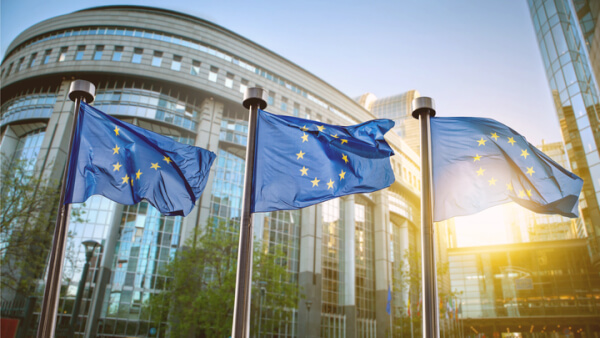
As the international headquarters of the EU and numerous international NGOs, Brussels is an attractive place for young professionals to work. Its...











