
Wise vs Western Union in Singapore 2026: fees, exchange rates and speed
Compare Wise vs Western Union in Singapore. See fees, exchange rates, limits, speed, cash pickup options and which may suit you.



Pricing claim based on comparative data for select airports and passes. Live pricing is subject to exchange rate fluctuations.
📱Find out how to get lounge access
This guide is for informational purposes only. If you're unsure whether to declare or pay tax on any item, seek professional advice. There’s also a helpful guide from the Singapore Customs Authorities***, available in multiple languages, which covers the declaration and taxation rules in full detail.***
If you’ve enjoyed hitting the local stores on a trip abroad, you’ll need to understand the Singapore duty-free allowance on items you bring back, as well as how GST on imported goods works. Import tax in Singapore can feel confusing: do you really need to pass through the Red Channel in Changi because you’ve topped up on your Korean skincare supplies, or after being gifted some new electronics or a designer bag abroad for example?
This guide explains GST relief, the necessary declarations and how to pay GST on imported goods in Singapore. You can also learn more about the Wise card, an easy way to stretch your dollars when paying in foreign currencies.
| Table of contents |
|---|

We’ll look at how to avoid GST on overseas purchases using GST reliefs in just a moment. But first, it helps to understand the importance of checking the rules before you bring goods back into the country.
GST is levied on all goods brought into Singapore, including items you buy when you’re abroad, or order online¹. Failing to report dutiable goods, and pay any relevant GST is illegal and can result in fines or even prosecution². However, there are some reliefs which may apply depending on the value of the items you’re bringing with you, and the nature of your travel.
Unfortunately, the customs rules for Singapore may not be universally known or understood. In fact, The Straits Times³ reports that following an exercise by the Customs Authorities at Singapore’s land, sea, and air checkpoints in late May 2025, nearly 200 travellers were found to have failed to declare imports of cash, goods and tobacco in random checks.
Don’t fall foul of the law - make sure you understand the rules which apply when you bring goods back with you after a trip abroad, to avoid running into problems with the authorities on arrival home.
We’ve touched on the fact that there are a couple of ways you might be able to avoid GST legally. Understanding the rules is the first part, to help you make the most of your next international spending free without breaking the law accidentally. Here’s what you need to know.
Countries often have duty free allowances which let you bring a certain amount of common goods into a country without needing to pay duty. In Singapore the key duty-free concession applies on the import of alcohol. This can mean that the overall cost of buying at an airport or when abroad is lower compared to buying liquor, wine or beer at home, for example⁴.
You can qualify for the Singapore duty free allowance on alcohol if you meet the following criteria⁴:
- You are 18 or older
- You are not arriving from Malaysia
- You have been outside of Singapore for 48 hours or more
- You are importing an allowable product for your personal use
Assuming you meet these eligibility rules, you can use the duty-free concession to import alcohol in one of the following ways:
| Option | Spirits⁴ | Wine⁴ | Beer⁴ |
|---|---|---|---|
| 1 | 1 litre | 1 litre | - |
| 2 | 1 litre | - | 1 litre |
| 3 | - | 1 litre | 1 litre |
| 4 | - | 2 litres | - |
| 5 | - | - | 2 litres |
You can buy alcohol for import at the airport or in the country you're travelling to. If you want to bring more than the allowable duty-free amount you can still do so, but you must pass through the Red Channel in the customs area of your border crossing back to Singapore, and pay any applicable duty. If you are importing more than 10 litres of liquor products, a Customs permit is needed.
There are no duty free concessions on other items, including cigarettes, so it is important to make sure you’re clear on the law before importing goods⁴.
GST is payable on all new items that are imported into Singapore. You can, however, claim the following reliefs⁵:
This means you generally do not need to pay GST on qualifying personal goods worth up to S$100 (if you were away for less than 48 hours) or S$500 (if you were away for 48 hours or more). As of 2025, the GST rate in Singapore is 9%, which will be applied to the value of your imported goods exceeding the relief threshold⁷. If you're bringing in goods worth more than this you will have the relief amount deducted from the value of the items when calculating your GST bill.
Example: If you buy an item worth 2,000 SGD on a week-long trip to the US, you’ll owe GST on arrival on 1,500 SGD (the value of the item minus the allowed GST relief based on your trip duration.)
If you receive a gift while abroad and do not know its value, the amount to pay will be calculated based on the equivalent item's value if bought in Singapore⁶.
This import relief is applicable to all travellers, including foreign visitors and returning residents. If you’re unsure, always declare your goods upon arrival in Singapore and seek assistance from the customs officers.
GST also applies when you import items purchased online. Previously, low-value goods worth S$400 or less imported by air or post could qualify for GST relief, but from 1 Jan 2023, GST was extended to these low-value imports as well. Imported goods above S$400 are also subject to GST at the prevailing rate¹. This is intended to level the playing field for local merchants by ensuring GST is paid on all items bought and brought into Singapore.
What happens if you have bought items which exceed your GST allowance or duty free allowance?
In these cases you must declare your imports - either by using an advance declaration on the Customs@SG web application, or by passing through the Red Channel which is clearly marked at border crossing points such as Changi airport⁸.
If you declare your imports in advance, you can pay any duties through the Customs@SG web application using major cards (Visa, Mastercard, American Express, UnionPay, or JCB), PayNow, or mobile wallets like Apple Pay and Google Pay¹¹. Alternatively, you may arrange payment via Interbank GIRO for automatic deduction on the due date¹⁰.
If you do not declare and pay GST on imported goods there are penalties. These vary depending on the items in question, their value and your previous offences. To give an example, here’s the penalty you can expect for failure to declare or making an incorrect declaration of dutiable goods other than cigarettes²:
There’s a minimum fine of 50 SGD - and the overall fine you may need to pay can rise to be pretty substantial. Make sure you settle any declaration and payment needed as soon as you arrive in Singapore - or even in advance - to avoid a hefty bill dampening your holiday mood.
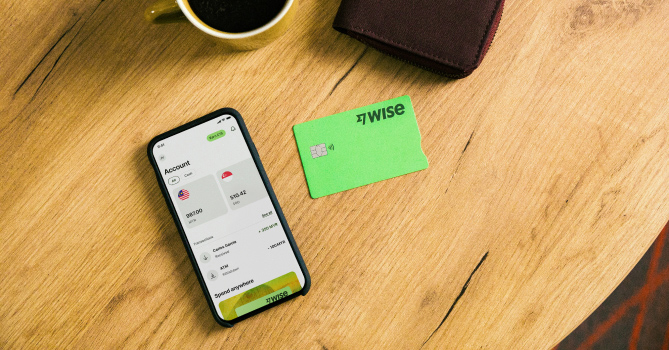
Planning your overseas shopping spree? Stretch your budget with every foreign currency transaction.
The Wise card lets you spend in 40+ currencies at the mid-market rate including MYR, JPY, CNY, and USD so you know you'll be getting a great deal in over 150+ countries. Simply create a free Wise account, order a card and top-up SGD to get started.
Virtual cards are free and can be added to your Google or Apple Pay wallet, while a physical Wise card can be ordered for a low fee of 8.50 SGD. Having a physical Wise card allows you to make chip and pin payments, as well as free ATM withdrawals up to the value of 100 SGD each month, before low fees start.
While abroad, you can choose to spend with directly in SGD and let auto-conversion do the trick, or convert to your desired currency with your Wise account. Either way, you’ll get the exchange rate you see on Google, with low, transparent fees from 0.26%.
Plus, you can activate Wise Interest to earn returns* on your SGD and other currencies, meaning your travel money could be growing right up until you spend it.
*Growth is not guaranteed. Capital at risk.
Sources last checked: 1 May 2026
*Please see terms of use and product availability for your region or visit Wise fees and pricing for the most up to date pricing and fee information.
This publication is provided for general information purposes and does not constitute legal, tax or other professional advice from Wise Payments Limited or its subsidiaries and its affiliates, and it is not intended as a substitute for obtaining advice from a financial advisor or any other professional.
We make no representations, warranties or guarantees, whether expressed or implied, that the content in the publication is accurate, complete or up to date.

Compare Wise vs Western Union in Singapore. See fees, exchange rates, limits, speed, cash pickup options and which may suit you.

Read our POSB Smart Buddy review covering the watch, card, fees, replacements, setup, features and alternatives for kids’ spending in Singapore.
Compare the best credit cards for travel booking in Singapore in 2026. Find the right card for flights, hotels, miles, cashback and overseas spending.

Is dividend income taxable in Singapore? Learn the tax rules for local, foreign and REIT dividends, plus what to report to IRAS.

Read our OCBC MyOwn Account review for parents. Compare fees, features and kids card options.

Looking for the best debit card for kids in Singapore? Compare features, fees and travel-friendly options from Wise, OCBC and POSB.











