
Wise brings Google Pay to the Philippines for cardholders!
Wise brings Google Pay to the Philippines for cardholders! Find out more about the partnership and how to add your Wise card to Google Pay.


Impersonation scams are on the rise in the Philippines. Fraudsters are increasingly pretending to be people or organisations you trust, such as banks, government agencies, delivery companies, or even friends and family.
These scams are becoming more convincing. Some scammers use spoofed phone numbers, fake social media profiles, or messaging apps like Facebook Messenger to appear legitimate. Knowing what to look out for can help you recognise a scam early and avoid losing money.
This guide explains how impersonation scams usually work, the warning signs to watch for, and what to do if something does not feel right.
Impersonation scams happen when someone pretends to be a trusted person or organisation to trick you into sending money or sharing sensitive information.
In the Philippines, scammers often impersonate organisations or people such as¹:
These scams often begin with unexpected contact. You may receive a message or call through SMS, email, or apps like Facebook Messenger or WhatsApp.
The message may look genuine and may even come from an account or number that appears familiar. The goal is to get you to act quickly, before you have time to verify the request.
Most impersonation scams follow a similar pattern.
You receive an unexpected message or call claiming there is an issue with your account, a delivery, or a payment. The scammer creates urgency and pressures you to act immediately.
You may then be asked to:
Once the scammer gets access or receives money, they disappear.
Recognising this pattern early can help you stop a scam before it progresses.
Some impersonation scams now involve manipulated audio or video. These can imitate real voices or faces, making calls or messages seem more convincing.
Because of this, appearance alone is no longer proof that a request is genuine. Even if something looks or sounds familiar, it is important to verify it through official channels.
You may be dealing with a scam if:
If something feels off, trust your instincts and verify it first.
Taking a few simple steps can help reduce your risk.
Scammers may ask you to receive or transfer money on their behalf. This is known as money muling.
Even if you think you’re helping someone, this is a serious offence.
In the Philippines, penalties may include:
Never allow others to use your account, and don’t transfer money for someone you don’t fully trust.
Knowing what Wise will never ask for can help you spot scams more quickly.
Wise will never:
If a message claims to be from Wise and includes any of the above, it is likely a scam.
Wise uses several measures to help customers stay safe and verify genuine communications.
Wise uses verification steps, such as secure communication codes, to help you confirm when you are communicating with us.
Wise has anti-fraud teams who monitor scam trends and work to protect customers.
Wise’s customer support teams are available 24/7 via phone, email, or live chat. You can reach out through official Wise channels to verify a request or report a concern.
If you receive a suspicious call or message, take these steps:
If you believe a scam has occurred, you may also consider reporting it to local authorities. Reporting scams can help prevent others from being affected.
In the Philippines, you can:
If you think you may have been targeted or affected, follow Wise’s official guidance:
Wise Pilipinas Inc. is regulated by the Bangko Sentral ng Pilipinas. You may visit the BSP website for more information about its regulatory framework and consumer protection policies.
Sources
*Please see terms of use and product availability for your region or visit Wise fees and pricing for the most up to date pricing and fee information.
This publication is provided for general information purposes and does not constitute legal, tax or other professional advice from Wise Payments Limited or its subsidiaries and its affiliates, and it is not intended as a substitute for obtaining advice from a financial advisor or any other professional.
We make no representations, warranties or guarantees, whether expressed or implied, that the content in the publication is accurate, complete or up to date.

Wise brings Google Pay to the Philippines for cardholders! Find out more about the partnership and how to add your Wise card to Google Pay.
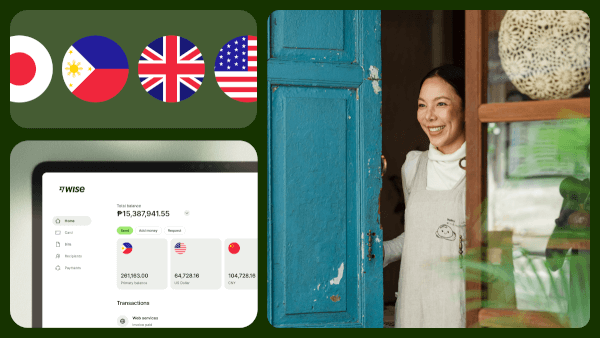
MSMEs in the Philippines can now go global with Wise Business, an account that simplifies international payments with low fees and mid-market exchange rates.
💳 Get your free digital card You can now fund your Wise account and Wise card transactions instantly via bank transfers or e-wallets and get your own...
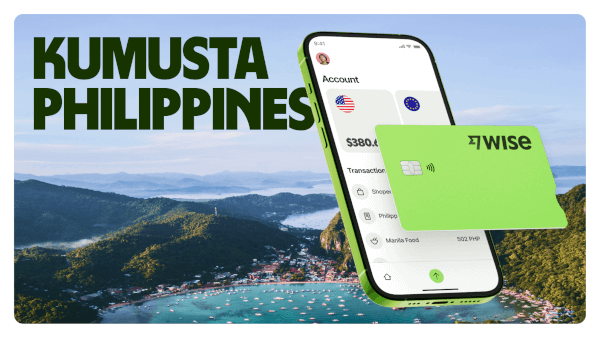
We’re excited to announce that Wise is launching in the Philippines with our Wise Account and Card - to give customers an easy and affordable way to receive...











