Guide on PayPal business account in New Zealand
Learn how to open a PayPal Business Account in New Zealand, and explore an in-depth guide to features, fees, and how it works for businesses.


For most businesses in New Zealand, taking credit cards is an essential part of getting paid. However, the actual process can be confusing for business owners and teams. There’s lots of moving parts, with the systems that support card payments involving multiple players and fees that aren’t always immediately obvious.
Getting a handle on how it all works is important. It will help you to make informed decisions about the methods you can use to accept card payments and reveal where there may be opportunities to reduce costs along the way.
In this blog, we’ll break down credit card processing in full detail, looking at key terms and steps involved, some of the common fees, and how you can find the right setup for your business.
| Table of Contents |
|---|


Credit card processing is a system that allows a business to take a credit card payment from a customer at an online checkout or physical card terminal and then receive the funds into its bank account. When a customer pays using a credit card, there are several behind-the-scenes mechanisms that check and approve the funds so the payment is settled quickly and securely.
Card payments account for 90% of all payments in New Zealand¹, so it’s a baseline expectation for pretty much every business, from cafes to consultants, to accept and process debit and credit cards online or in store. Catering to these customer preferences is important: it can increase sales, vastly improve checkout experiences, and help businesses get paid faster.
Under the hood of credit card processing lies a number of parties and technologies that connect the dots and make the whole thing work. These key terms will help you to understand who’s involved and how a card payment moves from a customer to your business.
Also, it’s important to note that credit card processing is an umbrella term** for handling both credit and debit card payments**, as they run through the same infrastructure.
All of these terms refer to what happens in the background during card processing. Before we cover all the steps, here’s a simple horizontal flow chart to illustrate the journey from start to finish:
| Customer → Merchant → Processor → Card network → Issuing bank → back again → Merchant gets paid. |
|---|
Now, let's look at each step in turn.
Before all the processing gets underway, it starts with the cardholder initiating the payment by either tapping or inserting their card at a terminal, or entering their details online and completing a purchase.
Next, your POS system or payment gateway gets the card info and transaction amount, and encrypts all the details, before sending them to your payment processor. This all happens instantly and securely to prevent fraud.
Your acquiring bank now carries the baton, passing off the transaction details to the relevant card network (Visa, Mastercard, etc.). The network acts as an intermediary here, routing the request to your customer’s issuing bank.
The issuing bank now does a few checks to see if the customer has enough funds or credit available to complete the transaction, while also verifying the card hasn’t recently been reported stolen and running its own fraud detection checks. Based on these checks, it then gives the transaction a green or red light. This all happens in milliseconds; it’s incredibly fast.
Now it’s time for a quick return journey. The approval or decline decision makes its way back through the card network to your acquiring bank, then to your payment gateway, and finally the POS system. If everything’s good, your customer sees “approved” on the screen and gets a receipt.
Everything up to this point has taken seconds (if that). The customer’s account is debited almost immediately, but there’s a little longer to wait for you to receive the funds. All the approved transactions are usually batched and sent for settlement at the end of each business day.
Finally, the issuing bank sends funds through the card network to your acquiring bank, which deposits the money minus any fees into a business account. This usually takes around 1 to 3 business days in New Zealand.

When a customer pays by card, the fee you’re charged is actually made up of several smaller costs, each for a different party involved in the transaction.
In practice, all these fees are often bundled together as a single percentage of between 1.5% to 3% per transaction. This is why people commonly refer to a “3% credit card fee.” The exact percentage you pay will vary on factors such as the card type and the pricing agreement with your provider.
As a business, you’ll be responsible for paying these fees directly, but you can pass the costs on to customers as a ‘surcharge’, given that it meets certain regulations in New Zealand.
It’s understandable that small businesses are wary of credit card payment processing fees that eat into profits. The New Zealand Commerce Commission states that merchants spend approximately $1 billion every year to accept card payments via Visa and Mastercard². That’s a huge chunk of money.
However, credit card processing fees exist because there are multiple parties that all play a part in making a transaction happen. Each player, from card networks to banks, takes a cut for their role in getting money from a customer’s account to yours without fuss, securely every time.
While it might seem frustrating, think of it as the price of offering customers the payment convenience they expect and need to buy something from you.
The merchant service fee (MSF) you pay is structured to reflect how these costs are shared across the payment card ecosystem.
As we mentioned, the exact amount you’ll pay for credit card processing services depends on a range of factors, some of which you have control over, and others that are linked to your business type and industry.
You can use the previous factors to inform your decision when choosing a credit card processing service. Obviously, headline rates are important, but try to look for a well-rounded offer covering the points below:
Once your credit card processing is complete and the funds are ready for settlement, a Wise Business account can help solve the logistical hurdle of where that money goes next. Businesses can get access to NZD account details to receive payouts from your payment processor or e-commerce platform.
Expanding a business globally opens up exciting opportunities, but also new challenges like receiving payments across borders. Hidden foreign transaction fees and hefty currency conversions involved with international payments can eat into your profits and time.
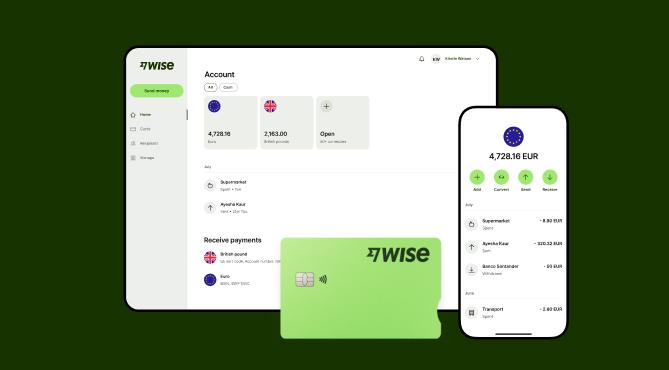
Wise Business serves as a cost-effective solution where you can receive money from around the world at the speed and price of local payments.
Transform the way you receive payments with Wise Business:
Sign up for the Wise Business account! 🚀
This general advice does not take into account your objectives, financial circumstances or needs and you should consider if it is appropriate for you.
1. Who bears the cost of credit card processing fees?
The merchant typically pays credit card processing fees, not the customer. Most businesses usually opt to absorb this expense, but you can choose to pass on the fees as a surcharge. However, the New Zealand Commerce Commission recently announced strict new rules about this practice, such as being fully transparent about the costs⁴.
2. What is the best credit card processing service for small businesses?
There’s no single, de-facto ‘best’ option for every small business. However, those processing under around $10,000 per month may benefit from the simple fee structure offered by flat-rate service providers, rather than interchange-plus, which is better suited to higher volumes. The right choice also depends on the industry you operate in and if you take payments mostly in store or online.
Sources:
*Please see terms of use and product availability for your region or visit Wise fees and pricing for the most up to date pricing and fee information.
This publication is provided for general information purposes and does not constitute legal, tax or other professional advice from Wise Payments Limited or its subsidiaries and its affiliates, and it is not intended as a substitute for obtaining advice from a financial advisor or any other professional.
We make no representations, warranties or guarantees, whether expressed or implied, that the content in the publication is accurate, complete or up to date.

Learn how to open a PayPal Business Account in New Zealand, and explore an in-depth guide to features, fees, and how it works for businesses.

Compare remote payroll software and explore features, pricing, and modern alternatives. Read more here!

Keen to kickstart your business idea the easy way? From obligations to costings, we’re covering how to register as a sole trader in New Zealand.

Learn how recurring payments work for Kiwi SMBs. Learn about fixed vs variable types, direct debit, setup steps, and recurring payments with Wise Business.

Guide to nz telegraphic transfers. learn about swift codes, bank fees, and how to send money overseas. Compare costs and explore alternatives.

Looking for a business debit card in New Zealand? Compare top options, features and fees, plus see how Wise Business excels at international card payments.