How Does Marketplace Payment Processing Work? A Quick Guide for UK Businesses
Learn how marketplace payment processing works for UK businesses. Our guide explains associated fees, how to optimise payouts, and more.


Cash flow is the lifeblood of any small business. Yet late payments are all too common, with 60% of small business owners in the UK admitting that late payments stop their businesses from growing1.
If you’re tired of delivering the product but seeing your payments drip in, we’ve put this guide together to help small business owners like you handle late payments effectively.
We’ve also touched on how to collect payments easily from both domestic and foreign customers using Wise Business, thanks to features like the ability to hold and manage currencies with an Advanced plan*.
Let’s dive in.

**Disclaimer: The UK Wise Business pricing structure is changing with effect from 26/11/2025 date. Receiving money, direct debits and getting paid features are not available with the Essential Plan which you can open for free. Pay a one-time set up fee of £50 to unlock Advanced features including account details to receive payments in 22+ currencies or 8+ currencies for non-swift payments. You’ll also get access to our invoice generating tool, payment links, QuickPay QR codes and the ability to set up direct debits all within one account. Please check our website for the latest pricing information.
| Topic | Tips and notes |
|---|---|
| 🌐 Foreign Transactions | Utilise the Wise Business Advanced plan to easily hold, manage, and receive payments in multiple foreign currencies from international clients. |
| ✅ Prevention & Automation | Automate your invoicing and payment reminders and offer various payment methods to help minimise administrative delays. |
| 🔍 Credit Control | Conduct thorough credit checks on new or high-risk customers to either adjust payment terms or request an upfront deposit. |
| 🎁 Encourage Promptness | Motivate early payment by offering incentives such as a small percentage discount or access to exclusive loyalty programmes. |
| 📩 Gentle Pursuit | Send a friendly, professional reminder via multiple channels (email, text) immediately after the due date, in case of a simple oversight. |
| 💷 Charge Late Interest | Legally, a business can charge statutory interest plus the Bank of England base rate on overdue business-to-business (B2B) payments in the UK. |
| 🤝 Negotiated Payments | If a customer is in genuine financial difficulty, agree on a manageable payment plan to secure partial payment and avoid bad debt. |
| 👨⚖️ Final Actions | As a last resort, issue a Letter Before Action (LBA) before escalating through the county court or utilising mediation/solicitor services. |
| 📊 Improve Cash Flow | Implement a clearly defined collection strategy and consider accounts receivable factoring to sell outstanding invoices for immediate cash. Recommended reading: Recommended reading: improving cash flow |
Your AR team should have a roadmap for the steps to take when a customer is overdue on payments.
It should share when to follow up, how often, which channel to use, and the tone to use at each stage.
Start by going through your current collection processes. What is working and what isn't.
Document the best approach and share this strategy so it is accessible to your collections team members.
Accounts receivable factoring lets you sell unpaid invoices in exchange for immediate cash. You sell your outstanding invoices to a factoring company for a slightly discounted fee.
The factoring company then collects payments directly from the customers, deducts its factoring fee, and pays the remaining balance to you.
One advantage of factoring is that you no longer worry about chasing payments. Accounts receivable factoring companies are responsible for chasing and collecting payments.
Check your customers' creditworthiness to understand how your customers are faring financially. It'll help you know customers who may pay late.
With this information, you can adjust the credit limits you allow for each client according to their creditworthiness.

When you're manually creating invoices for multiple customers, it's easy to make serious mistakes. Wrong customer details, inflated amounts, and wrong product descriptions - you name it.
The result? Endless disputes, back and forth, revision loops and an unavoidable cashflow crunch.
That’s not all. You lose precious time on repetitive tasks. It gets harder as your clients grow.
Automation can prevent these issues by letting you generate invoices faster and send them on time. Many of the best invoicing software in the market also let you track when a client opens and pays the invoice in real time.
This means you can speed up payments, improve your organisation's cash flow, and reduce your days sales outstanding (DSO) with minimal effort.
Most accounts receivable software send automated reminders at scheduled intervals, nudging your clients to pay your invoices without you lifting a finger.
By consistently following up with customers, you build stronger relationships with their accounts payable (AP) teams and stay on their radar.
And the real win shows when your staff become free from manual tracking and follow-ups, and can focus on higher-value work.
Some customers prefer paying by card. Others prefer direct debit or bank transfer. When you provide your customers with several options, they can easily choose the one that works best for them.
It also reduces the likelihood of delayed invoice payments that fewer payment options cause.
Apart from receiving cheques, you can also accept payments through local bank transfers, wire transfers, and credit cards. Some accounts receivable software also lets you send an invoice with an embedded payment link.
If you work with customers abroad, a payment platform like Wise Business makes cross-border payments easy for your customers.

Some customers have good credit payment habits, others don't. Check customers thoroughly before giving them credit or onboarding them.
You want to make all your customers happy - but not at the expense of your business’s survival.
Use credit checkers to assess your customers' creditworthiness, know their credit history, and identify those who normally pay on time. You'll figure out which client to offer credit, and when to adjust payment terms or ask for deposits from higher-risk customers.
Reward customers for paying outstanding invoices on time. Give them discounts, loyalty programs, or other exclusive benefits. Happy customers will be encouraged to pay earlier than the due date.
Customers are more likely to pay early if they know there's something in it for them. Money savings, gifts and other benefits can change their behaviour.
For your small business, that means faster payments and fewer late or missed invoices to worry about.
It also creates a win-win: your customers get rewarded for paying early, and you spend less time chasing payments or dealing with overdue accounts.
There are many ways you can offer your customers incentives, but some popular ideas are:
Asking for a deposit might feel a tad pushy, but it’s perfectly reasonable. You'll have some cash in hand to cover early project costs and it can work well if you have:

Your customers could be swamped with work and forget to pay invoices. Send a quick reminder to let them know the invoice is due.
When sending reminders to your customers, use a friendly, professional tone. And reach out to them through different channels, like emails, texts, and calls, to increase your chances of getting paid.
A Chaser report shows that businesses using a combination of SMS invoice payment reminders and email payment reminders increase their chances of getting paid within a week of the invoice due date by 56%2.
Late fees give your payment deadlines real consequences and encourage customers to take them seriously.
Small businesses are allowed to charge 8% statutory interest on unpaid invoices, plus the Bank of England base rate for business-to-business transactions3.
But before you charge late fees, be upfront about it. Nobody likes surprise bills. Let them know from the onset that you will charge them late payment fees, so there are no “I didn't know moments” later.
Setting this expectation shows customers that you have a transparent, professional process in place.
If a customer is experiencing financial difficulties and genuinely can’t pay the full invoice right away, offer a payment plan. Instead of hoping for a full payment that might never land, break the amount into smaller, manageable instalments.
This way, you'll lower the risks of bad debts. You can both agree on collecting payments in instalments over time rather than waiting till eternity for the full amount.
An added perk is that being flexible with payments can strengthen customer relationships and improve your cash flow.
If you’ve tried every reasonable option to get a customer to pay and nothing has worked, you might need to take legal action to recover the debt. Many SMEs avoid this option, and it's understandable, but sometimes, it's your last resort.
Start by sending a Letter Before Action (LBA) to your defaulting customers to formally let them know about the possible legal action you'll take if they don't pay by a specific deadline.
For most small business debts, you use the Small Claims Court to pursue these debts. This is a more straightforward and affordable legal route for small businesses. You can either file a claim online or by post4.
You can also choose mediation, where a professional helps you and your customer find a middle ground5. Compared to going to court, this is usually quicker, cheaper, and confidential.
Alternatively, you can also decide to work with a solicitor or a debt recovery service. The solicitor would send a Letter Before Action (LBA), negotiate a payment plan, and, if necessary, escalate to enforcement agencies on your behalf.

As a small business in the UK, you can legally charge your customers interest on overdue payments under the Late Payment of Commercial Debts (Interest) Act 19986.
This act allows businesses in the UK to charge interest on overdue invoices sent by one company to another for the supply of goods or services3.
Thirty days after you provided the services or delivered the goods (if this is later than the invoice date), or thirty days after the customer gets the invoice (whichever is later), the payment is classed as late or overdue7.
You can charge statutory interest, which is calculated as 8% plus the Bank of England base rate3.
You can also ask customers to compensate you with a fixed amount to cover the cost of chasing late payments. That said, remember to spell out these fees in the terms of your contract from the get-go.
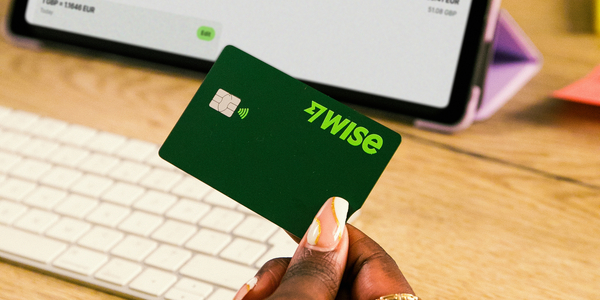
Wise Business offers a range of fantastic features that make it the ideal business account for small business owners in the UK dealing with late payments.
With an Advanced plan, not only can you hold and manage money in 40+ currencies to easily track your funds, but you can also generate professional invoices with payment links to make it simpler for your clients to pay you on time.
You can even integrate your Wise Business account with major accounting software like Xero and QuickBooks to automate routine tasks and streamline your bookkeeping, saving you valuable hours on financial admin.
It’s time to simplify your small business financial recordkeeping and limit the impact of late payments on your cash flow.
Be Smart, Get Wise.
**Disclaimer: The UK Wise Business pricing structure is changing with effect from 26/11/2025 date. Receiving money, direct debits and getting paid features are not available with the Essential Plan which you can open for free. Pay a one-time set up fee of £50 to unlock Advanced features including account details to receive payments in 22+ currencies or 8+ currencies for non-swift payments. You’ll also get access to our invoice generating tool, payment links, QuickPay QR codes and the ability to set up direct debits all within one account. Please check our website for the latest pricing information.
Here are some frequently asked questions:
Cash flow forecasting lets small businesses predict their inflow based on expected payments and outflows based on their expenses.
Businesses can also use this to predict cash shortages from late payments and to consider short-term financing options.
Having clear, upfront conversations with your customers about payment terms and deadlines helps them know what to expect and builds strong relationships. And you'll have fewer misunderstandings and disputes that could lead to payment delays.
Yes, there are accounts receivable and payment management software tools that integrate customer data, automate follow-ups, and share analytics on payment behaviours.
These tools can speed up collections, identify late-paying customers, and help your business recover payments more efficiently.
Sources:
Sources last checked on 9th December 2025
*Please see terms of use and product availability for your region or visit Wise fees and pricing for the most up to date pricing and fee information.
This publication is provided for general information purposes and does not constitute legal, tax or other professional advice from Wise Payments Limited or its subsidiaries and its affiliates, and it is not intended as a substitute for obtaining advice from a financial advisor or any other professional.
We make no representations, warranties or guarantees, whether expressed or implied, that the content in the publication is accurate, complete or up to date.

Learn how marketplace payment processing works for UK businesses. Our guide explains associated fees, how to optimise payouts, and more.

Learn how to improve your payment authorisation rate and reduce declined transactions. Our guide explains key factors and optimisation strategies to consider.

Learn how pre-authorisation payments work and how they affect business operations. Our guide explains holds, timings, managing customer expectations, and more.

Learn how multi-currency payment gateways work, how they benefit global businesses, and what factors to consider when choosing one in our guide.

Learn how to reduce chargebacks as an ecommerce business. Our guide offers practical steps covering the various aspects of chargeback prevention.

Learn how 3D Secure (3DS) authentication works for online payments. Our guide explains the process and how to balance fraud prevention with conversion rates.