
How to buy land in Italy as a foreigner: UK guide
Looking to buy land in Italy? Read our guide for average prices, the buying process and what foreign buyers from the UK need to know.


This guide is for informational purposes only and does not constitute tax advice. Get professional tax advice and guidance from your lawyer or tax advisor when dealing with property taxes.
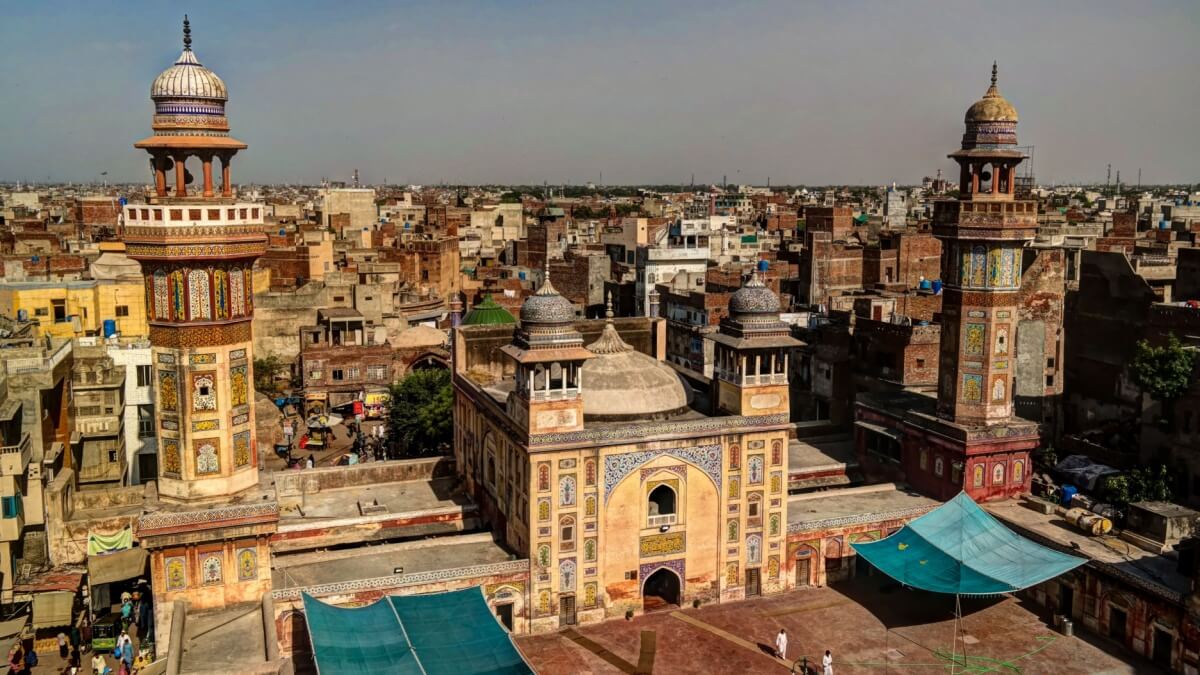
Thinking of buying property in Pakistan? You might be considering moving there permanently from the UK, or renting out a property you already own.
Whatever your plans, you need to get to grips with property taxes in Pakistan and how they apply to foreign nationals. We’re here to help, with a rundown of all the main Pakistan property taxes you need to know about, including current rates.
We’ll also show you a cost-effective way to pay property tax and other expenses in Pakistan from the money services provider Wise - the Wise account. It’s not a bank account but offers some similar features, and your money is safeguarded.
Over 14.8 million people worldwide use Wise to send, spend and convert money in pounds and 40+ more currencies – for low, transparent fees and no-markup exchange rates close to what you can see on Google. Plus, you’ll get dedicated support and volume discounts when sending large amounts.
➡️ Learn more about the Wise account
| Please see the terms of use and product availability for your region or visit Wise fees and pricing for the most up to date pricing and fee information. |
|---|
Yes, foreign nationals do pay tax in Pakistan - but it all depends on whether they are classed as resident or non-resident for tax purposes.
You’re considered a tax resident of Pakistan if:¹
If you’re classed as a resident, this means you have to pay income and other taxes on worldwide earnings and income.
If you spend less than 183 days in the country (for example, if you split your time between Pakistan and the UK, or another country) per year, you’re considered a non-resident.
This means you’ll only have to pay income tax on anything you earn in Pakistan. Other income and earnings will be taxed in the country you’re considered to be domiciled or a permanent resident in - for example, the UK.
Everyone who buys, sells or owns property in Pakistan will probably have to pay property tax.
However, the details of which ones you’ll have to pay - and exactly how much they are - vary considerably. The rules also vary between the different provinces of the country.
If you buy, sell, own or rent out property in Pakistan, you’ll need to get clued up on property taxes. There are a lot of them, and they apply to both Pakistani citizens and foreign nationals.
Here’s an overview, with more details on each below:
| Type | Tax | Tax rates |
|---|---|---|
| Buying a property |
|
|
| Selling a property |
|
|
| Annual property taxes |
|
|
| Rental income taxes |
|
|
Both buyer and seller pay what is known as Advance Tax when a property changes hands in Pakistan. It’s technically an advance income tax, and the rate varies depending on your tax filing status and the value of the property itself.
Here are the current rates for income tax filers:²
| Property value (PKR) | Advance Tax Rate |
|---|---|
| Up to 50 million | 1.5% |
| 50 million to 100 million | 2% |
| 100 million+ | 2.5% |
You also need to pay Stamp Duty when you buy property in Pakistan. This varies by province, but is often around 1% of the transaction value.³
Like when buying property in Pakistan, you also need to pay Advance Tax when you sell it. The rate is slightly different, but it still varies based on the value of the property you’re selling:²
| Property value (PKR) | Advance Tax Rate |
|---|---|
| Up to 50 million | 4.5% |
| 50 million to 100 million | 5% |
| 100 million+ | 5.5% |
Capital gains tax (CGT) is paid on the profit you make on a property - that is, the amount you sell it for, minus the amount you paid for it originally.
How much you pay depends on when you bought the property and how long you’ve owned it:²
There are also annual taxes every property owner in Pakistan must pay.
CVT is an annual tax calculated based on the fair market value of the property (according to figures from the Federal Board of Revenue or FBR).
The CVT rate is currently 2% of the market value of the property.²
UIPT is an annual property tax imposed by local governments on anyone who owns real estate in the country. The money is used to fund local public services.
The rate varies between provinces, so you’ll need to contact your local authority to find out more about this tax.
This tax treats every tax resident in Pakistan as having earned rental income of 5% of the market value of their property - whether they have or not. On this amount, there’s a Deemed Rental Income Tax to pay of 20%. It generally only applies to properties over 25 million PKR however.²
If you rent out your property in Pakistan, there are two main taxes you need to be aware of.
Withholding tax on rental income varies depending on your taxpayer status and your annual rental income. Rates range from 0% all the way up to 50%.²
There’s also income tax to pay on rental property income, with rates ranging from 0% to 45%.²
If you own or rent out property in Pakistan while still living in the UK, you might need a smart way to pay bills and taxes.
Wise offers a cost-effective solution, with a powerful multi-currency account that lets you send money to Pakistan for low, transparent fees and mid-market exchange rates.
Plus, you can get a Wise card to spend in Pakistani rupees whenever you’re next in Pakistan. This clever contactless card automatically converts currency at the mid-market exchange rate, only adding a tiny currency conversion fee, whenever you spend, making it easier to cover everyday expenses.
| Here’s an overview of the main benefits of using Wise: |
|---|
|
**Investments in funds are never guaranteed and your capital can be at risk. In the UK, Interest and Stocks are provided by Wise Assets — this is the trading name of Wise Assets UK Ltd, a subsidiary of Wise. Wise Assets UK Ltd is authorised as an investment firm and regulated by the Financial Conduct Authority (FCA). Our FCA number is 839689. We do not give investment advice, and you may be subject to pay tax. If you're not sure, seek qualified advice. You can find more information about the funds on our website.
Sources used:
Sources last checked 12-Nov-2025
*Please see terms of use and product availability for your region or visit Wise fees and pricing for the most up to date pricing and fee information.
This publication is provided for general information purposes and does not constitute legal, tax or other professional advice from Wise Payments Limited or its subsidiaries and its affiliates, and it is not intended as a substitute for obtaining advice from a financial advisor or any other professional.
We make no representations, warranties or guarantees, whether expressed or implied, that the content in the publication is accurate, complete or up to date.

Looking to buy land in Italy? Read our guide for average prices, the buying process and what foreign buyers from the UK need to know.

Read our practical guide to buying property in Las Vegas as a foreigner, including average prices, fees, taxes and mortgage info on buying property in the US.

UK buyer’s guide to buying property in Alaska state: Read on about real estate prices, taxes/fees, mortgages, and where to start your search.

UK buyer’s guide to buying property in Hawaii state: Read on about real estate prices, taxes/fees, mortgages, and where to start your search.

UK buyer’s guide to buying property in Arizona state: Read on about real estate prices, taxes/fees, mortgages, and where to start your search.

UK buyer’s guide to buying property in California state: Read on about real estate prices, taxes/fees, mortgages, and where to start your search.









