Money in the Netherlands: Banks, ATMs, cards & currency exchange
Read our helpful guide to money, banks and currency in the Netherlands, plus info on cards and currency exchange.


Planning a trip to the Netherlands for work, business or visiting family? Since Brexit, travel to EU countries now takes a little more preparation for both British travellers and UK-based expats.
Depending on your nationality and how long you’re staying, you might need to apply for a Netherlands Schengen visa before you go.
This comprehensive guide walks you through everything step by step, so you can get your paperwork sorted and focus on the best part of all: your trip itself.
Just keep in mind: there are a few fees along the way. With a Wise account, managing those costs is transparent and hassle-free.
You'll have access to 40+ currencies, so you can spend in 150+ countries worldwide (including, of course, the Netherlands).
Since Brexit, UK travellers no longer enjoy freedom of movement within the Schengen zone. However, British citizens can still visit Schengen countries visa-free for short stays, or up to 90 days within any rolling 180-day period.
This means you can make multiple trips within six months, as long as your total time spent in the zone doesn’t exceed around three months.1
If you’re a UK resident, but don’t have British or EU/EEA citizenship, there’s a chance that you’ll need a Schengen visa (officially called the Schengen C) to visit the Netherlands from the UK, whether your trip is for tourism, business purposes or catching up with family members.
A Netherlands Schengen visa not only permits you to travel to Holland, but also other countries within the Schengen zone - whether you’re hopping over to neighbouring Belgium or Germany, or going further afield.
You should apply for the Netherlands Schengen Visa if Holland is the country which you’re planning to spend the most time in.2
On October 12th, 2025, the EU put a new Entry/Exit System (EES) into place. When fully operational, non-EU travellers (including British passport holders) will have their fingerprints and facial image recorded when entering or leaving the Schengen area.3
As of 2026, nationals of visa-exempt countries (such as British citizens) will need to apply for ETIAS (European Travel Information and Authorization System) from 2026 for short stays under the visa waiver regime.
If you intend to stay in the Netherlands for more than 90 days, you will need a Type D (long-stay) visa or a residence permit - even if you are a British citizen or come from a country exempt from short-stay visas.
The UK’s Biometric Residence Permit (BRP) has now been replaced by a digital eVisa. However, holding a UK eVisa does not exempt you from visa requirements when travelling to the Netherlands.
Your eVisa simply confirms your right to live and work in the UK - it doesn’t serve as a travel document for the Schengen Area.4
So if your nationality normally requires a visa to enter Schengen countries, you’ll still need to apply for a Netherlands Schengen visa from the UK before you travel.
You *don’t *need a visa for the Netherlands if you are a citizen of a visa-exempt country such as the U.S., Canada, Singapore and New Zealand, or are a British citizen. You do need a visa if you’re a non-EU/EEA or Swiss citizen from a country that requires a visa to enter the Netherlands, such as India, South Africa, or China.
It’s important to keep in mind that even UK citizens will need a visa to the Netherlands if they intend to stay longer than 90 days for studying, working or an extended holiday.
In order to apply for a Netherlands Schengen visa, you’ll need to assemble a few important documents. These will show who you are, the purpose of your visit, and that you plan to return to the UK after your trip.5
Before you get started, check whether you need a short-stay (Schengen C) visa for visits up to 90 days, or a national (D) long-stay visa if you plan to stay longer, for example for study, work, or visiting family.
Also be sure to double check whether you, as a UK resident, can already enjoy visa-free travel for short stays.7
If you require a visa for travel, here is a full breakdown of options, including the Schengen visa:
If you’re applying for a Schengen visa to the Netherlands, you’ll need to start your application through the VFS Global portal, the official partner of the Dutch government for visa applications in the UK.8
You’ll be asked to create an account, fill out your application form online, and book an appointment at one of the VFS visa centres (London, Manchester, or Edinburgh).
Before you begin, make sure you have all your details ready — including your passport information, travel dates, itinerary, and accommodation details. Save your progress frequently and double-check your information before submitting, as the system may time out or not save incomplete applications.
Once you’ve completed your online application through the VFS Global portal, the next step is to book an appointment at one of the Netherlands Visa Application Centres in the UK - located in London, Manchester, or Edinburgh.
Appointments can fill up quickly, especially during busy holiday seasons, so it’s best to book as early as possible. You’ll receive a confirmation email with your appointment details and a checklist of documents to bring along.
If you’re applying as a family or group, everyone must attend their appointment in person unless exempt.
Getting to your visa appointment on time - that should be doable, right? Keep in mind, however, that not only will you have to be there (aim to arrive 15 minutes early), but also all of your important documents.
These include your passport, biometric photos, proof of accommodation, travel insurance, and proof of funds. Make sure to bring along both the original documents plus copies.
You will be asked to submit biometric data (fingerprints and photo) if not already collected in the last 5 years via the VIS (Visa Information System), a database which allows Schengen countries to exchange information on short-term visa holders.
Once you’ve submitted your application at the VFS Global centre, you can easily track the progress of your Netherlands visa online.
After your appointment, you’ll receive a receipt with a reference number — keep this safe, as you’ll need it to check your application status.
To track your visa:
You’ll also get an email notification when a decision has been made and your passport is ready to be returned or collected.
Processing times can vary: Most short-stay Schengen visas are decided within 15 calendar days, though this might take a tad bit longer during busy travel periods.
After all of the time and effort you’ve put into applying for a Schengen visa to the Netherlands, you probably want to make sure that your trip can actually take place. A small oversight or missing document could mean that you land in the (small but significant) 13.7 percent of applications that get rejected each year.10
It’s best to start your visa application as early as possible: you can apply up to six months before your planned trip. Applying early gives you plenty of time to make sure every document is current, correctly filled out, and translated if necessary.
You’ll also want to gather plenty of supporting information, like a detailed itinerary of where you’ll stay, return flight bookings, and recent bank statements or payslips to show you can cover your travel costs.
And while it’s not required, including a short cover letter outlining the purpose of your trip can make your application feel more complete and professional.
If you'd like extra support or simply are a bit stretched for time, there are several agencies that can help with document review, booking an appointment, and even travel insurance.
Here are some that offer help with a Netherlands Schengen visa appointment from the UK:
Once you've completed the visa application on the VHSGlobal website, the next step is to book your appointment.
After submitting your form online, you'll be directed to the VHSGlobal portal to choose a location, date, and time for your appointment.
Centres are available across major cities including London, Manchester, and Edinburgh, so you can choose the one most convenient for you.
During the appointment, you'll need to submit your documents, provide biometric data (a photo and fingerprints), and pay the visa fee if you haven't already.
Aim to book your appointment well in advance, especially during holiday periods or summer, when demand for Schengen visas spikes.
Currently anyone over 12 years of age will need to pay €90 to apply for a Schengen visa to Germany. For children aged six to 12, the cost is reduced to €45, while children under this age limit can apply free of charge.12
However, certain applicants might be eligible for a reduced fee of €35. They include spouses of EU citizens (granted they are travelling together), university students on a study trip, and children under 18 from certain countries.
Some applicants might qualify for a complete fee waiver. They include pupils or students taking a trip as part of their studies or researchers carrying out a research activity or participating in a conference.
You can pay this fee online with a debit or credit card during the application process, or you can cover it during the appointment itself. However, keep in mind that they are usually paid in euros, so you might be dealing with poor exchange rates.
Schengen visa fees are pretty straightforward, but if you're paying in euros from the UK, the hidden costs can add up fast. Some banks and credit card providers can tack on extra fees or offer poor exchange rates, meaning you pay more than necessary. That's where money services provider, Wise, can help.
With a Wise account, you get access to the mid-market exchange rate, and benefit from low, transparent fees*. Whether you're paying your Netherlands Schengen visa fee from the UK, or booking a bike tour through the streets of Amsterdam, Wise makes it easier to manage your money across borders.
With the Wise card, you will be able to spend in 40+ currencies with low, transparent fees* at the mid-market rate.
Sources used:
Sources last checked on date: 24-Oct-2025
*Please see terms of use and product availability for your region or visit Wise fees and pricing for the most up to date pricing and fee information.
This publication is provided for general information purposes and does not constitute legal, tax or other professional advice from Wise Payments Limited or its subsidiaries and its affiliates, and it is not intended as a substitute for obtaining advice from a financial advisor or any other professional.
We make no representations, warranties or guarantees, whether expressed or implied, that the content in the publication is accurate, complete or up to date.

Read our helpful guide to money, banks and currency in the Netherlands, plus info on cards and currency exchange.

Read our guide on the best travel card for Amsterdam, including card comparisons and travel tips.

The VAT refund system in the Netherlands allows tourists to claim back the tax paid on goods. This guide will show you how to shop tax free in Amsterdam.
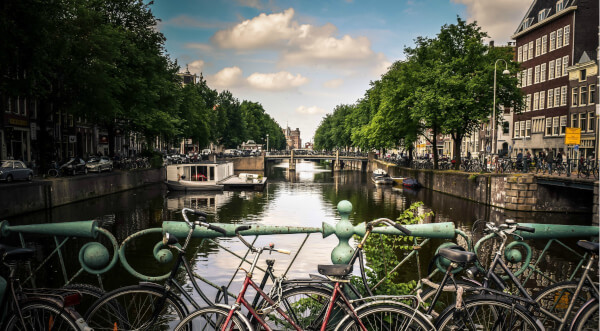
Travelling to the Netherlands and need cash? Learn about where to find ATMs, how much are the withdrawal charges, and some tips on how to save on ATM fees.
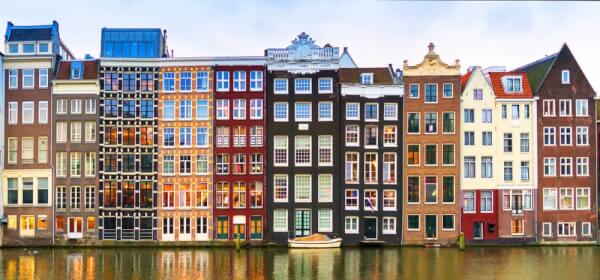
A handy guide to the Eurostar London to Amsterdam rail route, including timetable, journey times, prices and more.
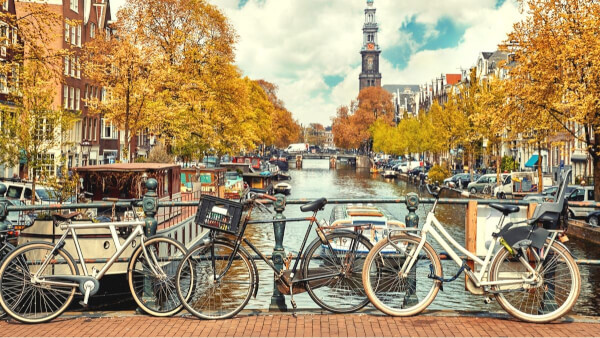
Travelling to Amsterdam: Find out how to spend and get around while you’re there.