
A list of the top banks in Bulgaria
A list of the top banks in Bulgaria, including DSK Bank, UniCredit Bulbank, United Bulgarian Bank (UBB) and Postbank Bulgaria.


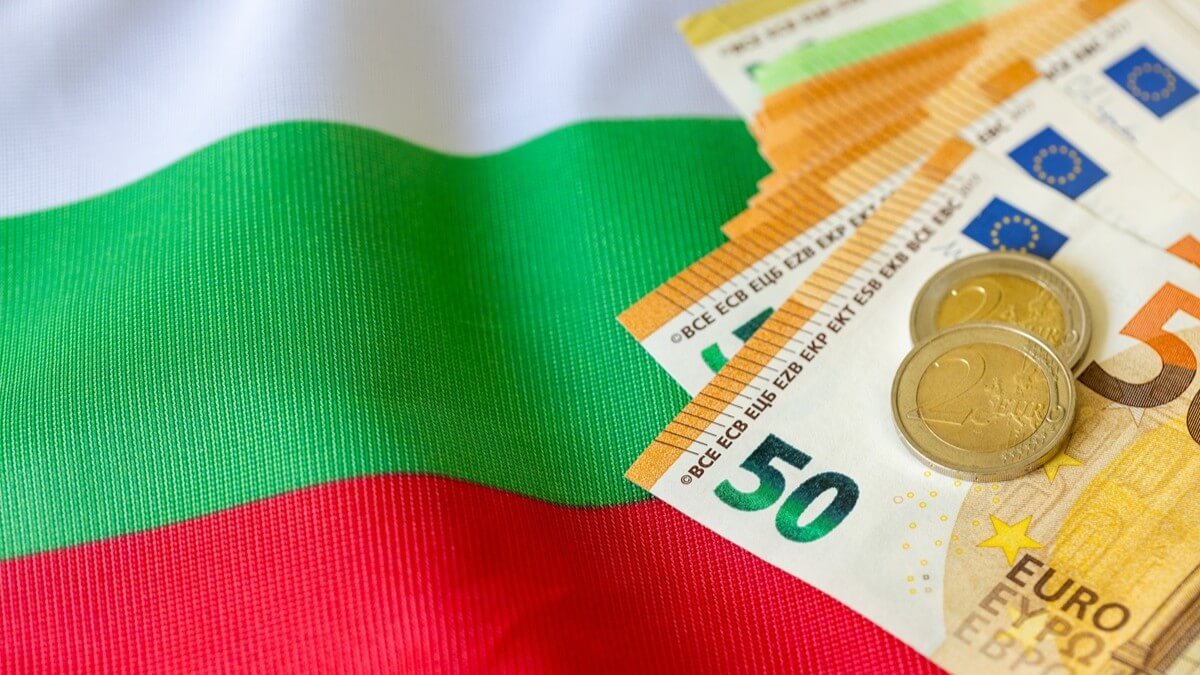
Travelling to Bulgaria from the UK? Whether you’re heading to Sofia, the Black Sea or the untouched highlands, you’ll find it useful to know a little about money, banks and currency in Bulgaria.
And if you plan on staying longer or moving here, it’s essential that you learn about currency exchange, ATMs and everyday spending.
Read on to find out everything about money and currency in Bulgaria. This includes tips on exchanging currency, finding ATMs and Bulgarian banks.
So, let’s get started.
The official currency in Bulgaria is the euro.
Up until 1st January 2026, when Bulgaria entered the eurozone, the primary currency was the Bulgarian lev (BGN).1
To find out how many euros you can get for your pounds, use our currency converter.
Here are some useful-to-know facts about the euro in Bulgaria:
If you’re visiting Bulgaria from the UK, you’ll need to find the best way to exchange your pounds for euros and make sure you’re getting a good deal.
To get the most EUR for your GBP, here are some tips for exchanging currency in Bulgaria:
To avoid hidden fees and unfavourable rates, make sure you get to know the mid-market exchange rate for pounds and euros.
By using an online currency converter, you’ll get an idea what your money is actually worth and be better prepared to spot typical tourist traps.
Explore live exchange rates for EUR.
Although this is the most convenient option, exchange desks at airports and in hotels are usually the most expensive way to exchange currency. Unless you have no other choice, it’s best to go elsewhere.
Withdrawing cash from an ATM is often one of the best-value options when travelling. As long as you choose to be charged in euros in Bulgaria, the exchange rate applied is usually close to the mid-market rate.
However, additional charges to watch out for include ATM operator fees and any foreign transaction fees your bank may apply. These are more common when using a UK-issued card that isn’t designed for overseas use.
If you’re travelling with foreign currency to exchange when you arrive in Bulgaria, make sure your banknotes are in good condition. Currency exchange desks may refuse to change damaged banknotes.
Credit and debit cards are widely used in Bulgarian towns and cities, in larger shops, hotels and restaurants. However, smaller restaurants and stores, or those in smaller towns, may not be able to process card transactions.
Where cards are accepted, you’ll find that Visa and Mastercard are most commonly accepted, with Amex taken primarily in tourist areas. Because Amex is the least widely used provider, it's always a good idea to carry an alternative form of payment if this is your main card.
The Wise card is a great option for spending while in Bulgaria, as it can be used everywhere that cards are accepted and has no foreign transaction fees. Even better, it automatically converts the currency at the mid-market rate whenever you spend, for just a small conversion fee*.
And if you’re thinking about opening an account in Bulgaria, the Wise account could be a convenient and money-saving option.
ATMs in Bulgaria can be found in cities and tourist areas, as well as most towns. However, if you’re headed off the beaten track, bear in mind that most villages won't be covered by the banking network. Check out the locators below to make sure you can find a convenient ATM during your stay:
Some ATMs in Bulgaria are free to use, while others might charge a fee. If you’re asked by an ATM whether you want to be charged in euros or pounds for the withdrawal, always select the local currency. Otherwise, the operator will apply their exchange rate which likely has an expensive mark-up built in.
In Cyrillic script Bulgarian, an ATM is spelled банкомат.
You’ll find a good range of banking brands in Bulgaria, many of which are regional banks which operate throughout the Balkan peninsula and beyond. It’s well worth checking if your home bank operates in Bulgaria, or has a partnership with another local banking brand. If they do, you might find you benefit from reduced or fee free cash withdrawals or other services.
Here are some of the biggest and most popular Bulgarian banks:
See a full list of banks in Bulgaria in the article below.
If you’re looking to open up a bank account in Bulgaria, some of the most expat-friendly banks to check out include:
A bank isn’t the only way to manage your money abroad. An alternative such as Wise could be easier and even cheaper to use.
Open a Wise multi-currency account and you can hold, send, spend, receive and convert money in 40+ currencies at once - and all online.
You can also send money back to the UK and worldwide at the mid-market exchange rates with low fees*.
The linked Wise card is ideal for international spending in Bulgaria and 150+ countries in currencies. It automatically converts your money to the local currency at the mid-market exchange rate, whenever you spend.
Plus, you can keep track of everything on the move using the handy Wise app.
Still have questions about money, banks and currency in Bulgaria? You might find the answer in our FAQs below.
You don’t have to buy euros before arriving in Bulgaria, but it’s smart to have a small amount of euros in cash on arrival.
You’ll be able to use your card in most tourist spots, but cash is still popular in Bulgaria, especially in remote areas.
Yes, cards are widely accepted in Bulgaria, but make sure you have cash for small purchases and when visiting rural areas.
The standard euro symbol (€) is used in Bulgaria and is placed after the amount. You may also encounter it written in Cyrillic as евро.
One euro is 1.95583 Bulgarian levs (BGN).4
Sources used:
1. European Central Bank - Bulgaria joins the euro area
2. European Central Bank - current banknotes
3. European Union - the euro internationally
4. European Central Bank - BGN to EUR exchange rate
Sources last checked on date: 12-Jan-2026
*Please see terms of use and product availability for your region or visit Wise fees and pricing for the most up to date pricing and fee information.
This publication is provided for general information purposes and does not constitute legal, tax or other professional advice from Wise Payments Limited or its subsidiaries and its affiliates, and it is not intended as a substitute for obtaining advice from a financial advisor or any other professional.
We make no representations, warranties or guarantees, whether expressed or implied, that the content in the publication is accurate, complete or up to date.

A list of the top banks in Bulgaria, including DSK Bank, UniCredit Bulbank, United Bulgarian Bank (UBB) and Postbank Bulgaria.

Billed as one of the most affordable destinations in Europe, it’s no wonder tourists are flocking to Bulgaria. Where else can you take a beach vacation and a...









