
LLCs for Non-US Residents (Complete Guide)
Learn how UK residents can form and manage a US LLC remotely. Our guide covers state costs, tax, banking, compliance and Wise Business payment support tips.


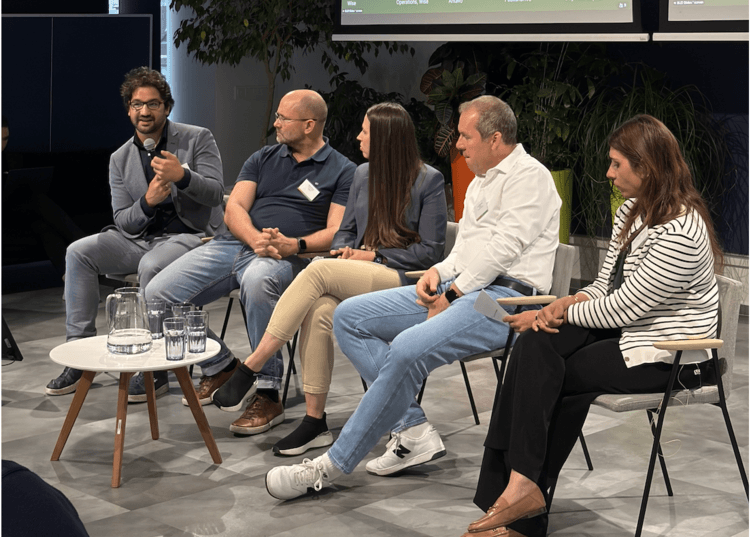
Hungary's startup ecosystem is on the rise but for many founders, the domestic venture capital market isn't keeping pace. Increasingly, Hungarian founders are looking abroad — including to the US and UK — for the capital and customers they need to scale.
But that doesn’t mean they’re turning their backs on Hungary. Instead, many are adopting a 'dual-base' model — incorporating overseas while keeping the majority of their workforce in Hungary.
But is it the right move for every Hungarian startup? And what are the costs of being dual-base?
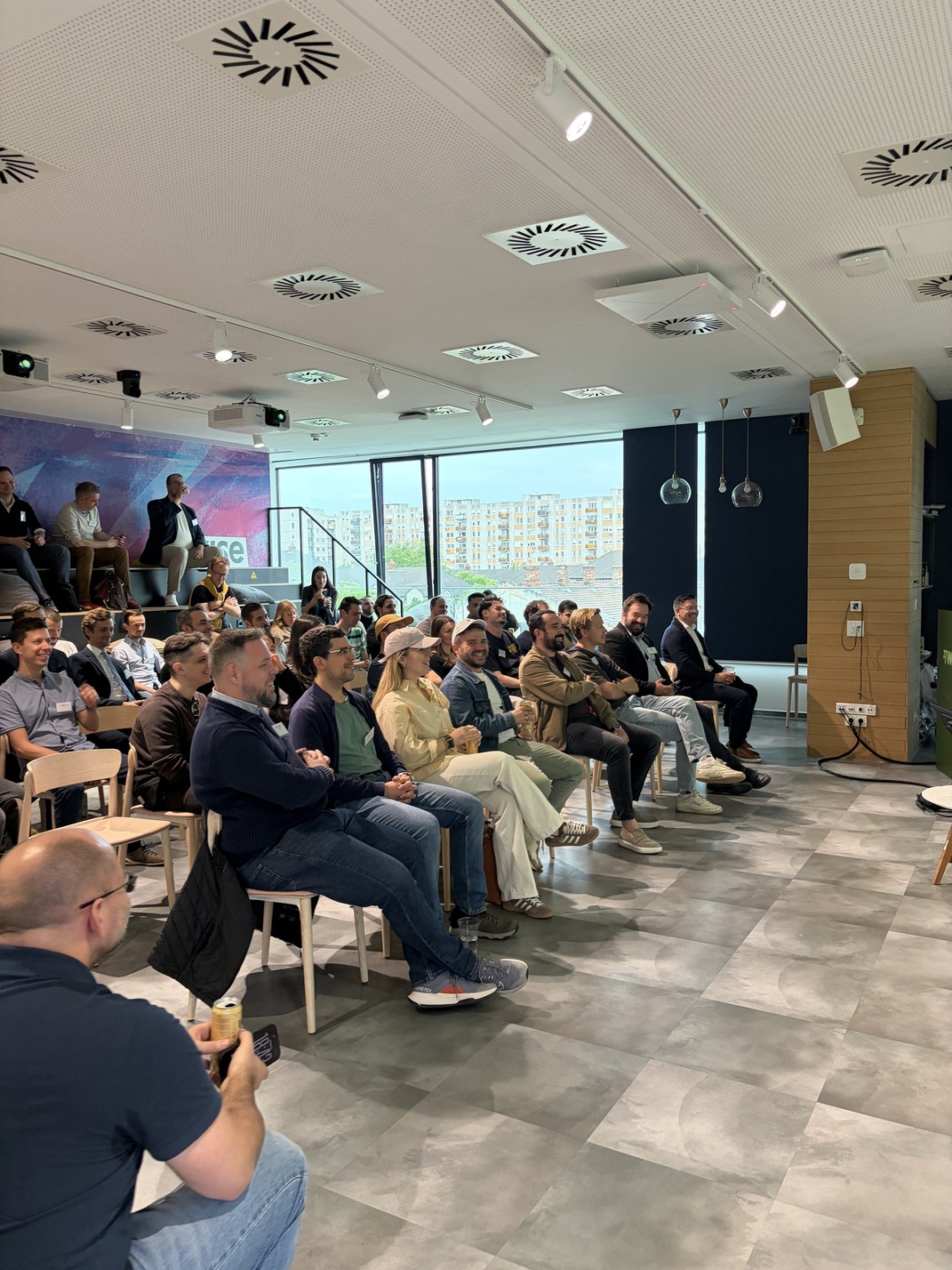
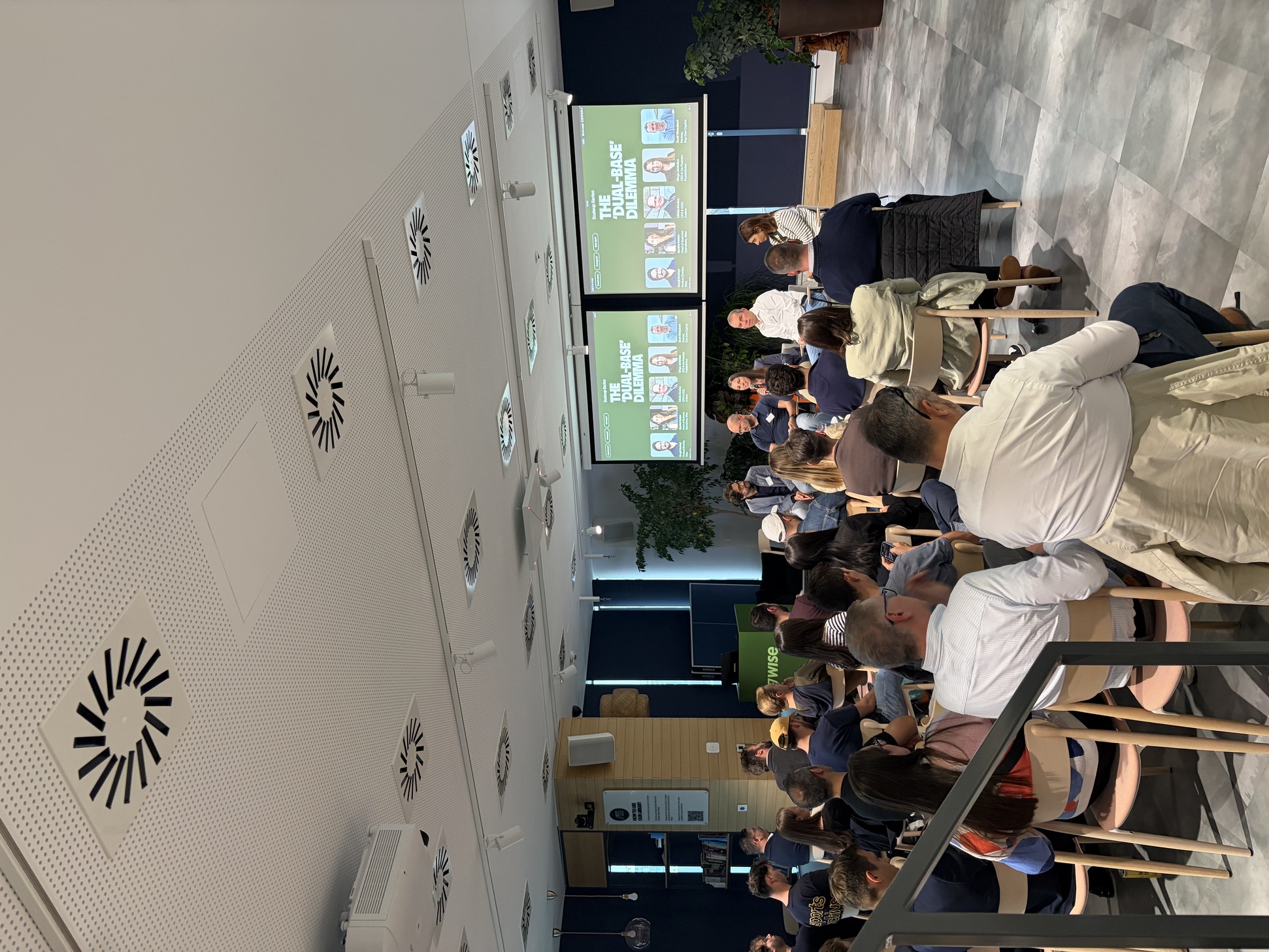
At our latest Scaleup Series event, Wise's Head of Business Operations Ayesha Kadan led a panel with Zsolt Weiszbart, Partner at Day One Capital, Miklos Kovacs, CFO & COO at Antavo, Kinga Jentetics, CEO & Co-Founder at PublishDrive and Gergő Horányi, Product Director at Wise to unpack these questions.
We’ve summarised the key takeaways from the session below.
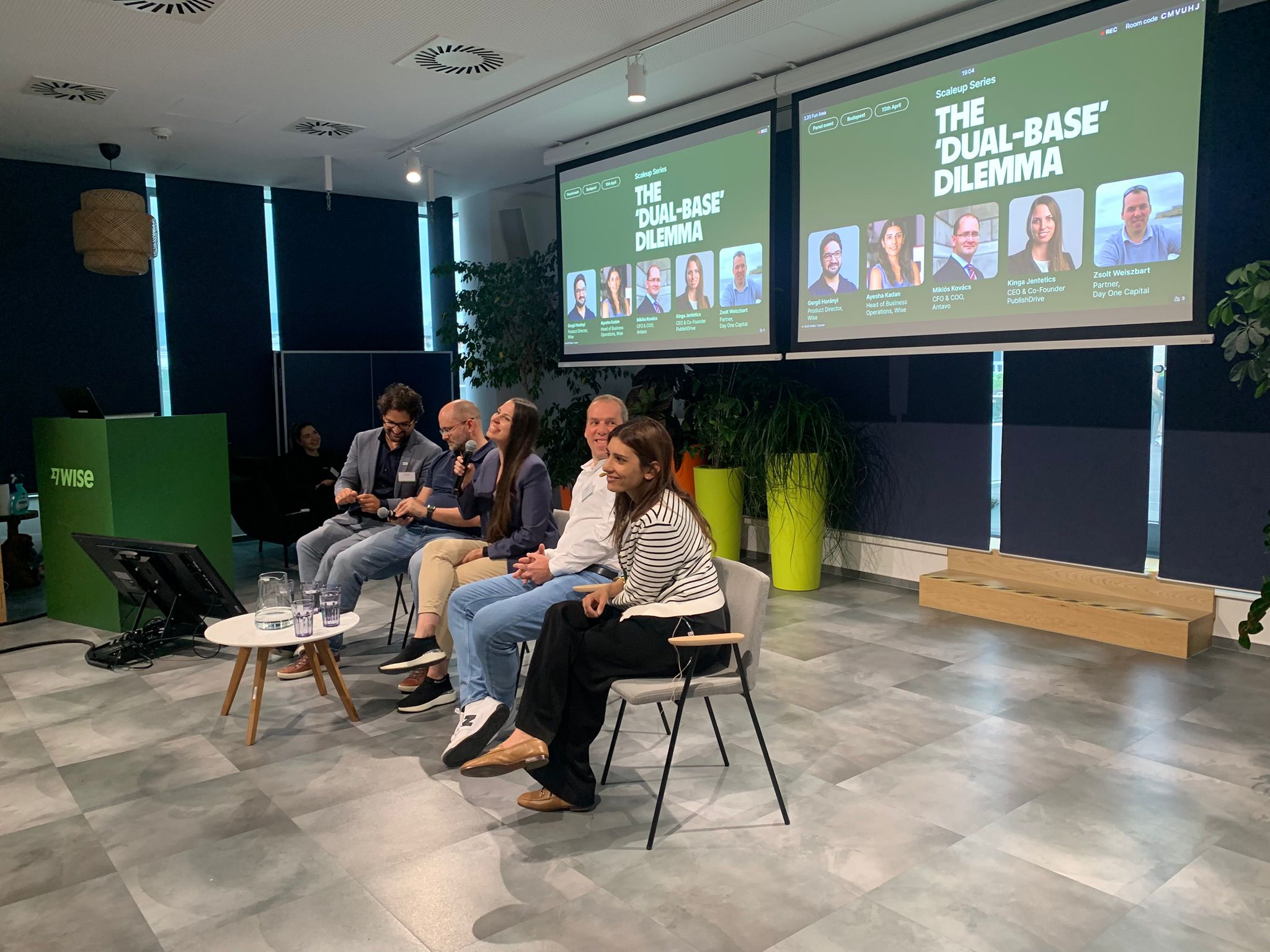
| Meet the panellists | |
|---|---|
| Zsolt Weiszbart, Partner at Day One Capital | Zsolt is a Partner at Day One Capital, where he leads early-stage venture capital investments spanning Central Eastern Europe. His influence extends to serving on the Board of companies such as Colossyan, Recart, Webshippy, and Miros. Zsolt also serves as a Board Member of the Hungarian Venture Capital Association since 2020, contributing significantly to Hungary's venture capital ecosystem. |
| Miklos Kovacs, CFO & COO at Antavo | Miklós Kovács has diverse experience spanning various roles and industries. Miklós currently holds the position of CFO & COO at Antavo Loyalty Management Platform, a role they began in March 2021. In 2016, Miklós founded Blueopes, an automated wealth management service that utilizes artificial intelligence to create customized portfolios focused on sustainable investments. |
| Kinga Jentetics, CEO & Co-Founder at PublishDrive | Kinga Jentetics is the CEO and founder of PublishDrive, the software-as-a-service platform for indie publishers that rewrites the rules of publishing. She made Forbes’ 30 Under 30 in Media in 2017 and was named one of the Top 100 European Female Founders by The Hundert. She was also nominated for the 2018 Digital Book World Awards (in a list that included Jeff Bezos). |
| Gergő Horányi, Product Director at Wise | Gergő Horányi is Wise’s Head of Product Development, driving global product strategy from the company’s technology center in Budapest. A former software developer with experience at CERN and Prezi, he transitioned to product management to focus on solving real customer problems rather than just feature development. Gergő is also an active builder of the Budapest ecosystem; he is the founder of the Wise Product Academy, a member of the Bridge Budapest leadership community, and a key organizer of several Budapest meetups. |
In an ever competitive startup landscape, it's natural for founders to fixate on fundraising. But with global VC funding still below its $640–$670 billion 2021 peak, Kinga kicked off the conversation with an alternative perspective on fundraising: treat your customers as your first investors.
"I’ve met a lot of entrepreneurs and early-stage startups who were really keen on fundraising, but they didn't actually talk to any customer yet,” she explained, "if you are still in early stages and you are thinking about whether you should fundraise or whether you should actually build a product and get some customers first, I always say that the customers are your best investors. Try to get any kind of customers early on, even if they are not paying.”
In her experience, understanding your audience is the first and most important thing your business should nail. Only after you understand your customers and how they interact with your product should you reach out to investors. After all, traction and proof of market aren't just nice-to-haves, they're the barriers to entry for investor interest in Hungary and abroad.
Gergő echoed this sentiment from a product perspective, "If you are just building something that looks cool, it won’t work. Building a new wrapper for another cool service won’t stop the next release of ChatGPT or Anthropic from overtaking your business. It’s important to solve the problems that are hard challenges for your customers.”
For Gergő, uncovering this niche means speaking to your audience and uncovering the issues that “no one else is solving." Only then can you create a product that will truly spark market interest and stand the test of time.
Kinga and Gergő's advice both point to the same north star. Before you pitch investors, talk to your customers. Not only are they essential to validating your proof of concept but can help fuel your startup at its earliest stages.
When you're building outside the US (or even within it), the question of whether to complete a Delaware Flip will almost inevitably arise. A Delaware Flip is the process of opening a new US holding company in the state of Delaware for a company based in another jurisdiction — in this case, Hungary. For many startups, this offers greater funding prospects, easier access to the US market and streamlined scalability. That said, the Flip itself can be highly complex and costly.
Zsolt noted that the Delaware Flip remains industry standard, "If I look at my whole portfolio, 90% plus are either based in Delaware or in the UK. We have maybe one Hungarian and one Czech company, and that's it." That’s because the VC world runs on its foundation. "There is a common language, and everyone understands in the VC world what Delaware means, what are the jurisdictions there, what are the rules there, so it's easy to have the financing," Zsolt explained.
If you are doing a Delaware Flip, sooner is better than later. Kinga described the painful process of completing it mid-flight at PublishDrive, "It was really hard to restructure our company. We already had an operating business, so we needed to move our contracts to the US company with all the retailers we work with." Her advice is to do it before you have to, "It's much easier if you start like that."
Miklos had a different perspective. If you've already scaled your business without a Delaware Flip, it may not be worth the effort. In his experience, a large Silicon Valley law firm “specifically advised us against the Delaware Flip. If you’re at Seed and Series A, yes, go to the US, especially if you're at an early stage. They won't deal with any other legal structures, but at a later stage, it's not really a must." He suggests the Flip should only happen "after a term sheet is signed and there's a definite interest. Don't do it prematurely."
Zsolt's final word of advice was to use the right partners, "Don't use online providers. It's around $5K, and you can find a proper lawyer to set up your Delaware company, even in Hungary. It will save you another $10 or $20,000 later."
While the panel didn’t fully agree on the value of the Delaware Flip for every company, there was consensus that it can be a helpful tool in scaling your business to the world’s largest consumer and capital market: the US. If and when you perform the Flip will come down to your business’ unique needs.
With a startup ecosystem valued at around $2.2 billion, Hungarian founders have newfound opportunities to scale both domestically and internationally. But can regional investors keep up?
Zsolt offered an encouraging look at how the Hungarian VC landscape has matured in recent years, "I don’t think it's ever been easier than today to start a business and raise your first $500,000, or even $1 million,” he explained.
The quality and expertise of local investors has also improved significantly. "As of today, there are only a few VCs in Hungary, but those VCs have learned their lessons — they've learned how to cooperate with other VCs, how to make co-investments.” He explained, “Even today, at pre-seed, we have 50% of our deals co-invested with other VCs from Western Europe."
For founders trying to navigate this landscape, Zsolt pointed to one clear starting point,
"Startup Hungary is definitely one of the first places that I would start, in terms of figuring out who the players are." And persistence is key, "Maybe your first or second email will not be answered, but I believe that sooner or later, you get answered. Just do your homework and do your job."
The same holds true for attracting investors overseas. Even in an uncertain fundraising environment, staying the course and demonstrating a clear determination to scale can make all the difference.
For many startups, the international markets can offer unprecedented growth opportunities.
This is certainly true for Kinga and her team at PublishDrive, “We have a US top company that owns our Hungarian business, where we have the Hungarian team employed. We chose to build the business like this because we could see that the biggest market for us, at least from the customer side, was in the US.”
While managing a company across countries can unlock significant growth, it also means navigating the complexity of operating in multiple currencies. For many Hungarian startups, this need first arises when they’re raising overseas capital.
Gergő explained that fundraising can unlock a new set of challenges for unprepared businesses, "If you raise outside of your home currency, very quickly you'll need to figure out how you move that money. That can bring new challenges, including how the FX rates may change."
Zsolt saw most of his portfolio companies struggle with FX risk this past year, "they did the budgeting in December with FX rates, and then already before the election, in March, they were seeing that this is just not possible to sustain, and then after the election, another 10% was lost."
Kinga saw this as a consequence of the broader Hungarian business environment. Today, Hungary is the 4th most export-oriented economy within the EU, which poses significant FX exposure, "A lot of Hungarian companies are export-based, so it's a really big problem how volatile the Hungarian forint is, especially if you are paying employees here."
In the panel’s experience, having a trusted multi-currency business account can help you protect your bottom line from fluctuations and prepare for uncertainty. With a Wise Business account, you can manage up to 40+ currencies in one easy-to-use platform. That means you can hold your business funds in USD, EUR, GBP and more to shield your earnings from volatility. Plus, if you want to convert your money to pay regional employees, you can do so at the mid-exchange rate — that’s the one you usually see on Google — with zero hidden fees.
Wherever your business is based and whatever the industry, AI is now an unavoidable part of scaling. The panel was united in agreeing that the startups that find ways to implement AI will pull ahead, and the ones that don't will be left behind.
For B2B SaaS companies like Antavo, AI is changing business fundamentals.
Miklos shared "The change is very, very significant. If you look at the public valuations of B2B SaaS companies at the beginning of this year, you can see this massive uncertainty about this. What is the role of B2B SaaS in the future?" The shift from human to agentic users is even rewriting who their "product" is for, "We used to have manual users, people logging into the platform, using a UI, and interacting with the platform. This is now changing. For agents, it doesn't matter what the UI looks like. They need their own UI — their APIs, the MCPs, the CLIs."
For content platforms like PublishDrive, AI is bringing new challenges into focus.
"There is a dark part of the innovation that a lot of people in the industry don't want to talk about. However, it is a big issue even for Apple and the big guys: preventing and avoiding fraudulent activity," Kinga shared. Still, she pointed to genuine upside in AI use in her industry, "AI narration is becoming a gold standard and even really big voices and actors are giving their voices to platforms to make sure that they can use it in audiobooks."
Gergő highlighted opportunities that many Hungarian companies are missing, "Hungary is almost one of the lowest in Europe in enterprises using AI. This needs to grow, and it requires loads of work to enable teams to do this because it could fundamentally change how your business is structured."
Across industries and company stages, the panel's message was consistent on AI — it shouldn’t be a feature you add on later, it's a structural shift that's reshaping every aspect of operating a business. Now’s the time to engage and get ahead.
Another important aspect of building a startup that can succeed internationally is hiring and retaining talent. As the panel came to a close, the panel shared some contrasting views on remote work, shaped by each of the panelists’ personal experiences.
For early-stage founders, Zsolt said "If you are just about to start your startup journey, don't do remote. Just sit together in one room — who are the four or five of you — and just don't leave the room. It is not the phase and not the time when you have to go remote."
Miklos, whose team is fully remote, acknowledged the trade-offs.
"The relative value of offline events is growing day by day, and what I really miss from these constant Google Meet sessions is this very random encounter with random people from the company. It's not possible to bump into somebody in the kitchen." Still, having a dispersed team means the company can move quickly and benefit from boots-on-the-ground expertise as they scale.
Gergő described how Wise keeps face-to-face culture alive at scale, "Once a year, we bring the whole company together in Tallinn for Mission Days. Thousands of people are flying in and talking about our biggest problems and challenges."
While there’s no single blueprint for how to build a team, especially as you scale, it’s important to be intentional with your hires and cultural traditions. Whether you're all in one room, running a fully distributed company or flying your team out to connect once or twice a year, the goal is the same: to create an environment for your team to produce their best work.
In today’s environment, building a startup that can scale both within Hungary and across the world requires founders to juggle multiple tasks at once. Whether it’s talking to customers, deciding your legal structure, managing your operating currencies, embracing AI or building a team, the panellists have navigated it all. Despite the challenges they’ve all faced with tackling any one of these tasks, their collective message was clear. The opportunity for Hungarian startups to take on the world is real and growing.
Whether you’ve just launched your startup or are scaling internationally, Wise Business has all the tools you need to operate in 150+ countries. Receive payments from investors overseas, extend your runway with Wise Interest, create multi-currency debit cards for your team and more — all from one easy to use account.
Create a Wise Business account
*Please see terms of use and product availability for your region or visit Wise fees and pricing for the most up to date pricing and fee information.
This publication is provided for general information purposes and does not constitute legal, tax or other professional advice from Wise Payments Limited or its subsidiaries and its affiliates, and it is not intended as a substitute for obtaining advice from a financial advisor or any other professional.
We make no representations, warranties or guarantees, whether expressed or implied, that the content in the publication is accurate, complete or up to date.

Learn how UK residents can form and manage a US LLC remotely. Our guide covers state costs, tax, banking, compliance and Wise Business payment support tips.

A comprehensive guide to employee relocation, including how relocation packages work, UK costs, tax considerations and best practices for staff support.

Learn how to structure and manage relocation packages, including costs, policies, implementation steps and global considerations for employers in the UK.

In today’s economy, there’s one thing business owners can be certain of: uncertainty. Volatility has fundamentally changed the way businesses operate. And...

Compare Revolut GlobalHire and Papaya Global across features, pricing and payroll capabilities to find the right solution for your business.

Learn how much it can cost to outsource social media in the UK. Our guide explains average rates, pricing models, cost drivers, and more.











