
Inheritance tax in Switzerland: What you need to know
Discover everything you need to know about inheritance tax in Switzerland. Our comprehensive guide covers the rates, who pays, how to calculate, and much more.


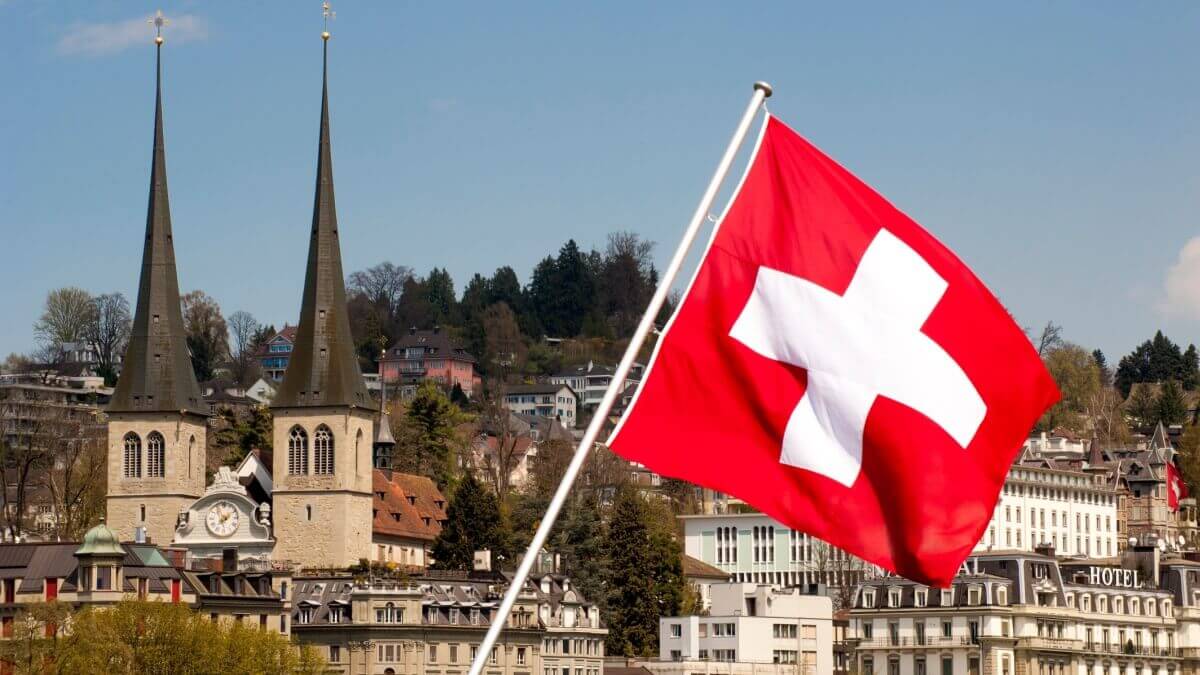
Planning to move to Switzerland from the UK? You might be planning to work in cosmopolitan Zurich, study in vibrant Basel or retire in beautiful Bern.
Alternatively, you might be thinking of buying a holiday home or investment property in the country.
Whatever your plans, we’re here to help with a complete guide to buying property in Switzerland for foreigners. Below, we’ll take a step-by-step look at the process of purchasing a home, along with info on Swiss property prices and tips on how to start your search. Plus, the main risks and pitfalls to avoid.
We’ll also introduce a smart and cost-effective way to send large sums internationally from the money services provider Wise. Over 14.8 million people worldwide use Wise to move £36 billion every quarter.
With low, transparent fees, great mid-market exchange rates, and secure, trackable transfers, Wise makes international money transfers simple and stress-free. Plus, you’ll get dedicated support and volume discounts when sending large amounts. On a £50,000 transfer, you could save up to £1,000 with Wise vs your bank.
Get expert support for your large transfer 📞
| Please see the terms of use and product availability for your region or visit Wise fees and pricing for the most up to date pricing and fee information. |
|---|
You can buy property in Switzerland as a foreign national, but only if you meet one of the following conditions under what are known as Lex Koller laws:¹
If you don’t fall into any of these categories, you might not be permitted to purchase property in the country - or you might have to apply for a licence.
For example, UK nationals with a Swiss B Permit wanting to buy a second/holiday home will need to apply for a licence.¹
If you’re not living in Switzerland but want a holiday home there, you’ll need to prove close ties to the country and meet a number of conditions. For example, you’ll only be able to buy property of a limited size in a tourist area, and can’t let out the property all year round.¹
The requirements also vary from canton to canton (these are the states of the Swiss Confederation), so you’ll need to check what the rules are in the area you’re planning to move to.
There’s no direct route to permanent residency through the purchase of property in Switzerland.
The country does have a Golden Visa scheme which offers a path to residency through investment. However, buying real estate isn’t a qualifying pathway.
| 📚 Read more: Countries that offer citizenship by investment |
|---|
The Swiss property market is experiencing a period of continuing price growth. Apartment prices rose by around 4.47% in Q3 2025 compared to the year before, while prices for single-family homes rose 4.61% year-on-year.²
Unsurprisingly, property prices (especially apartments) are most expensive in Zurich.
This is caused by a combination of high demand, low supply and falling interest rates.
This pattern is set to continue in 2026, but analysts expect the momentum to slow slightly.²
This could mean that as a buyer, you’ll need to pay more for your dream home - and compete with other keen buyers.
Weighing up whether Switzerland is a good place to buy property abroad? Here are some pros and cons to consider.
Pros:
Cons:
So, how much is property in Switzerland? This is an essential thing to know as you set your budget and start your search.
The average (median) property price for a 4-room house is 901,000 CHF, while the average price per square metre for a house is 7,270 CHF.³
Now, let’s take a look at average property prices across major cities and neighbourhoods in Switzerland:³
| Region | Area type | Average property price (CHF) |
|---|---|---|
| Zurich 8008 (Seefeld) | Expat/premium | 1.65 to 2 million |
| Zurich 8032 (Fluntern) | Premium | 1.55 to 1.9 million |
| Zurich 8051 | Value | 1.05 to 1.3 million |
| Geneva 1207 | Expat/premium | 1.2 to 1.6 million |
| Geneva 1204 | Prime central | 1.3 to 1.7 million |
| Basel 4059 | Family | 950,000 to 1.15 million |
| Basel 4001 | Value | 700,000 to 850,000 |
| Bern 3011 | Premium/central | 950,000 to 1.2 million |
| Bern 3015 | Value | 550,000 to 700,000 |
| Lausanne 3015 | Family | 1 to 1.3 million |
If you’re property hunting on a budget, you’ll find that property prices tend to be more affordable in the following cantons:
The best place to buy property in Switzerland all depends on why you’re buying.
If you’re looking to live in Switzerland as an expat, a major city like Zurich, Geneva or Basel will offer all you could want in terms of lifestyle, culture, job opportunities, amenities and connections to Europe and the UK.
However, they also tend to be the most expensive for property prices.
If you’re buying a holiday home, it’s best to look in tourist-designated areas within the Valais, Vaud and Graubünden cantons where restrictions on foreign ownership are more relaxed.
Looking toretire abroad? You might want to look at Lausanne and other spots in the Vaud canton which offer picturesque scenery and a relaxed lifestyle. Bern is another popular choice among UK expats and retirees.
Looking to buy property in Switzerland and need a secure, low-cost way to pay your deposit or final balance? High street banks often add a markup to the exchange rate, which can be costly on large sums.
The Wise account, from the money services provider Wise, offers a modern alternative. You’ll get the mid-market exchange rate (close to the one you see on Google) with no hidden markups and low, transparent fees. On a £50,000 transfer, you could save up to £1,000 with Wise vs your bank.
It's not a bank account but offers some similar features, and your money is safeguarded.
| Here’s an overview of the main benefits of using Wise: |
|---|
|
**Investments in funds are never guaranteed and your capital can be at risk. In the UK, Interest and Stocks are provided by Wise Assets — this is the trading name of Wise Assets UK Ltd, a subsidiary of Wise. Wise Assets UK Ltd is authorised as an investment firm and regulated by the Financial Conduct Authority (FCA). Our FCA number is 839689. We do not give investment advice, and you may be subject to pay tax. If you're not sure, seek qualified advice. You can find more information about the funds on our website.
If you’re new to the Swiss property market, it could be worth using a specialist real estate agent to help you find the right property.
If you’re looking for an agent, you have two main options. You can either go with a UK agency that specialises in international property (with expertise in Switzerland), or you can find a local Swiss real estate agent. A good place to start is the Swiss Real Estate Association (SVIT).
You can also start the search online yourself, using one of these Swiss property websites and portals:
Here’s a quick list of important things to check before you buy property in Switzerland:
Now, let’s run through the typical process of buying property in Switzerland for foreigners:
Before you do anything, it’s crucial to get your finances in order. You need to set your budget, get mortgage pre-approval and define exactly what you’re looking for.
You might want to open a Swiss bank account, ready for transactions relating to your mortgage.
Now it’s time to start searching for your dream home. You can use online property portals and/or local estate agents to find properties, then view any you’re interested in.
If you find somewhere you like, move fast. The property market in Switzerland can be very competitive, so it’s smart to arrange viewing appointments as quickly as possible.
Once you’ve found your dream home, you’ll need to make an offer or bid to the real estate agent or directly to the seller.
Be prepared to show proof of how you’ll finance the purchase at this stage, such as your mortgage agreement or a letter from your bank or lender.
If your offer is successful, you’ll move onto the legal stages of purchasing the property - and at this point you may want to appoint your own property lawyer.
They will check over and translate all documents and contracts, as well as carrying out due diligence on the transaction.
A good place to start when finding a solicitor is this list of English-speaking property solicitors on the UK Government website.
Before you reach any legally binding stages of the process, you may want to have a building survey/inspection carried out. They aren’t common in Switzerland, but you might still want to get one. It could give you warning of any potentially serious or expensive-to-fix problems - especially if you’re buying an older property.
The next important step is for both parties to sign the reservation contract. This is legally binding, and also requires the transfer of the deposit. This is usually around 10% of the sale price,⁴ and it’s held in escrow by the appointed notary.
Consider using the Wise account here to convert your pounds to Swiss francs (CHF), avoiding hidden fees and getting the mid-market exchange rate.
A written agreement will be produced which outlines circumstances in which a deposit will be returned or forfeited (i.e. if one party pulls out of the transaction).
At this stage, you’ll need to start the process of finalising your mortgage.
The sale contract or deed of sale will be drawn up by the notary, who will also complete the final steps required to complete the purchase. This includes completing the official transfer of the property and registering the change of ownership with the land register.
You’ll need to sign all documents and transfer the remaining balance.
And apart from settling fees and taxes (which we’ll look at shortly) this is the purchase complete. You’ll get the keys to your new home, and can settle into your new life in Switzerland.
| 📚 Read more: How to transfer large amounts of money from the UK |
|---|
Buying property in Switzerland generally takes around 2 to 3 months.⁵ Delays can happen, but they’re uncommon - this is because it’s a structured process managed by an experienced notary.
Here are the main fees and taxes for buying property in Switzerland, which you’ll need to factor into your budget:⁶
| Fee/tax | Amount |
|---|---|
| Property transfer tax (Handänderungssteuer) | 0% to 3%, varies by canton |
| Notary fees | 0.1% to 1% |
| Land registry fee | 0.1% to 0.3% |
| Legal fees | Varies, around 500 to 2,000 CHF |
| Building inspection/survey | 500 to 1,500 CHF |
| Translation services (if needed) | 300 to 1,500 CHF |
| Canton purchase approval costs (for foreign buyers) | 500 to 2,000+ CHF |
| Mortgage registration fees | 0.5% to 1% |
And, if you’re arranging your property purchase from the UK, you’ll need a safe, reliable and preferably low-cost way to send over fees, deposits and other payments.
The Wise account could be a great solution, with transparent, low fees, and multiple layers of security, so you can safely transfer large amounts both in the UK and overseas.
➡️ See how Wise compares with other providers
Once you’ve bought your Swiss property and paid all those initial costs, you’ll also have some ongoing fees and taxes to cover as a property owner.
This includes annual property tax, which is made up of both cantonal and communal taxes. Not all cantons have them, but in those that do the rate ranges from 0.02% to 0.3% of the property's taxable value.⁶
If you rent out the property, you may also pay personal income tax as a landlord.
Swiss banks do offer mortgage loans to foreigners, but only if you have a Swiss residency permit (B or C).⁷ This means you can’t apply if you’re living outside the country - you’ll need to wait until you’ve moved there.
It’s also useful to know that the maximum mortgage loan you can get is 80% of the property’s purchase price.⁷
One of the main things to watch out for whenbuying property abroad are scams.
To avoid these, it’s strongly recommended to work with qualified, credible and licensed professionals such as real estate agents and solicitors.
Switzerland is generally considered one of the safest places in the world to buy property, due to the stringent regulations which govern its housing market. The requirement to use a notary also helps to make property transactions safer for all parties.
But there are still some potential pitfalls and risks you should look out for, including the following:
Before you can get the keys to your new home, you’ll have a final few tasks to check off your list.
It’s strongly recommended to take out a buildings insurance policy starting from your completion date. In fact, you might find it's a mandatory condition of your mortgage offer.
If you know when your completion date will be, it makes sense to get some essentials set up in advance of your move-in date.
A prime example is utilities, such as heating, power and water. Get these sorted as early as you can, and the moving process should be a little smoother.
If you’ve bought an older Swiss property, you might want to make some energy efficiency improvements to it. For example, improving the insulation, upgrading the windows or installing a new heating system.
Sources used:
Sources last checked 7-Apr-2026
*Please see terms of use and product availability for your region or visit Wise fees and pricing for the most up to date pricing and fee information.
This publication is provided for general information purposes and does not constitute legal, tax or other professional advice from Wise Payments Limited or its subsidiaries and its affiliates, and it is not intended as a substitute for obtaining advice from a financial advisor or any other professional.
We make no representations, warranties or guarantees, whether expressed or implied, that the content in the publication is accurate, complete or up to date.
Discover everything you need to know about inheritance tax in Switzerland. Our comprehensive guide covers the rates, who pays, how to calculate, and much more.

Find out everything you need to know about Switzerland RSU tax here in our essential guide, including current tax rates.
Read our helpful guide on how to transfer a UK pension to Switzerland, including the steps, fees and taxes involved.
Everything you need to know about moving to Switzerland from the UK. Read about visas, popular expat destinations, healthcare and more.
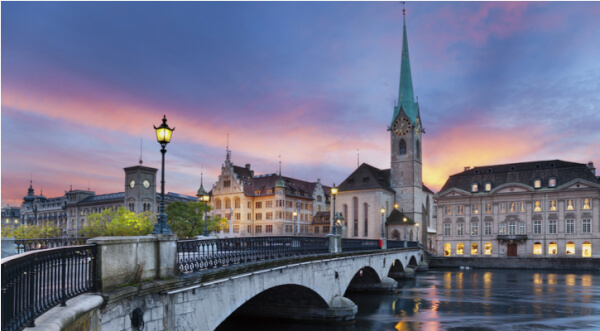
Switzerland offers many perks for anyone moving there from the UK. But, there are also some downsides to look out for. Read on to learn more about both sides.
Your essential guide to the cost of living in Switzerland, including average prices for rent, transport, healthcare, education and much more.











