
Is there stamp duty in Ireland? Guide for Brits
Complete guide to stamp duty in Ireland for British buyers. Check current rates, the 15% surcharge, new build VAT rules, and when the tax is due.


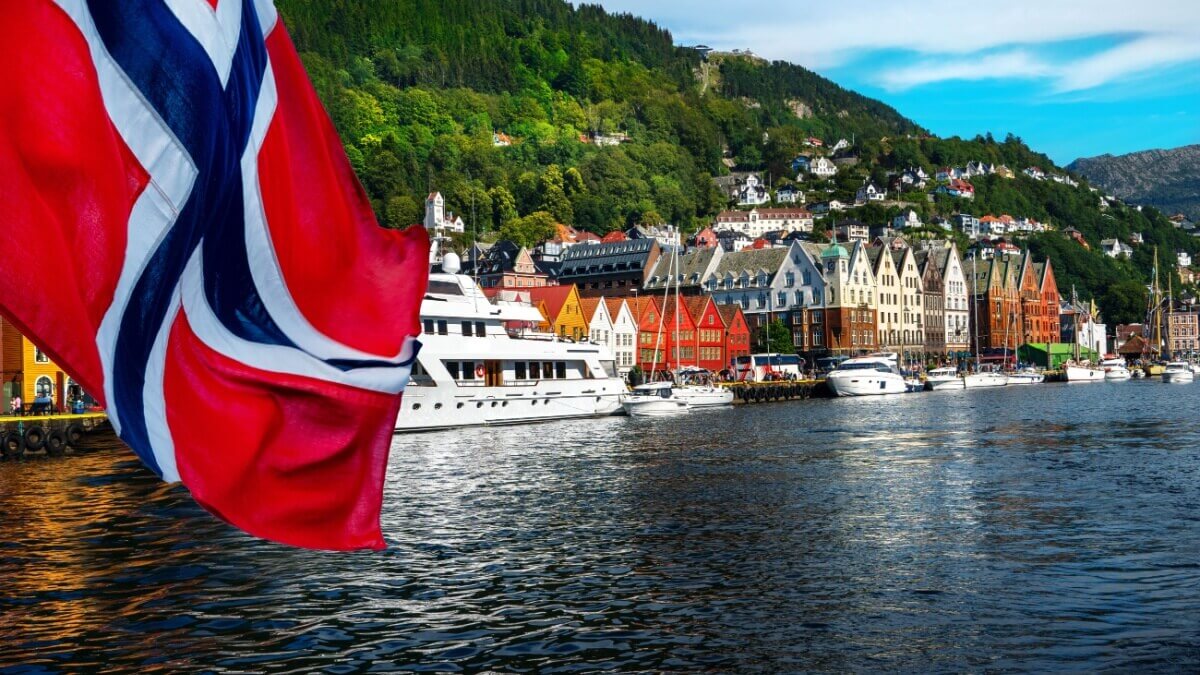
If you’re dreaming of a Scandi sanctuary, buying property in Norway is a brilliant way to trade the London commute for a literal walk in the park (or a hike up a fjord). Whether you’re moving for work, eyeing a holiday hideaway, or just looking to invest your pounds in something more solid than a rainy Tuesday in Reading, we’ve got you covered.
In this practical guide we’ll cover everything you need to know as a UK buyer. This includes info on current property prices in Norway, fees and taxes, how to get a mortgage and tips on where to start your search.
We’ll also introduce a reliable and cost-effective way to send large sums internationally from the money services provider Wise. Over 14.8 million people worldwide use Wise to move £36 billion every quarter.
With low, transparent fees, great mid-market exchange rates, and secure, trackable transfers, Wise makes international money transfers simple and stress-free.
Plus, you’ll get dedicated support and volume discounts when sending large amounts. On a £50,000 transfer, you could save up to £1,000 with Wise vs your bank.
Get expert support for your large transfer 📞
| Please see the terms of use and product availability for your region or visit Wise fees and pricing for the most up to date pricing and fee information. |
|---|
Yes, UK nationals and other foreign nationals can buy property in Norway.
Unlike in some other countries, there are no country-wide restrictions on property ownership, only a handful of municipality-level restrictions to ensure housing availability for local residents.¹ So as long as you have the financing, you should be able to buy and own property there just like a local.
This is one of many reasons it’s one of the best countries in the world to buy property.
However, it’s still very important to use a qualified solicitor to carry out due diligence checks before buying property in Norway, to make sure you won’t encounter any obstacles.
You should also be aware that there may be additional costs to pay as a foreign buyer. For example, if you need to have documents translated or use a specialist broker to find a mortgage.
No, there is no direct route to residency or citizenship through buying property in Norway.
If you want to live there permanently, you’ll need to follow other visa pathways such as work, study or family.
| 📚 Read more: Countries that offer citizenship by investment visa |
|---|
After a long house price boom, Norway’s property market has started to stabilise. Prices are still rising, increasing by 4.54% in Q2 2025 compared to the same period a year earlier.²
Demand is also improving, with an uptick of residential property transactions of 1.1% recorded in 2024. Sales of detached houses saw the biggest increases, with areas such as Akershus, Oslo, Rogaland, and Vestland seeing the most transaction activity.²
Supply of properties is tight, with the shortage caused by a year-on-year fall of 15.4% in the construction of new homes.²
What this means for you as a buyer is that you may have to search harder, act faster and pay a little more to secure your dream home.
If you’re still weighing up options on where is the best place to invest in property abroad, here are some of the pros and cons for Norway’s real estate market:
Pros:
Cons:
| 📚 Read more: Pros and cons of living in Norway |
|---|
So, how much is property in Norway? This is an essential thing to know as you set your budget and start your search.
Generally speaking, Norwegian property prices are roughly 20.6% higher in city centres and 8.9% higher outside the centres than in the UK.³
If you're wondering where to buy a house in Norway, here are the average property prices per square metre in a few of the country’s major cities:⁴
| City | Average apartment price per sq.m - city centre (NOK) | Average apartment price per sq.m - outside city (NOK) |
|---|---|---|
| Oslo | 107,173 | 72,872 |
| Bergen | 71,233 | 46,400 |
| Stavanger | 58,409 | 50,031 |
| Trondheim | 58,324 | 46,277 |
However, the price very much depends on exactly what and where you buy, along with other factors.
And, if you’re arranging your property purchase from the UK, you’ll need a safe, reliable and preferably low-cost way to send over fees, deposits and other payments.
The Wise account could be a great solution, with transparent, low fees, and multiple layers of security, so you can safely transfer large amounts both in the UK and overseas.
➡️ See how Wise compares with other providers
If you’re house hunting on a budget, you’ll need to head outside of the major cities where prices can be eye-wateringly expensive.
You might want to look instead at smaller towns and more rural areas, such as Nordkapp, Stor-Elvdal, Rennebu, Holtålen, Snåsa, Notodden and Sauda.
If you simply must live in the city, Oslo’s outer east is known for being relatively affordable (compared to other areas) - especially Søndre Nordstrand, Stovner and Alna.
The best place to buy property in Norway all depends on why you’re buying.
If you’re looking to live and work there, a major city like Oslo offers all you could want in terms of lifestyle, job opportunities, amenities and connections to the rest of Scandinavia, Europe and the UK.
For scenery, you might want to consider Bergen, Lofoten or Tromsø. The city of Stavanger is popular with expats due to its oil industry jobs, while Trondheim could be a good spot for a buy-to-let investment due to its active university rentals market. You can also consider the ski resorts of Trysil and Hemsedal for holiday rentals.
| 📚 Read more: Retiring abroad from the UK: Complete guide |
|---|
If you’re new to the Norwegian property market, it could be worth using a specialist real estate agent to help you find the right property.
They’ll have knowledge of the local market, and can walk you through the process of buying a property. This service is likely to come with a fee, however.
You can also start the search online yourself, using one of these Norwegian property websites and portals:
Before buying a property in Norway, there are a few key things to check. The first is to search for the property in the Grunnboken land register (or have your solicitor do it) to verify ownership.
You should also check whether the property is part of a borettslag (housing cooperative) as this will usually mean significant extra ongoing costs. Owners of these properties need to pay monthly fees for maintenance, utilities and services.
You may also want to have a building survey carried out. While not mandatory, this could help to flag up any structural or other issues which could be expensive to fix.
Now, let’s run through the steps involved in buying property in Norway as a foreigner:
Before you do anything, it’s a good idea to get your finances sorted. This means setting a budget, getting a mortgage offer (approval in principle) and getting all your paperwork together.
Foreign nationals need a D-number (temporary ID number) from the Norwegian Tax Administration for financial transactions, including getting a mortgage, opening a bank account and buying property. This can take some time to come through, so it’s recommended to apply early.
Now it’s time to start searching for your dream home. You can use online property portals and/or local estate agents to find properties.
If you’ve found somewhere you like, arrange a viewing as soon as you can, and start researching the area in the meantime.
While it’s not mandatory, it’s strongly recommended to find and appoint a lawyer experienced in Norwegian property law. They will check over and translate all documents and contracts, as well as carrying out due diligence on the transaction.
A personal recommendation is a good way to find a solicitor, but you can also find a list of English-speaking property solicitors on the UK Government website.
Norway works a little differently to the UK when it comes to submitting offers on a property. It has a property auction system called Budrunde, which involves an open, transparent bidding process.
You’ll submit a bid in writing to the estate agent. This is legally binding and other bidders will be able to see it. There’s no negotiation on price like in other countries such as the UK. Every bidder must have proof of financing before submitting their bid.
Before submitting a bid, you should review the prospectus (Prospekt) for the property, including the technical report on the building’s condition. You or your solicitor can also check local development plans for any restrictions on permitted use.
If your bid is successful, the next step is for both parties to sign the sales contract (Kjøpekontrakt). You may also be asked to arrange a transfer for the deposit.
At this stage, you might want to contact your mortgage provider to finalise the financing for your purchase.
Property transactions in Norway are typically pretty fast and efficient, so you may find that it’s not very long until a completion date is set.
The final steps are to transfer funds to pay the final balance, register the change of ownership in the Norwegian Land Register and pay any fees and taxes. Consider using the Wise account here to convert your pounds to Norwegian krone (NOK), avoiding hidden fees and getting the mid-market exchange rate.
Buying property in Norway is a pretty quick process, which on average takes around 1-2 months.⁵
| 📚 Read more: How to transfer large amounts of money from the UK |
|---|
Here are the main fees and taxes for buying property in Norway, which you’ll need to factor into your budget:⁶
| Fee/tax | Amount |
|---|---|
| Property transfer tax (Stamp duty) | 2.5% |
| Registration fees (land registry) | 0.1% |
| Legal and notary fees | Varies, typically less than 1% |
| Mortgage-related fees | 5,000 to 20,000 NOK |
| Property inspection fee | 5,000 to 15,000 NOK |
Once you’ve bought your Norwegian property and paid all those initial costs, you’ll also have some ongoing fees and taxes to cover as a property owner.
This includes:⁶
If you rent out the property, you may also pay personal income tax as a landlord.
Banks in Norway do offer mortgages to foreign nationals and non-residents. However, bear in mind that foreign buyers tend to face much stricter lending criteria.
This includes having stable Norwegian employment (or proof of consistent foreign income), an existing relationship with a Norwegian bank or a Norwegian residential address - all of which may make things difficult for non-residents.
If you meet the requirements, you should be able to secure up to 60% to 75% of the property value.⁷ This may mean you need a larger deposit compared to local buyers.
For your best chance of getting a mortgage in Norway, try foreigner-friendly banks such as DNB, Nordea and Danske Bank.⁷
One of the main things to watch out for when buying or selling property abroad are scams.
To avoid these, it’s strongly recommended to work with qualified and credible professionals such as real estate agents and solicitors. Ideally, you should also check for membership of a professional body when working with any property experts, brokers or agents.
Other important things to remember include the following:
Before you can get the keys to your new home, you’ll have a final few tasks to check off your list.
It’s strongly recommended to take out a buildings insurance policy starting from your completion date. In fact, you might find it's a mandatory condition of your mortgage offer.
If you know when your completion date will be, it makes sense to get some essentials set up in advance of moving in.
A prime example is utilities, such as heating, power and water. Get these sorted as early as you can, and the moving process should be a little smoother.
If you’ve bought an older Norwegian property, you might want to make some energy efficiency improvements to it. For example, upgrading the insulation, replacing the windows or installing a new heating system.
Need a secure, convenient and low-cost way to send large sums of money internationally? Take a look at the Wise account from the money services provider Wise. It's not a bank account but offers some similar features and your money is safeguarded.
With Wise, you can send large amount transfers worldwide to 140+ countries for low, transparent fees and the mid-market exchange rates with no markup.
| Here’s an overview of the main benefits of using Wise: |
|---|
|
**Investments in funds are never guaranteed and your capital can be at risk. In the UK, Interest and Stocks are provided by Wise Assets — this is the trading name of Wise Assets UK Ltd, a subsidiary of Wise. Wise Assets UK Ltd is authorised as an investment firm and regulated by the Financial Conduct Authority (FCA). Our FCA number is 839689. We do not give investment advice, and you may be subject to pay tax. If you're not sure, seek qualified advice. You can find more information about the funds on our website.
Sources used:
Sources last checked 16-Jan-2026
*Please see terms of use and product availability for your region or visit Wise fees and pricing for the most up to date pricing and fee information.
This publication is provided for general information purposes and does not constitute legal, tax or other professional advice from Wise Payments Limited or its subsidiaries and its affiliates, and it is not intended as a substitute for obtaining advice from a financial advisor or any other professional.
We make no representations, warranties or guarantees, whether expressed or implied, that the content in the publication is accurate, complete or up to date.

Complete guide to stamp duty in Ireland for British buyers. Check current rates, the 15% surcharge, new build VAT rules, and when the tax is due.
Read our essential guide to buying land in Spain as a UK foreigner, covering land prices, fees and taxes, land types, and where to start your search.
Read our essential guide to buying land in Thailand as a UK foreigner, covering land prices, fees and taxes, land types, and where to start your search.
Read our essential guide to buying land in Turkey as a UK foreigner, covering land prices, fees and taxes, land types, and where to start your search.

Read our guide to find out where’s the cheapest place to buy a house in the world and make the most of your property search.
Read our guide to discover the cheapest country to buy land and explore the best locations abroad.











