
Order Amazon in Croatia & Alternatives
Considering a visit to Croatia's stunning Adriatic coast, or even to move there? Whether you're a tourist or a resident, the idea of ordering online from...


Disclaimer: The information in this article is for reference purposes only. All information on this page should not be considered financial or tax advice. You are also solely responsible for calculating and paying your tax liabilities depending on the applicable law. All tax saving strategies or decisions should be made after thorough research and consultation with a qualified financial advisor.
Thinking about buying land in Croatia for a future home, holiday escape or an investment opportunity? Croatia’s landscape offers UK buyers many options, from coastal plots to buildable land and olive groves.
In this guide, we’ll explain how to buy land in Croatia and the key requirements for foreign buyers. We’ll also cover the typical costs and the process from start to finish.
If you’re also looking for ways to save money on currency exchange during the purchase, we’ll also introduce a reliable and cost-effective way to send and receive large sums internationally from the money services provider Wise.
With low, transparent fees*, great mid-market exchange rates, and secure, trackable transfers, Wise makes international money transfers simple and stress-free. Plus, you’ll get dedicated support from their expert team and volume discounts when sending large amounts.
Get expert support for your large transfer 📞
| Please see the terms of use and product availability for your region or visit Wise fees and pricing for the most up to date pricing and fee information. |
|---|
So, can foreigners buy land in Croatia? Yes, but rules vary depending on nationality and the type of land.
EU citizens and nationals from Norway, Iceland, Liechtenstein and Switzerland can buy land in Croatia under the same conditions as Croatian nationals, with some restrictions on agricultural or protected land.1
Non-EU buyers can buy land in Croatia if their home country has a reciprocity agreement and they receive approval from the Croatian Ministry of Justice.1 As the UK has a reciprocity agreement, UK buyers are eligible.2
Whether land investment abroad is worth it depends largely on your goals and intended use.
In Croatia, a key benefit is that land can be relatively affordable, especially away from the coast. There is also a mix of land types, from rural plots to areas with development potential. However, there are also pitfalls to consider.
Land doesn’t generate rental income, so any return depends on future development or resale. You also need to apply for purchase permission and it can take up to six months to receive approval.3
Here are the steps to follow if you decide to buy land in Croatia:
First, choose the area you want. Coastal land usually costs more, while inland plots are cheaper but may take longer to sell. If you plan to build, check whether the land is zoned for construction and what approvals are needed.
Keep in mind that land within approximately six metres of the coastline can’t be privately owned.3
Working with a Croatian property lawyer and, if you wish, real estate agent is essential. Your lawyer will handle legal due diligence, checks with the land registry and Ministry of Justice approval, while an agent helps with property visits and negotiations.
Make sure they both speak English to avoid misunderstandings. To find a lawyer, you can consult the Foreign, Commonwealth & Development Office (FCDO) for a list of English-speaking property solicitors.4
You’ll need a Croatian identification number or osobni identifikacijski broj (OIB) in order to buy land here. You can apply through the Croatian embassy or through a Croatian Tax Administration Office.3
Before proceeding with the purchase, your lawyer should obtain the land registry extract (zemljišnoknjižni izvadak) and cadastral plans to confirm the land is legally owned by the seller and free of liens or encumbrances. You can also get this yourself from the OSS portal.3
Once a price is agreed, a preliminary agreement (predugovor) is typically drawn up. At this stage, you should also arrange the deposit transfer, typically around 10% of the land price. This secures the deal while other checks and approvals are completed.3
As a non-EU buyer, you’ll need to apply for approval from the Croatian Ministry of Justice before buying land. Your lawyer usually handles this, and the approval usually takes between two and six months.3
Once approvals are in place, the final purchase contract (kupoprodajni ugovor) is signed before a notary and submitted for registration in the land registry.3
Land prices vary widely across the country, but residential land has generally been rising in value. Coastal land in Croatia is often comparable to Montenegro or higher, while overall land prices are usually lower than in Slovenia.5
The average price of residential land in Croatia is €120 per square metre or €485,623 per acre (£422,492). However, you can find inland plots for €40 euros per square metre or €161,874 per acre (£140,830).5
Coastal land is significantly more expensive because of tourism demand. The price of residential land here can reach €250 per square metre or €1,011,715 per acre (£880,192).5
Let’s look at the parts of Croatia where residential land is the most affordable:
| Location | Average cost per square metre5 |
|---|---|
| Vukovar | €15–€40 (£13–£35) |
| Vinkovci | €15–€40 (£13–£35) |
| Lika | €20–€50 (£17–£44) |
| Parts of central Croatia | €20–€50 (£17–£44) |
That covers the essentials you need to know before you buy land in Croatia. You should now have a better understanding of the costs, legal steps and what to expect.
Need a secure, convenient and low-cost way to pay for your land purchase in Croatia? Take a look at the Wise account from the money services provider Wise. It's not a bank account but offers some similar features and your money is safeguarded.
With Wise, you can set up large amount transfers worldwide to 140+ countries for low, transparent fees* and the mid-market exchange rates with no markup.
| Here’s an overview of the main benefits of using Wise: |
|---|
|
**Investments in funds are never guaranteed and your capital can be at risk. In the UK, Interest and Stocks are provided by Wise Assets — this is the trading name of Wise Assets UK Ltd, a subsidiary of Wise. Wise Assets UK Ltd is authorised as an investment firm and regulated by the Financial Conduct Authority (FCA). Our FCA number is 839689. We do not give investment advice, and you may be subject to pay tax. If you're not sure, seek qualified advice. You can find more information about the funds on our website.
Sources used:
1. GOV.HR - real estate purchase for foreign nationals
2. Ministry of Justice - property ownership reciprocity
3. Investropa - buying land as a foreigner in Croatia
4. GOV.UK - find a lawyer abroad
5. Investropa - how much land costs in Croatia
Sources last checked on date: 09-Feb-2026
*Please see terms of use and product availability for your region or visit Wise fees and pricing for the most up to date pricing and fee information.
This publication is provided for general information purposes and does not constitute legal, tax or other professional advice from Wise Payments Limited or its subsidiaries and its affiliates, and it is not intended as a substitute for obtaining advice from a financial advisor or any other professional.
We make no representations, warranties or guarantees, whether expressed or implied, that the content in the publication is accurate, complete or up to date.
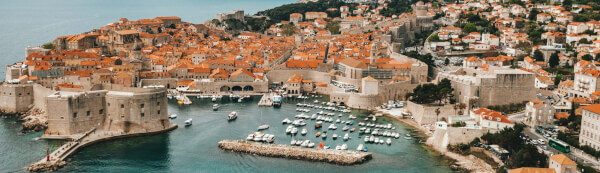
Considering a visit to Croatia's stunning Adriatic coast, or even to move there? Whether you're a tourist or a resident, the idea of ordering online from...
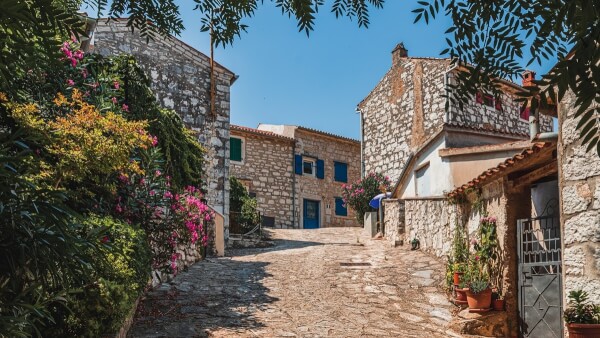
Read our comprehensive guide to buying property in Croatia as a foreigner, including average prices, fees, taxes and where to start house hunting.

Some 16 million tourists visit Croatia every year, and with its pristine coastline and unspoiled national parks, stunning walled towns and youthful vibrant...











