
Where to buy US dollars in France at the best rate and save on your currency conversions!
To buy US dollars in France, you can go to the bank, the post office, a currency exchange office, or an ATM. Which option is the most economical?


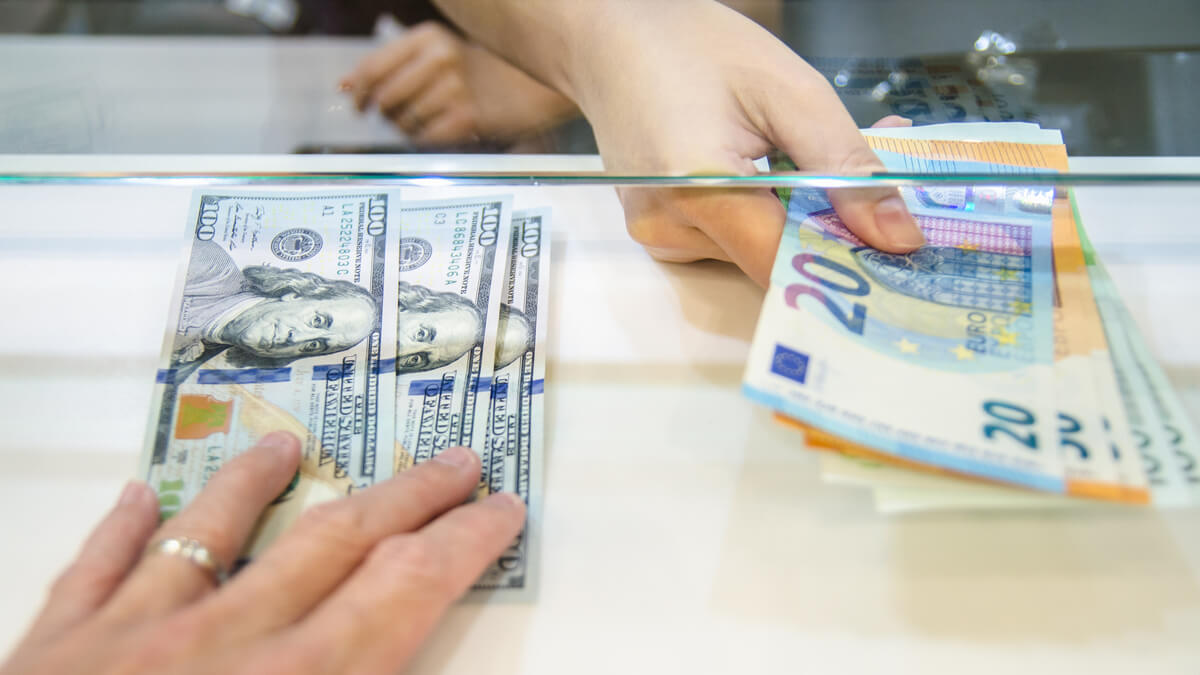
To get US dollars in France, you have several options: your French bank, a currency exchange office, Western Union, an international bank transfer, or withdrawing cash once you arrive in the US.
However, these methods can be expensive. The exchange rate is often marked up, and providers usually add extra fees that are hard to identify.
In this article, we’ll break down all the fees linked to euro to dollar conversions — and explain how to reduce or even avoid them. Some providers don’t add any surcharge to the exchange rate, such as Wise.
The cost of buying or selling a currency depends on the market where the transaction takes place:
When you visit a French bank or exchange office to buy dollars, you’ve probably noticed there isn’t just one exchange rate but several:
The “exchange rate” generally refers to the value of a currency on the interbank market — the price at which banks trade currencies with each other.
When a bank offers you an exchange rate, it typically includes a margin. This means the rate you receive is higher (or lower) than the real market rate.
Many factors influence currency fluctuations. Some are macroeconomic, such as inflation or purchasing power, while others relate to supply and demand — the more a currency is in demand, the stronger it becomes.
Because of the many variables involved, exchange rate movements are difficult to predict.
If your trip to the United States is planned in advance, you can buy dollars directly from your bank. However, banks usually apply less favourable rates, and you may need to wait several days for the currency to arrive.
If you prefer not to travel with cash, you could use traveller’s cheques, though they aren’t accepted everywhere in the US.
You can also visit a currency exchange office, but be cautious — rates can vary widely. Compare offers to get the best rate and avoid losing money unnecessarily.
If you arrive in the US without dollars, here are your main options:
For your dollar payments and withdrawals, Wise could be a convenient alternative. With the Wise Visa debit card, you benefit from low and transparent currency conversion costs. Plus, you get 2 free withdrawals per month (up to €200 or its dollar equivalent).

Whether you use your online bank, an exchange office, or an ATM, each option involves specific fees.
These are fixed or variable commissions charged by the provider on money transfers or receipts. Transfers to or from the United States are usually subject to these fees, which vary depending on your bank.
Your bank may charge fees for withdrawing money abroad from an ATM outside its network. Outside the SEPA zone, these fees often include a fixed component and a variable percentage based on the withdrawal amount.
Similar to withdrawal fees, but applied to card payments. The commission amount depends on the transaction value.
Exchange rate fees are often hidden. When you withdraw or convert dollars, your bank uses its own rate — usually marked up above the interbank (or mid-market) rate.
You’ll therefore pay more than you expect, as this markup is combined with the commission already charged for the transaction.
In the United States, some banks also charge ATM usage fees. Depending on the bank’s policy, these may not always appear clearly on your account statement.
If your account is domiciled in France, making transfers or withdrawals abroad can quickly become costly. To save money, you could use an alternative provider like Wise, which uses the mid-market rate and allows card payments in the US.
Transfers are often cheaper and more transparent than through traditional banks — with no hidden fees. You always know in advance how much you’ll pay.
Source:
Last verified on September 24, 2025.
This article is a translation of the original article published in French and was translated within 365 days of publication. While the content has been translated for accessibility, the data and sources referenced have not been updated since the original publication date.
*Please see terms of use and product availability for your region or visit Wise fees and pricing for the most up to date pricing and fee information.
This publication is provided for general information purposes and does not constitute legal, tax or other professional advice from Wise Payments Limited or its subsidiaries and its affiliates, and it is not intended as a substitute for obtaining advice from a financial advisor or any other professional.
We make no representations, warranties or guarantees, whether expressed or implied, that the content in the publication is accurate, complete or up to date.

To buy US dollars in France, you can go to the bank, the post office, a currency exchange office, or an ATM. Which option is the most economical?
You can pay by Visa card in the US, but you'll be charged an additional fee. Here's everything you need to know before paying in dollars by card









