
Opening a bank account in Andorra: what to know
Learn how to open a bank account in Andorra as a resident or non-resident. Compare top banks like Creand and Morabanc, and discover the Wise alternative.


Opening a bank account in Spain is a relatively straightforward process if you are a citizen or a legal resident. However, if you are living abroad or have just arrived, the requirements can feel a bit like a moving target.
Many banks claim you can open an account using just a passport, but in practice, it’s rarely that simple. Requirements often fluctuate depending on the specific bank and your individual circumstances.
In this guide, we break down what you can realistically expect, when a passport might actually suffice, and which additional documents you should have ready. We’ll also introduce Wise, a digital alternative that lets you manage your money without the usual banking red tape.
The short answer is yes, but with caveats. It largely depends on the provider. A few banks have modernized their systems to allow non-residents to start or complete the application process using a passport.
The most prominent example is Santander’s online non-resident account. It is specifically designed for those living outside of Spain, provided the applicant is over 18 and holds a valid passport.
However, most traditional banks will ask for more than just a passport, especially if:
For instance, BBVA allows foreigners to open an account with a passport, but they typically require you to finalize the process in a physical branch. They also note that requirements vary depending on whether you are using a NIE (Foreigner Identification Number), TIE (Foreigner Identity Card), or a passport.
Even if a bank accepts your passport as primary ID, they may still request supporting documentation. Common requirements include:
| 💡 Learn more about how to open a free online bank acount in Spain |
|---|
The digital landscape in Spain is changing, but it’s still hit-or-miss for non-residents.
Ultimately, if you aren't physically in Spain, your options with traditional banks remain somewhat limited.
While most Spanish banks serve both residents and non-residents, the paperwork, product availability, and fee structures change significantly based on your tax residency.
According to Article 9 of Law 35/2006, you are generally considered a tax resident in Spain if:
Banks will categorize you based on these criteria, which determines which specific account types you are eligible for.

If you want to skip the bureaucracy and don't strictly need a traditional Spanish bank, Wise is a powerful alternative. It’s built specifically for expats, frequent travelers, and digital nomads.
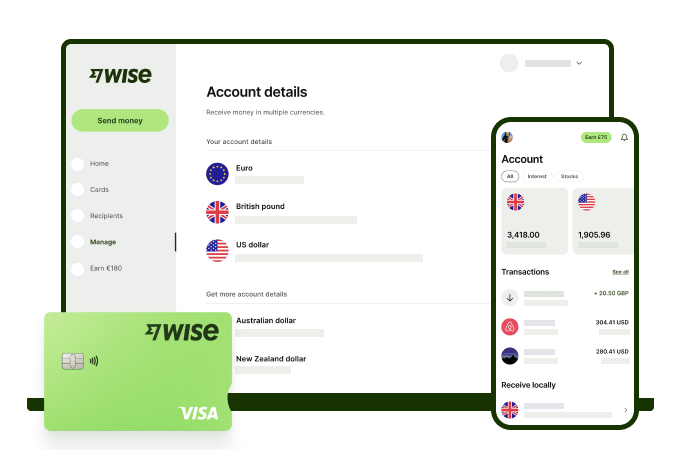
With a Wise account, you can manage your money in over 40 currencies. You also get dedicated local account details for 9+ currencies—including Eurozone IBANs, US Dollar account numbers, and British Pound sort codes. This allows you to receive money like a local and avoid expensive international wire fees.
The best part? When you spend or move money between currencies, Wise uses the mid-market exchange rate without hidden markups.
| Feature | Traditional Spanish Banks | Wise |
|---|---|---|
| Available to non-residents | Yes (limited providers) | Yes |
| Online Opening | Often requires a branch visit | 100% digital |
| Maintenance Fees² | Up to €196/year | Free |
| Local Account Details | Eurozone only | EUR, USD, GBP, CAD, and more |
| Supported Currencies | Euros only | 40+ currencies |
| International Transfers | High fees (€18–€27) + SWIFT charges² | Low, transparent conversion fees |
| Exchange Rate | Bank's rate (includes a markup) | Mid-market rate |
Note: Wise is a regulated payment institution in the EU, not a traditional bank. Terms and conditions apply.
Traditional Spanish banks often waive fees for customers who deposit a monthly salary (nómina). However, for non-residents, this is rarely an option, leading to higher costs:
A passport is the first step, but it’s rarely the last. While you can technically open an account with just a passport at certain banks, you should be prepared to provide proof of income and residence status to keep the account active.
If you need a Spanish IBAN quickly and want to avoid high maintenance fees, a digital solution like Wise often provides a smoother, faster, and more transparent experience.
Sources:
Police website – Non-resident certificate > How to complete the procedure and Ministry of Finance website – Fee associated with Form 790 – 052. Section 6.6
Maintenance fees extracted from: Caixabank website, Sabadell website – Key account fee schedule, Santander website – tariff and BBVA website – Fees. Section 10.1.2: Account Maintenance Service (page 1)
Fees for international transfers corresponding to: BBVA website – Fees. Section 67: Transfers with other countries (pages 1 and 2), Caixabank website, Sabadell website – Key account fee schedule, Santander website – tariff
Costs associated with The issuance, holding and use of cards consulted in: BBVA website – Fees. Section 17: Cards and electronic money (pages 4 and 5), Caixabank website, Sabadell website – Key account fee schedule (page. 1), Santander website – tariff
Information about Surcharges on exchange rates consulted in: Caixabank website – Fee Schedule, Caixabank website – General Fees. Section 60: Foreign Banknotes and Sabadell website – Key Account Fee Schedule (page. 2)
Last reviewed on March 30, 2026.
*Please see terms of use and product availability for your region or visit Wise fees and pricing for the most up to date pricing and fee information.
This publication is provided for general information purposes and does not constitute legal, tax or other professional advice from Wise Payments Limited or its subsidiaries and its affiliates, and it is not intended as a substitute for obtaining advice from a financial advisor or any other professional.
We make no representations, warranties or guarantees, whether expressed or implied, that the content in the publication is accurate, complete or up to date.

Learn how to open a bank account in Andorra as a resident or non-resident. Compare top banks like Creand and Morabanc, and discover the Wise alternative.

Need a UK bank account while living in Spain? Learn how to open a bank account in Gibraltar online, compare top banks, and discover low-cost alternatives.

Can you open a bank account abroad without leaving Spain? Learn about the legal requirements, tax forms (Modelo 720), and how to set it up online via Wise.

Looking for a free bank account in Spain? Compare top online options like Wise, N26, and BBVA. Find out how to sign up and avoid maintenance fees today.

Moving to Spain? Learn how to open a bank account as a resident or non-resident, the documents you’ll need, and the best Spanish banks to choose from.

Open an international bank account online from Spain. Learn about the legal rules, tax limits, and how Wise offers multi-currency accounts without travel.











