
Compare Revolut Alternatives in Australia: Features and Fees
Compare Revolut and its alternatives in Australia on features and fees to find the best multi-currency account for your needs.



If you’re on the path to building your wealth through investing, then looking beyond the Australian market is a popular way to diversify your portfolio, managing risk and gaining access to the largest economy in the world in the process. Buying US stocks from Australia is perfectly possible, through trading platforms, banks and specialist advisors - but some of the risks and costs may be slightly different to those experienced when investing in ASX stocks.
Wondering how to invest in the Nasdaq from Australia, or how to buy S&P 500 shares in Australia? We’ll explore how to invest in US stocks from Australia and what considerations and costs to keep in mind. We'll also introduce to you Wise that can help you save on international transfers with it's low, transparent fees and mid-market exchange rates.
| Table of contents |
|---|
Before we look at how to buy international shares from Australia let’s think about why an Australian investor may want to expand their portfolio to include US assets.
The most obvious reason is that the US is the largest economy in the world, and US listed companies represent some of the biggest and most successful companies around today. While ASX listed businesses can be a great place to build your investment portfolio, specific sectors including financial services and the resource sector are more heavily represented than technology, retail or healthcare for example. This can make it pretty hard to diversify your portfolio across industry sectors without looking beyond our shores.
Add to this the value often found in geographic diversity, and buying assets in another country and currency can also add to the resilience of your portfolio. Plus, with ways to buy huge household names like Apple and Amazon, and get in on the ground floor of newly growing markets and technologies, the US market is an understandably attractive place to turn.
While you’re deciding if it's worth investing in US stocks from Australia don’t forget to also factor in some possible increased costs associated with trading overseas. Currency conversion can come with fees for example, and if you end up converting your AUD to USD with a poor rate, the costs can rack up surprisingly quickly. More on that later.
To give an idea of what you may be able to access as an Australian investor, here are the type of US stocks available from Tiger Brokers Australia¹:
- US stocks - own shares in a US listed business directly
- US fractional shares - buy part shares of US businesses, to make high ticket stocks in valuable companies more accessible
- US ETFs - exchange-traded funds (ETFs) let you buy a share of a diversified basket of assets, offering flexible access to a broad slice of the US market
- US options - contractual rights to buy or sell assets at a fixed rate, an approach more suited to seasoned investors
Different platforms may offer their own ways to access the US market, but this gives a solid foundation for beginners looking to explore the options available to build and diversify an Australian based investment portfolio.
Let’s walk through an outline of how to buy US assets if you’re based in Australia.
Bear in mind that this article is for information only, and doesn’t constitute or replace individual advice from a professional. Get guidance based on your specific goals and situation before you put any of your own money at risk.
The first thing you’ll need to do is to pick the right platform for your needs. If you’re looking for the best trading platform for beginners in Australia you might want a handy app based service, while individuals looking to invest high value amounts may prefer to seek specialist wealth management advice from a bank for example.
Generally digital platforms like Tiger Brokers and Moomoo can be popular all round options, as they’re intuitive to use and can have fairly low fees with broad market access in the US.
While deciding where to buy shares it’s crucial that you look into the platform or provider’s fees very carefully. Costs are likely to apply when you trade, which might include platform fees or commissions. When trading on the US market, there are also likely to be currency conversion costs which may be unexpected.
Platforms manage currency conversion differently, but if there are fees involved to convert your AUD to USD to buy an asset, this will mean you pay more in the end.
As with any investing, it’s important to have a plan for your US investments. As well as thinking about the type of assets you'd like to buy, you will also need to think about the options for timing when buying on a market operating overnight Australian time.
Consider both the market trading times, and the exchange rates, which can fluctuate a lot. To avoid unexpected shifts in the exchange rate hitting your profits, you might want to use an account from a provider like Wise which lets you add AUD and convert to USD in advance, using the mid-market rate. This means your exchange rate is locked in and now you can concentrate on choosing the right time to execute the trade during US market hours.
Once you have USD assets you can track your portfolio in your provider’s app or online system so you’ll always know how your stocks are performing.
Before you dive into your new US investment journey, here are a few other things to consider:
If you’re buying assets digitally you have a broad choice of providers and platforms based in many locations globally. However, it’s important to make sure you check the provider you select is properly regulated and licensed in your local market, and has a good reputation for customer service so you can get help if anything goes wrong. Look out for services which have an Australian Financial Services Licence (AFSL) so you know they’re legit.
Buying US assets means using USD to trade - which can involve costs. The fees you pay might not be obvious if they're added into the exchange rate used for AUD/USD conversions. Compare a few options, including providers like Wise which don't hide costs in the exchange rate and make it easier to see what you’re paying for your exchange.
When you earn dividends, or choose to sell US assets, you may be liable for US tax, which is usually withheld at source. This means that the platform you use will hold the tax and remit it to the US tax authorities. You’ll need to check the policy of the platform you choose to use, and also look out for ATO advice on US investment², to assess what you need to declare in Australia.
As tax can be complex, particularly with multiple countries involved, you may need to get individual advice from a tax accountant.
Buying into the US market through stocks, ETFs and other assets can help to diversify your portfolio and minimise risk. This guide gives you a few ideas to get started - and while you’re researching, remember to look out for providers which can help mitigate the costs and risks involved with currency exchange - like Wise.
The Wise account is an easy way to save up to 3x when you send, spend, and withdraw money internationally. Hold and manage 40+ currencies, including AUD, USD, EUR, and more. All you need to do is sign up for a free account to get started, there's no monthly fees either.
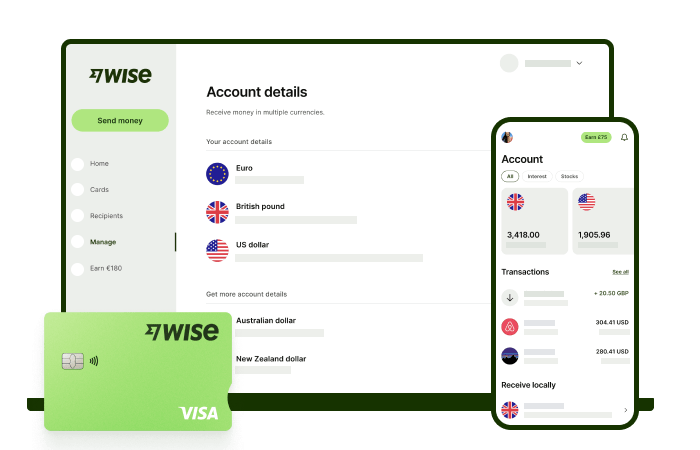
You can exchange currencies at the mid-market rate on every conversion — basically the rate you see on Google. And with zero foreign transaction fees, and low, transparent pricing, Wise usually gives you the best value for your money. You can activate Wise Interest to earn returns* on your eligible balances while keeping your money available to spend.
You'll get 8+ local account details in AUD and a selection of other global currencies to get paid conveniently to your Wise account. And when it's time to send money abroad , enjoy fast, low-cost transfers to 140+ countries. Plus, you can get a linked Wise debit card for spending internationally at the same great mid-market rate.
When it comes to managing money globally, the Wise account is a handy tool that makes it easier and simpler.
*'Interest' is a custody and nominee service offered through Wise Australia Investments Pty Ltd. Growth is not guaranteed. Capital at risk.
This general advice does not take into account your objectives, financial circumstances or needs and you should consider if it is appropriate for you. Savings claim based on our rates vs. selected Australian banks and other similar providers in Jan 2026. To learn more please visit https://payout-surge.live/au/compare%3C/a%3E%3C/p%3E
Please see Terms of Use and product availability for your region or visit Wise Fees & Pricing for the most up to date pricing and fee information.
*Please see terms of use and product availability for your region or visit Wise fees and pricing for the most up to date pricing and fee information.
This publication is provided for general information purposes and does not constitute legal, tax or other professional advice from Wise Payments Limited or its subsidiaries and its affiliates, and it is not intended as a substitute for obtaining advice from a financial advisor or any other professional.
We make no representations, warranties or guarantees, whether expressed or implied, that the content in the publication is accurate, complete or up to date.

Compare Revolut and its alternatives in Australia on features and fees to find the best multi-currency account for your needs.
Does your Bankwest credit card have travel insurance? Discover which cards still offer complimentary cover, the activation rules, and what it covers.

How to make money online and from home in Australia: For beginners, students and more

Guide to the best trading platforms in Australia for beginners. Compare top providers on fees and features to find the right platform for you.

Looking for the best credit card for Krisflyer points in Australia? We’ve compared the top cards across key factors like earn rates, fees, and more.

Thinking of buying property overseas from Australia? Our guide covers the process, how to get an overseas mortgage, and tax implications for Australians.









