


Top 10 Countries With the Most OFWs: Where Filipinos Work Abroad



Millions of Filipinos work overseas, boosting their career prospects and contributing significantly to the Philippine economy through remittances. While OFWs travel for work all over the world, there are certain countries which employ especially large numbers of OFWs thanks to high demand, historic or cultural ties, good salaries and government level agreements.
This guide covers the top 10 countries with the most number of OFWs, if you’re interested in which OFW countries may appeal to you.
We'll also introduce the Wise account, a handy companion to make your money go further with low, transparent fees.


What is an OFW?
OFW stands for Overseas Filipino Worker.
OFWs are employed in many countries around the world, commonly in sectors including:
- Healthcare
- Construction
- Domestic work
- Hospitality
- Manufacturing
- Maritime
In the Philippines, the government agency responsible for overseas employment is the Department of Migrant Workers (DMW)¹. The DMW works with foreign governments to support the rights and safety of OFWs, and protects and informs OFWs planning to travel abroad.
If you’re planning to work overseas, it’s important to understand the full process, from documents to approvals, before you leave. Learn more about the requirements for working abroad as a Filipino.
Top 10 Countries with the most OFWs
The country with most Filipino OFWs is Saudi Arabia - and in fact, all ten of the top ten are in Asia and the Middle East². Here's a rundown from the most recently available government statistics to give you an overview:
Number 1: Saudi Arabia

Percentage of OFWs: 21.9%
Encouraged by large existing Filipino communities, Saudi Arabia continues to be a popular place for OFWs working in construction, healthcare, domestic services, and engineering. There’s a very strong demand for foreign workers in the country, with high rates of pay and a favorable tax regime, which can make it easier to save money.
The DMW reports that there are over 1,400 OFWs employed as nurses, and signed a bilateral agreement in 2022 to support Filipino workers in the Kingdom³. These agreements help improve working conditions and provide additional protections for OFWs.
Number 2: United Arab Emirates

Percentage of OFWs: 12.4%
The UAE, including Dubai, is home to 12.4% of OFWs, allowing individuals to achieve higher salaries compared to the Philippines in roles spanning healthcare, hospitality, construction, and domestic services. Many Filipinos are also employed in retail and service industries.
The UAE is a vibrant destination with people from all different countries and cultures, offering a safe living environment and good career opportunities for OFWs. Its modern infrastructure and strong economy also make it an attractive place to work. Explore jobs in Dubai for Filipinos to see what roles are available and how to apply.
Number 3: Kuwait
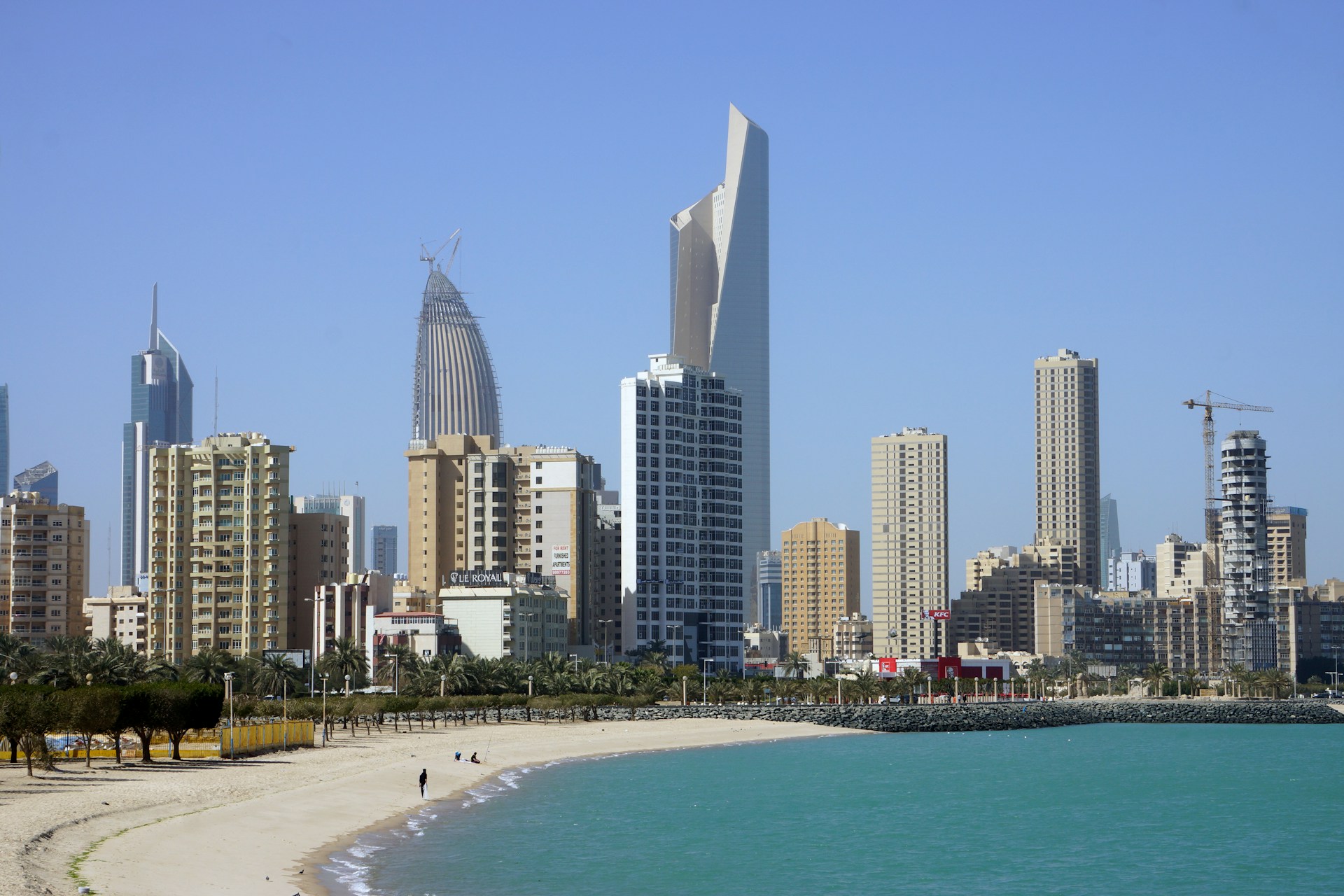
Percentage of OFWs: 6.3%
About 6% of OFWs head to Kuwait, where they’re often involved in domestic services, engineering and construction. Kuwait has long been a destination for Filipino workers, with established communities already in place.
Salaries are high and tax is favorable which can make this a popular choice for OFWs who want to earn to save for the future, and remit more money home to loved ones. However, it’s still important to understand employment terms before relocating.
Number 4: Hong Kong

Percentage of OFWs: 6.3%
Hong Kong is home to many OFWs, often working in domestic services such as childcare and eldercare, or hospitality and adjacent industries. Many Filipino workers are employed as helpers supporting families in the city.
Hong Kong can appeal as a relatively small destination with a high number of Filipinos, making it a comfortable place to build a community of likeminded people. Its proximity to the Philippines also makes travel home easier compared to more distant destinations.
Number 5: Qatar

Percentage of OFWs: 5.3%
OFWs in Qatar work in diverse industries including IT and healthcare, construction and domestic services. The country continues to attract foreign workers due to ongoing infrastructure and development projects.
Salaries are high compared to the Philippines — but bear in mind that the costs of living can also be quite high, especially for accommodation. Even so, many OFWs choose Qatar for the opportunity to earn and save.
Number 6: Taiwan

Percentage of OFWs: 4.7%
Taiwan has a government to government agreement with the Philippines which includes OFW factory workers there. Many Filipinos are employed in manufacturing roles, alongside opportunities in healthcare, hospitality, domestic services and construction.
Taiwan is an appealing country as it is close to the Philippines with fairly easy connections and flights. This makes it a practical option for OFWs who want to stay within easy reach of home while working abroad.
Number 7: Singapore

Percentage of OFWs: 4.5%
Singapore is another country which appeals to OFWs thanks to its geographic proximity among other things. It’s a major regional hub with strong demand for foreign workers across different industries.
OFWs in Singapore may work in domestic services, health, IT, construction or manufacturing — and a broad range of other careers, too. Singapore has strong labour laws and although costs are high, salaries are also competitive with a beneficial tax regime.
If you’re considering this destination, you can learn more about jobs in Singapore for Filipinos, including common roles and requirements.
Number 8: Japan

Percentage of OFWs: 3.4%
Some 3.4% of OFWs head to Japan, including nurses and caregivers who may travel through government to government agreements which are in place. These programs can help provide structured pathways for Filipino workers.
Other job options which are commonly considered by OFWs include food processing, manufacturing, agriculture, domestic and elderly care. While salaries can be attractive, some roles may require Japanese language skills and adapting to a different working culture. Check out this guide to jobs in Japan for Filipinos to understand the requirements and available roles.
Number 9: Malaysia

Percentage of OFWs: 1.7%
Malaysia is home to 1.7% of OFWs, and offers a quick flight home as well as a good range of job opportunities in a well regulated country. Its proximity makes it a convenient option for workers who want to stay close to the Philippines.
Filipinos in Malaysia often work in manufacturing, construction, hospitality, and domestic services. While salaries may be lower than in some other destinations, the cost of living can also be more affordable, helping OFWs manage expenses and save.
Number 10: Other countries in Asia
Combined percentage of OFWs: 8%
Several other countries in Asia also employ Filipino workers, including:
- Bahrain
- Brunei
- Cambodia
- China
- Indonesia
- Israel
- Jordan
- Lebanon
- South Korea
Individually, these countries have smaller OFW populations than Malaysia. However, when grouped together, they account for around 8% of total OFWs.
Some countries have specific bilateral agreements with the Philippines, such as South Korea which has an Employment Permit System (EPS), and existing government to government programs. These pathways can make it easier for OFWs to find work abroad.
Why do Filipinos work abroad?
Filipinos work abroad for many reasons, including strong overseas opportunities for career growth and high earnings. Filipinos are often in demand overseas thanks to high levels of education and good spoken English. This means that there’s often interest from sectors as diverse as IT and domestic services, allowing OFWs to look at a range of roles which suit their experience and preferences.
OFWs often support loved ones at home through remittances, sending money home on a regular basis. Thanks to higher overseas salaries OFWs often hope to be able to remit money home and also save for their own futures upon return to the Philippines.
Before leaving the Philippines, most OFWs are also required to attend a pre-departure seminar. Here’s what you need to know about PDOS requirements for OFWs.
How do OFWs send money back to the Philippines?
If you’re considering working overseas to send money back to the Philippines you’ll have several different remittance options. These include:
- Sending your payments with a bank in your host country
- Using a digital money transfer service with your laptop or phone
- Visiting an in person remittance center in your host country
- Bringing cash home on visits (up to legal limits)
Different methods have their own pros and cons so you’ll need to weigh up your options carefully. Remember to look carefully at the fees and exchange rates involved with any overseas payment. Some services add hidden fees into the exchange rates used for currency conversion, which can quickly mean your recipient at home gets less than you’re expecting.
It’s also important to look at delivery times which can vary from seconds to several working days - and to choose a regulated and licensed provider.
Move money between countries with low fees and the mid-market rate: Wise
Once you’re working overseas, sending money home and managing your finances becomes just as important as earning.
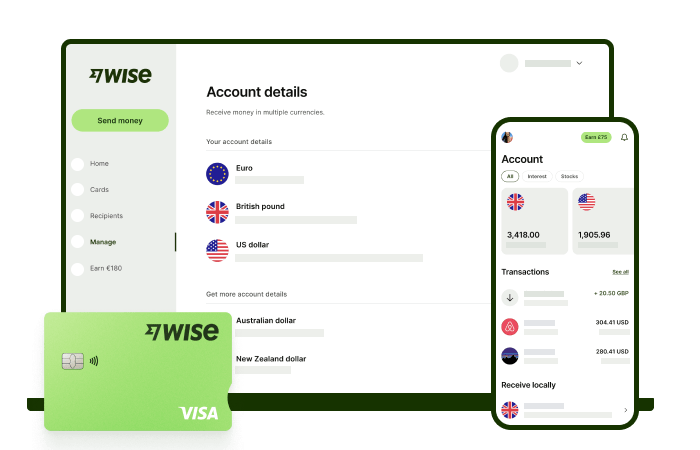
The Wise account is an easy way to hold and exchange 40+ currencies, including PHP, USD, CNY, and more. All you need to do is create a free account to get started.
With Wise, you can exchange currencies at the mid-market rate each time, with low, transparent conversion fees from 0.57% and absolutely no markups. Plus, you can order a Wise card for convenient spending at the same great rate, without any foreign transaction fees. At times you need cash, you can also make up to 2 free ATM withdrawals to the value of 12,000 PHP when you're overseas. You'll even get 8+ local account details to get paid conveniently to your Wise account in PHP and a selection of other major global currencies.
Sending money or making payments abroad? Wise also offers fast, low cost transfers to 140+ countries - you can track your transfer in your account and your recipient will also be notified when a transfer reaches them.
✍️ Sign up for a free account now
Sources:
*Please see terms of use and product availability for your region or visit Wise fees and pricing for the most up to date pricing and fee information.
This publication is provided for general information purposes and does not constitute legal, tax or other professional advice from Wise Payments Limited or its subsidiaries and its affiliates, and it is not intended as a substitute for obtaining advice from a financial advisor or any other professional.
We make no representations, warranties or guarantees, whether expressed or implied, that the content in the publication is accurate, complete or up to date.









