
VAT refund in Singapore: A complete guide to tax-free shopping in Singapore
Learn how to get a VAT refund in Singapore with this comprehensive guide. Discover tips to maximise your savings on shopping in Singapore.


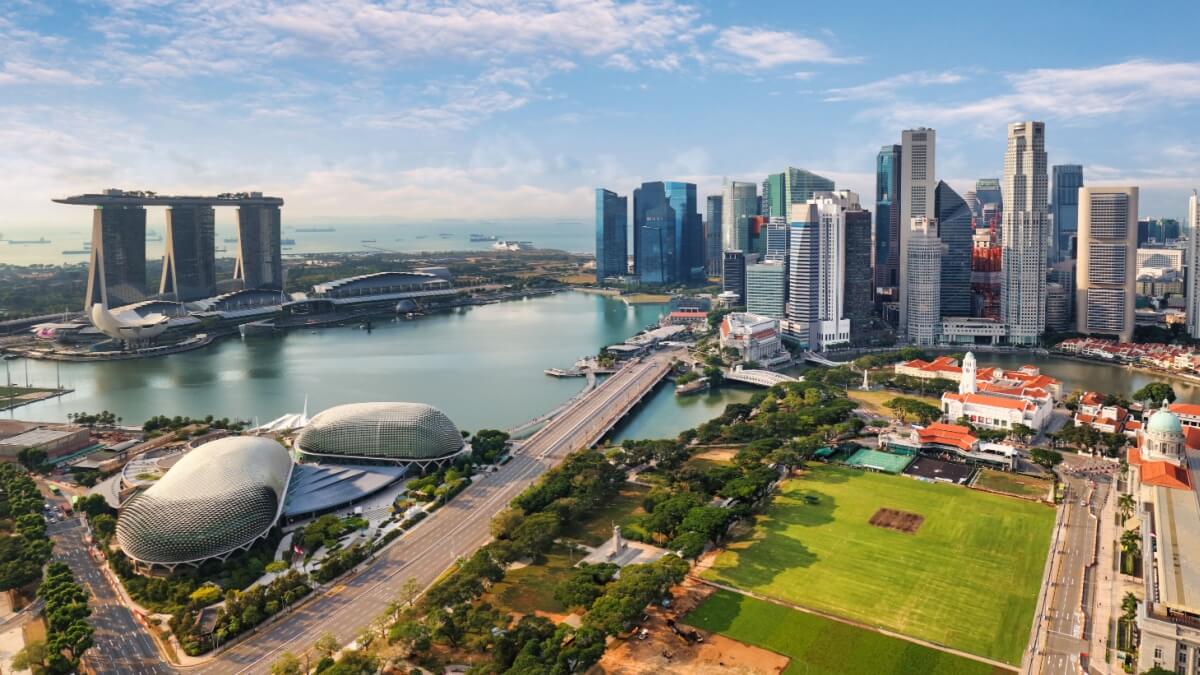
Maybe you’re planning a visit to Singapore to reunite with family or friends, attend an international conference, or simply sample some of the world’s best street food. Whatever the case, this comprehensive guide breaks down the visa and entry requirements for the Southeast Asian city-state of Singapore.
We'll also introduce the Wise card from the money services provider Wise. This clever debit card automatically converts your pounds to the local currency at the mid-market exchange rate in 150+ countries, only adding a tiny, transparent conversion fee* - or it's free if you already have the local currency in your Wise account.
🔎 Learn more about the Wise card
No. British citizens travelling from the UK can enter Singapore visa-free for up to 90 days for tourism, business, or a short social visit.1
You’ll need a visa (or “pass” as it’s referred to in Singapore) if you plan to work, study, or stay longer than 90 days.
Non-British passport holders travelling from the UK may also need a visa depending on their nationality.
All travellers arriving from the UK must submit an electronic SG Arrival Card (SGAC) within three days before their date of arrival. The SGAC has fully replaced the previous paper Disembarkation/Embarkation card.2
Your passport must be valid for at least six months from the date you enter Singapore.
You may need a yellow-fever vaccination certificate if you have recently visited or transited (for more than 6 hours) through a yellow-fever-risk country.
Border officers may also request:
While not always required, it’s a good idea to keep copies of these documents ready.
Be vigilant about what you pack: There is a sizable list of items which are prohibited to bring into the country, including most types of chewing gum.3
In Singapore penalties for drug possession are also severe, and you can be screened for drugs in your system both in transit and at the border.
The final length of stay is granted at the discretion of immigration officers.
Here’s a breakdown of the main passes used for working, studying, or staying longer term in Singapore.
Singapore offers several types of working passes depending on your role and experience:
Employment Pass (EP): For professionals in higher-skilled jobs.
S Pass: For mid-level skilled workers who don’t qualify for the EP.
Work Holiday Pass (WHP): For eligible students and recent graduates who want to work and travel in Singapore for a limited time.
EntrePass: For entrepreneurs or founders looking to start and operate a business in Singapore.
Personalised Employment Pass (PEP): For high-earning professionals or existing EP holders who want more flexibility and are not tied to a specific employer.
Even short-term study in Singapore requires a pass. The right one will depend on the course length and institution.
Short-term study under a Visitor Pass: For short courses (language, executive education, certifications) typically not exceeding 30 days.
Student’s Pass: Required for full-time degree programmes, diplomas, or long-term courses at recognised institutions.
Studying on an existing pass: Holders of certain long-term passes (ie. Dependant’s Pass) may study without applying separately.
If you’d like to stay in Singapore for longer than 90 days and you’re not working or studying, these are the main options:
Long-Term Visit Pass (LTVP): Often used for extended family visits or long stays.
Dependant’s Pass (DP): For spouses or children of holders of eligible long-term work passes.
The first step to applying for a visa to Singapore is knowing just where you‘ll need to apply.
Work- and study-related passes in Singapore are typically administered by relevant government agencies - a work pass would go through the Ministry of Manpower (MOM) for example.
For study-related passes, the application is handled by the immigration authorities, but must be initiated by the school or university that admits you.
Work passes and student passes usually require a local sponsor such as an employer or school/university before you can start the application process.
Typical documents you’ll need to apply for any pass in Singapore are:
Good news: The SG Arrival Card (SGAC) is completely free of charge when you submit it via the official website or app of Immigration & Checkpoints Authority (ICA).
Third party sites may ask for a fee, but this is optional - and unnecessary.
Other typical fees:
Student’s Pass: S$30 processing + S$60 issuance7
Work / Employment-related Passes: Usually between S$105 and S$225, depending on the pass type8
Long-Term Visit Pass: S$45 processing + S$60 issuance6
These aren’t written in stone though: Fees may vary depending on renewal, appeal, or replacement circumstances.
British citizens don’t need a tourism visa for visiting Singapore. However, if you’re planning on working, studying or staying longer in the country, there are several visa options at your disposal.
Open a Wise account online and you can order the Wise card for a one-time fee of £7. You can use this clever card in 150+ countries. It automatically converts your pounds to local currency whenever you spend using the mid-market exchange rate, only adding a tiny, transparent conversion fee* – or it’s free if you already have the local currency in your Wise account.
You also get two free ATM withdrawals for up to 200 GBP (or currency equivalent) each month. Wise will not charge you for these withdrawals, but some additional charges may occur from independent ATM networks.
You’ll need to fill out an electronic SG Arrival Card within three days before you travel. You’ll also need a UK passport valid for at least six months beyond your date of arrival, proof of onward or return travel (such as a flight ticket) and proof of accommodation and sufficient funds.
No. While British passport holders are visa-exempt for a short stay, using a visitor visa or pass does not allow you to work or study legally in Singapore. You’ll still need to make sure you apply for the correct visa.
There are no mandatory vaccinations for visiting Singapore from the UK. Keep in mind, though, that you’ll need to get a yellow fever vaccination if you’re coming directly from a country with a risk of transmission. If you fail to provide proof of this, you could be placed in quarantine or completely denied entry.
In Singapore, card is king, with over 95 percent of transactions on debit or credit card. Still, it’s common to pay with cash, for example at hawker stands where this method is usually preferred.9
Sources used for this article:
Sources checked on 1-December-2025
*Please see terms of use and product availability for your region or visit Wise fees and pricing for the most up to date pricing and fee information.
This publication is provided for general information purposes and does not constitute legal, tax or other professional advice from Wise Payments Limited or its subsidiaries and its affiliates, and it is not intended as a substitute for obtaining advice from a financial advisor or any other professional.
We make no representations, warranties or guarantees, whether expressed or implied, that the content in the publication is accurate, complete or up to date.

Learn how to get a VAT refund in Singapore with this comprehensive guide. Discover tips to maximise your savings on shopping in Singapore.
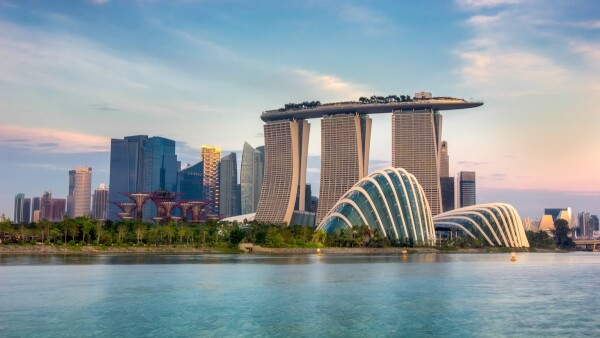
Read our essential guide to ATMs in Singapore, including how to find them, fees, exchange rates, withdrawal limits and more.

Paying with cash or card in Singapore? Which is best? Read our guide on SGD, cash etiquette, Singapore ATMs and using your UK card.

Check out our in-depth guide on everything you need to know about buying a prepaid Singapore SIM card, including different providers, pricing, and features.

If you’re working, visiting, or investing in Singapore, you’ll want to be informed about money. Singapore is a global finance and business hub with The World...

Over fifteen million international visitors arrive in Singapore every year - three times the number of permanent residents of the city-state. From its roots...









